Wondering how to get to Everest Base Camp from Kathmandu? The most popular option is flying to Lukla from Kathmandu or Ramechhap, followed by a scenic trek through Namche Bazaar, Tengboche, Dingboche, and Gorak Shep. Travelers can also choose an overland route without flying to Lukla or take a helicopter sightseeing tour. This detailed guide from Overland Trek Nepal explains transportation options, travel times, trekking itineraries, costs, permits, and practical safety tips to help you choose the best route for your Everest Base Camp adventure in Nepal.
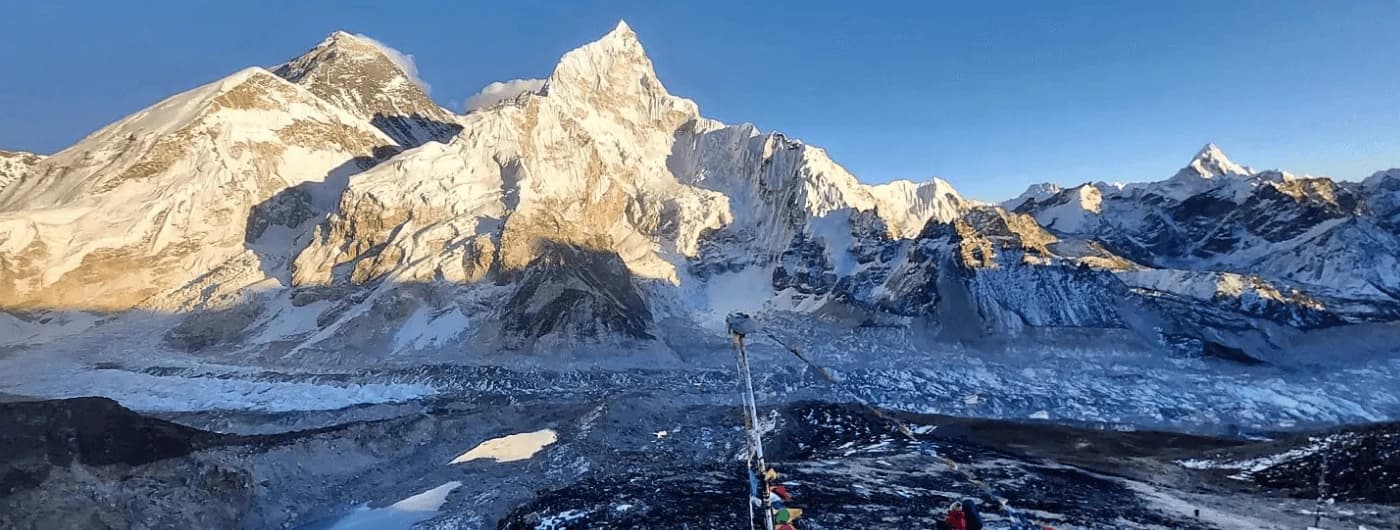
How to Get to Everest Base Camp: Fly to Lukla or Take the Road?

How to Get to Everest Base Camp: Flights, Road Routes & Trekking Options
How to get to Everest Base Camp? The most common way is to fly from Kathmandu or Manthali Airport in Ramechhap to Lukla (2,860 meters), then trek through Namche Bazaar, Tengboche, Dingboche, Lobuche, and Gorak Shep to Everest Base Camp (5,364 meters).
Most trekkers allow 12–14 days for the round-trip trek, including acclimatization. Alternatively, you can drive from Kathmandu toward Salleri and the lower Everest roadhead before walking to the main trail.
Helicopter sightseeing tours offer another option, but they do not normally include landing at Everest Base Camp.
Introduction: Planning Your Journey to Everest Base Camp
You've decided to visit Everest Base Camp. Now comes the practical question: How do you actually get there?
Can you fly directly from Kathmandu? Do you need to travel to Ramechhap first? Is it possible to reach Everest Base Camp by road without taking the Lukla flight?
These questions matter, especially if you have limited vacation time.
Everest Base Camp sits deep inside Nepal's Khumbu region. Reaching it involves more than booking a flight and putting on hiking boots. You need the right transportation, a realistic itinerary, proper acclimatization, and flexibility for mountain weather.
In this guide, Overland Trek Nepal explains the main routes, transportation costs, travel times, permits, and trekking options to help you plan your journey with confidence.
How Can You Reach Everest Base Camp?
There are three main ways to experience the Everest Base Camp area: fly to Lukla and trek, drive toward the lower Everest region and trek, or take a scenic helicopter tour. The Lukla-based trek is the most popular choice. The overland route takes longer, while helicopter sightseeing is different from physically trekking to Base Camp.
Everest Base Camp travel facts:
- Location: Khumbu region, Solukhumbu, Nepal
- Everest Base Camp altitude: 5,364 meters (17,598 feet)
- Main trekking gateway: Lukla
- Nearest common flight access: Tenzing-Hillary Airport, Lukla
- Standard trekking duration: 12–14 days, Lukla to Lukla
- Main seasons: March–May and September–November
- Accommodation: Mountain teahouses and lodges
How to Get to Everest Base Camp from Kathmandu
For most travelers who want to visit Everest Base Camp, the journey starts in Kathmandu, Nepal's capital city.
Step 1: Arrive in Kathmandu, Nepal
Fly into Tribhuvan International Airport (KTM). Travelers around the world usually connect through major international airports in the Middle East or Asia.
Spend at least one night in Kathmandu before heading toward Lukla. This gives you time to check your trekking equipment, attend a trip briefing, and confirm your domestic flight departure airport.
Step 2: Fly to Lukla from Kathmandu or Ramechhap
Lukla is the usual starting point for the Everest Base Camp Trek.
Depending on the season and airline schedule, your flight may depart directly from Kathmandu or from Manthali Airport in Ramechhap.
A Kathmandu to Lukla flight takes approximately 30–35 minutes. From Manthali, the flight is generally around 15–25 minutes, but reaching Manthali requires a road transfer from Kathmandu.
Step 3: Trek from Lukla to Everest Base Camp
After landing in Lukla, your walking journey begins.
The trail follows the Dudh Koshi River, crosses suspension bridges, and passes traditional Sherpa settlements before climbing toward Namche Bazaar.
From Namche, you continue through Tengboche, Dingboche, Lobuche, and Gorak Shep.
Most itineraries reach Everest Base Camp around Day 8 of the Lukla-based trek, including two acclimatization days.
Step 4: Return from Lukla to Kathmandu
After reaching Base Camp and optionally hiking Kala Patthar, you return along the main trail toward Lukla.
The return walk normally takes three days from the Gorak Shep area, depending on the itinerary.
Your journey finishes with a flight back to Kathmandu or Manthali and a road transfer to Kathmandu if required.
Explore our 14-Day Everest Base Camp Trek.
Kathmandu to Lukla Flights: What Travelers Need to Know
Flying Directly from Kathmandu
The Kathmandu to Lukla flight is the simplest transportation option when direct flights are operating. You travel from Tribhuvan International Airport to Tenzing-Hillary Airport in Lukla by plane.
However, direct services may be limited during peak trekking months because of airport congestion and airline operating arrangements.
Always confirm your departure airport before booking your hotel or airport transfer.
Flying from Ramechhap (Manthali Airport)
During busy trekking seasons, many Lukla flights operate from Manthali Airport in Ramechhap.
The journey involves:
- Leaving Kathmandu very early, sometimes around 1–2 AM.
- Driving approximately 4–6 hours to Manthali, depending on road conditions.
- Taking a short mountain flight to Lukla.
- Beginning the trek after arrival.
You can arrange shared transportation or a private vehicle.
Important: Ramechhap is a flight departure point, not a road route to Everest Base Camp. Flights from Manthali can also face weather delays.
Check the Ramechhap to Lukla Flight.
Flight Duration, Baggage Limits, and Costs
Small aircraft serving Lukla generally have strict baggage allowances. A common allowance is 10 kg of checked baggage plus 5 kg of hand luggage, although the exact limit depends on the airline and ticket.
| Flight route | Reference one-way fare |
|---|---|
| Kathmandu to Lukla | USD 251 |
| Ramechhap to Lukla | USD 208 |
These are advertised reference fares, not confirmed live quotations. Prices may change by travel date, nationality, airline, and availability. Ground transportation to Manthali may cost extra.
View Kathmandu to Lukla Flight Details.
What Happens If a Lukla Flight Is Canceled?
Lukla flights depend heavily on visibility, wind, and local weather conditions.
A flight might be delayed for several hours or canceled for the day. During prolonged bad weather, travelers can face longer interruptions.
Quick travel advice: Keep at least two flexible days in your Nepal schedule after the trek. Avoid booking your international departure immediately after your planned Lukla return flight. Helicopter transfers may sometimes be available, but they also depend on weather, operating permission, and additional costs.
How to Get to Everest Base Camp Without Flying
Yes, you can reach Everest Base Camp without flying to Lukla. Drive from Kathmandu toward Salleri and the current lower Everest roadhead, then continue on foot toward Surke, Phakding, and Namche Bazaar. This route takes longer than the standard Lukla-based trek but allows you to explore additional Sherpa settlements.
Traveling by Jeep via Salleri and the Lower Everest Roadhead
The overland route starts with a road journey from Kathmandu toward Salleri in Solukhumbu.
Depending on road access and conditions, jeeps may continue toward Thamdanda or another operating roadhead.
From there, you trek toward Surke and Phakding before joining the main Everest Base Camp route.
Road surfaces can be rough, and rain or landslides may affect vehicle access.
Jiri to Everest Base Camp: The Classic Old Trail
The traditional Jiri approach follows older walking routes through the lower Everest region.
It passes rural villages, farmland, forests, and mountain settlements before connecting with the main Khumbu trail.
This is a good choice for travelers who want a longer cultural trekking experience rather than the fastest journey.
How the Road Route Connects to the Main Everest Trail
Regardless of whether you start from a lower roadhead or follow the classic Jiri approach, your journey eventually connects with the main trail toward Namche Bazaar.
From there, the upper Everest Base Camp route follows the familiar path through Tengboche, Dingboche, Lobuche, and Gorak Shep.
Overland Trek Nepal offers an 18-day Everest Base Camp Trek without flying, including ground transportation and a guided trekking itinerary.
Explore the Everest Base Camp Trek Without Flight.
Can You Visit Everest Base Camp by Helicopter?
Scenic Helicopter Tours vs. Trekking to Base Camp
An Everest helicopter tour is an alternative for travelers who want Himalayan views without completing a multi-day trek.
These flights may include views of Everest, Lhotse, Nuptse, Ama Dablam, and the Khumbu Glacier.
However, a helicopter sightseeing flight is not the same as trekking to Everest Base Camp.
Flight Options, Landing Restrictions, and Costs
Helicopter itineraries vary by operator, route, weather, and current aviation and national park restrictions. Many sightseeing tours use approved stops around the lower Everest region rather than landing at Everest Base Camp itself.
Private helicopter charters generally cost more than shared sightseeing flights.
Before booking, confirm the exact route, approved landing locations, flight duration, and cancellation conditions.
Explore the Everest Base Camp Helicopter Tour.
Which Route to Everest Base Camp Is Best for You?
| Travel option | Typical time needed | Main advantage | Best for |
|---|---|---|---|
| Kathmandu–Lukla flight and trek | 12–14 trekking days | Fastest common trekking access | Most trekkers |
| Ramechhap–Lukla flight and trek | 12–14 trekking days, plus ground transfer | Practical during peak flight operations | Spring and fall trekkers |
| Jeep and overland trek | Around 16–18 days or more | Avoids Lukla flights | Travelers with extra time |
| Classic Jiri trekking approach | Roughly 18–21 days or more | More cultural and walking experiences | Experienced long-distance hikers |
| Helicopter sightseeing | Usually a short tour | Everest views without a long trek | Travelers not undertaking EBC trekking |
Our recommendation: If this is your first Everest Base Camp Trek and you have around two weeks, choose the standard Lukla-based itinerary with proper acclimatization. If you prefer not to fly to Lukla and have more time, consider the overland approach.
How Many Days Does It Take to Reach Everest Base Camp?
Standard Lukla-Based EBC Trek
Most standard itineraries take around 12 days from Lukla to Lukla, including the outbound and return flights. A complete trip with Kathmandu arrival, preparation, and departure often takes approximately 14–16 days.
Extended Overland Trek
The no-flight route generally requires more time because you must travel overland and walk through the lower Everest region.
Allow around 16–18 days or longer, depending on the roadhead, itinerary, and rest days.
Planning Extra Days for Weather Delays
For international visitors, two contingency days are a sensible starting point.
Travelers visiting during monsoon or winter should consider additional flexibility because weather and transportation disruptions can last longer.
Everest Base Camp Trek Route: Day-by-Day Overview
This 12-day itinerary follows the standard Lukla route, with acclimatization stops in Namche Bazaar and Dingboche.
| Day | Route | Overnight altitude |
|---|---|---|
| 1 | Fly to Lukla; trek to Phakding | 2,610 m |
| 2 | Phakding to Namche Bazaar | 3,440 m |
| 3 | Acclimatization in Namche Bazaar | 3,440 m |
| 4 | Namche Bazaar to Tengboche | 3,860 m |
| 5 | Tengboche to Dingboche | 4,410 m |
| 6 | Acclimatization in Dingboche | 4,410 m |
| 7 | Dingboche to Lobuche | 4,940 m |
| 8 | Lobuche to Gorak Shep; visit Everest Base Camp | 5,164 m |
| 9 | Optional Kala Patthar hike; trek to Pheriche | Approx. 4,240 m |
| 10 | Pheriche to Namche Bazaar | 3,440 m |
| 11 | Namche Bazaar to Lukla | 2,860 m |
| 12 | Fly from Lukla to Kathmandu or Ramechhap | Return to Kathmandu |
Everest Base Camp is approximately 5,364 meters above sea level. Kala Patthar reaches approximately 5,545 meters, depending on the viewpoint measured.
Walking times vary with trail conditions, weather, and individual fitness.
This is a sample itinerary, not a guarantee that every traveler will acclimatize at the same rate. Additional rest days or itinerary changes may be necessary.
How Much Does It Cost to Get to Everest Base Camp?
The cost to get to Everest Base Camp depends on transportation, accommodation, meals, guides, permits, and whether you book an organized trek.
Flight and Road Transportation Costs
The flight cost from Kathmandu to Lukla one way is USD 251 and from Ramechhap is USD 208 respectively.
Shared and private Manthali transfers cost extra unless included in your package. Jeep prices depend on vehicle size, the roadhead, and whether transport is private or shared.
Permits, Guides, and Accommodation
Budget for Sagarmatha National Park entry and the Khumbu local entry system.
The EBC Trek permit cost for the foreigner NPR 3,000 for Sagarmatha National Park entry, according to Nepal Tourism Board. Khumbu Pasang Lhamu Rural Municipality lists NPR 3,000 for its Trek-Card for visitors from countries outside SAARC and China.
Mountain lodging, meals, hot showers, charging, Wi-Fi, guides, and porters may be charged separately depending on your package.
Package Costs vs. Independent Arrangements
A complete trekking package may include local transportation, trekking permits, accommodation, meals, a guide, and porter services.
Compare what is included rather than choosing solely by the lowest advertised price.
International airfare, Nepal visa fees, personal insurance, extra meals in Kathmandu, and emergency evacuation costs are commonly excluded.
Read Our Everest Base Camp Trek Cost Guide.
Permits and Documents Needed for Everest Base Camp
Before entering the Everest region, prepare:
- A valid passport and Nepal visa, where required.
- Sagarmatha National Park entry permit.
- Khumbu Pasang Lhamu Rural Municipality entry documentation.
- Any additional trekking documentation required under the rules applicable to your route.
- Travel insurance covering high-altitude trekking and emergency evacuation.
Best Time to get to Everest Base Camp
Spring (March–May) and fall (September–November) are the best times to get to Everest Base Camp.
Spring offers longer days, mountain views, and rhododendrons at lower elevations. The upper trail may be busy during the Everest climbing season.
Fall often provides clear mountain views after the monsoon, with cooler temperatures as the season progresses.
Winter brings colder weather, snow, and fewer trekkers. Monsoon conditions can create flight delays, muddy lower trails, and poor visibility. No season guarantees clear skies or uninterrupted flights.
Is It Safe and Difficult to Reach Everest Base Camp?
Yes, it is safe to reach Everest Base Camp. However, Everest Base Camp is a challenging high-altitude trek, but the standard route does not require technical mountaineering skills.
The main challenges are long walking days, cold weather, uneven trails, and reduced oxygen availability at altitude.
Most trekkers walk for five to seven hours on many days, with longer periods possible near Base Camp.
Altitude safety matters more than speed.
Headache, nausea, dizziness, and unusual fatigue can indicate altitude illness. Do not ascend to sleep higher while experiencing symptoms. Worsening symptoms or serious warning signs require prompt descent and medical attention.
A sensible preparation plan includes regular hiking, stair climbing, cardiovascular exercise, and walking with a daypack before traveling.
Choose insurance that explicitly covers trekking above 5,000 meters and emergency helicopter evacuation, subject to policy conditions.
Learn More About Altitude Sickness in Nepal.
Planning Your Journey with Overland Trek Nepal
Choosing the right route can be difficult when flight schedules, road conditions, and available trekking days all affect your plans.
Overland Trek Nepal is a Kathmandu-based trekking company offering guided Everest Base Camp itineraries, Lukla flight services, and overland trekking options.
Our team can help you compare routes, understand transportation arrangements, review package inclusions, and choose a schedule with appropriate acclimatization and contingency time.
Before confirming your trip, we recommend discussing:
- Your arrival and international departure dates.
- Your preferred flight or overland travel option.
- Your hiking experience and fitness level.
- Your budget and preferred accommodation standard.
- Your need for guides, porters, and private transportation.
Not sure which route is right for you?
Contact Overland Trek Nepal via email or WhatsApp us at +9779849790153 to discuss your travel dates and Everest Base Camp plans with our local team.
Getting to Everest Base Camp for Beginners: Step-by-step Guide Itinerary
For first-time trekkers, a 12-day Everest Base Camp itinerary is ideal. Getting to Everest Base Camp is easy if you follow the regular EBC Trek Itinerary. It provides enough time for acclimatization while keeping the trek manageable.

Suggested Beginner Itinerary:
Day 1: Flight from Kathmandu to Lukla and Trek to Phakding (2,610m, 4-5 hours, 7–8 km)
Day 2: Trek from Phakding to Namche Bazaar (3,440m, 6-7 hours, 10–11 km)
Day 3: Acclimatization day in Namche (3,440m, 4-5 hours Hike, 3–4 km)
Day 4: Trek from Namche to Tengboche (3,860m, 50-6 hours, 9–10 km)
Day 5: Trek from Tengboche to Dingboche (4,410m, 5-6 hours, 11–12 km)
Day 6: Acclimatization in Dingboche (4,410m, 4-5 hours, 4–5 km)
Day 7: Trek from Dingboche to Lobuche (4,940m | 5–6 hrs | 8–9 km)
Day 8: Trek from Dingboche to Gorakshep (5,164m) and Hike to Everest Base Camp (5,364m) (7–8 hrs, 12–13 km)
Day 9: Hike to Kala Patthar (5,545m) and Trek to Pheriche (4,280m) (7–8 hrs | 12–13 km)
Day 10: Trek back to Namche Bazaar (3,440m, 6-7 hours, 13–14 km)
Day 11: Trek from Namche to Lukla (2,860m, 6-7 hours, 13–14 km)
Day 12: Flight to Kathmandu (1,400m, 35 min)
This itinerary balances trekking hours with altitude acclimatization, making it the best way to reach Everest Base Camp for beginners. By pacing the journey steadily, trekkers can enjoy every moment of the trail, crossing suspension bridges, visiting Tengboche Monastery, and standing face-to-face with Everest at Base Camp.
Conclusion
Reaching Everest Base Camp is not just about trekking—it’s about choosing the right route for your time, budget, and adventure style. Whether you fly into Lukla, take the road from Salleri or Phaplu, or opt for a luxury helicopter ride, each option brings a different experience. Hope by now you have found the ways how to get to Everest Base Camp?
At Overland Trek Nepal, we help trekkers find the best way to get to Everest Base Camp, offering guided trips, tailored itineraries, and safe journeys with experienced local guides. Contact us today via email or WhatsApp us at +9779841920870to plan your trip to EBC.
FAQs
Yes. You can drive from Kathmandu toward Salleri and the lower Everest roadhead, then trek through villages such as Surke and Phakding to join the regular trail to Everest Base Camp.
It takes around 8 day to reach EBC from Lukla by walking. This includes acclimatization days in Namche Bazaar and Dingboche. The complete walk back to Lukla generally brings the round-trip trek to approximately 11–12 days.
No. There is no public road directly to Everest Base Camp on Nepal's southern trekking route. Jeeps can reach parts of the lower Everest region, depending on road conditions, but travelers must continue on foot to reach the base camp itself.
During busy trekking periods, airlines may operate many Lukla flights from Manthali Airport in Ramechhap to reduce pressure on Kathmandu's airport. Travelers usually drive from Kathmandu to Manthali early in the morning, then take a short flight to Lukla.
You can take a helicopter sightseeing tour for views of the Everest region without completing a long trek. However, sightseeing flights generally do not provide the same experience as walking to Everest Base Camp, and landing locations depend on permissions, weather, and operating restrictions.
Best country for a vacation NepalBest Trekking Company in NepalBest Trekking Company of NepalBook your Trek with Overland Trek NepalBook your Trek with UsEverest Base Camp TrekEverest RegionKhumbu EverestMountain GuideNepal Holiday PackageTravel NepalTrek with Overland Trek NepalTrekking Guide in NepalTrekking in Nepal
Need Help? Call Us+977 9851138871orChat with us on WhatsApp
Latest Travel Blogs
Nov 09, 2026
By Anil
Hiring a Guide from Lukla: Real Costs, Local Tips & What to Know
Explore more
Nov 05, 2026
By Anil
Best Trekking Agency for Manaslu Circuit Trek in Nepal
Explore more
Nov 01, 2026
By Anil
Winter Treks in Nepal: 7 Routes That Make Winter Worth It
Explore moreNeed Help? Call Us.+977 9851138871