Highlights of the Trip
- Baruntse Expedition offers a classic 7,129-meter Himalayan climb that bridges the gap between trekking peaks and major expeditions.
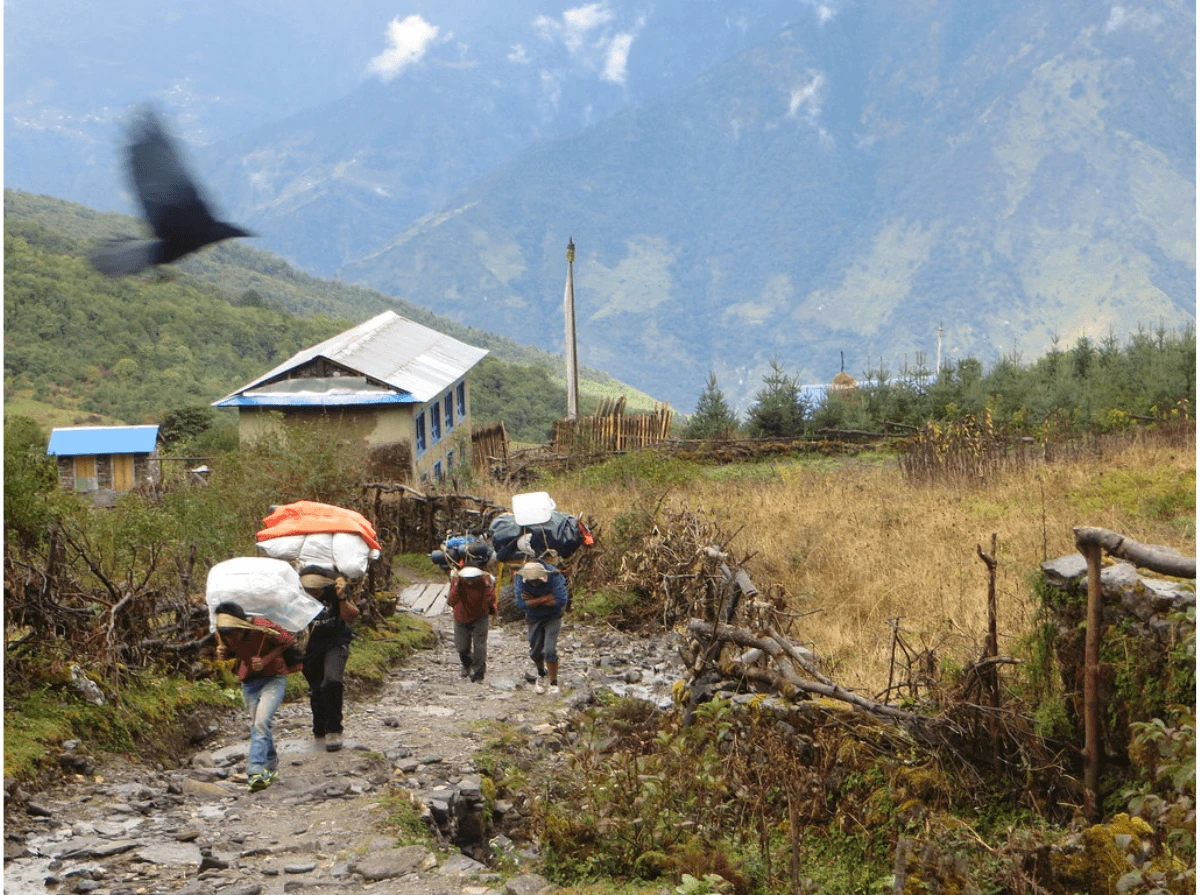
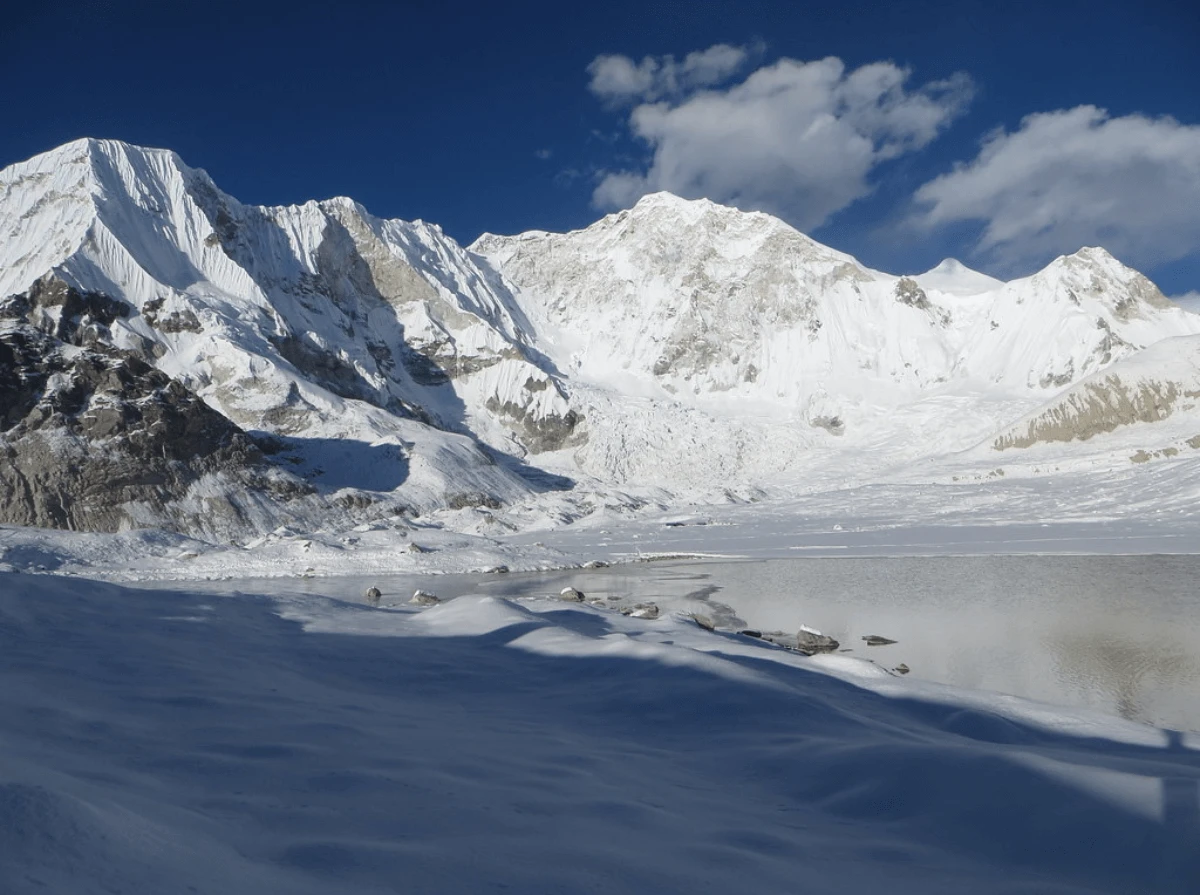
- Explore the remote Hinku Valley and Seto Pokhari, delivering quiet trails and dramatic alpine scenery.
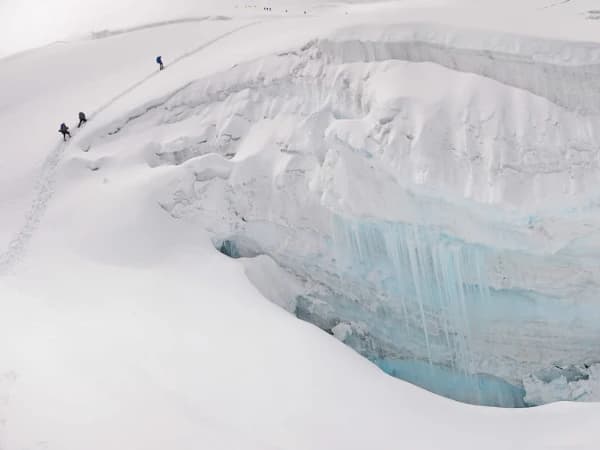
- Climbers experience real mountaineering challenges, including glacier crossings, fixed ropes, steep snow and ice sections, and high camps above 6,400 meters.
- Led by experienced Sherpa guides with full logistical and safety support, the expedition ensures a professional, responsible, and focused Himalayan climbing experience.
Introduction to Baruntse Expedition
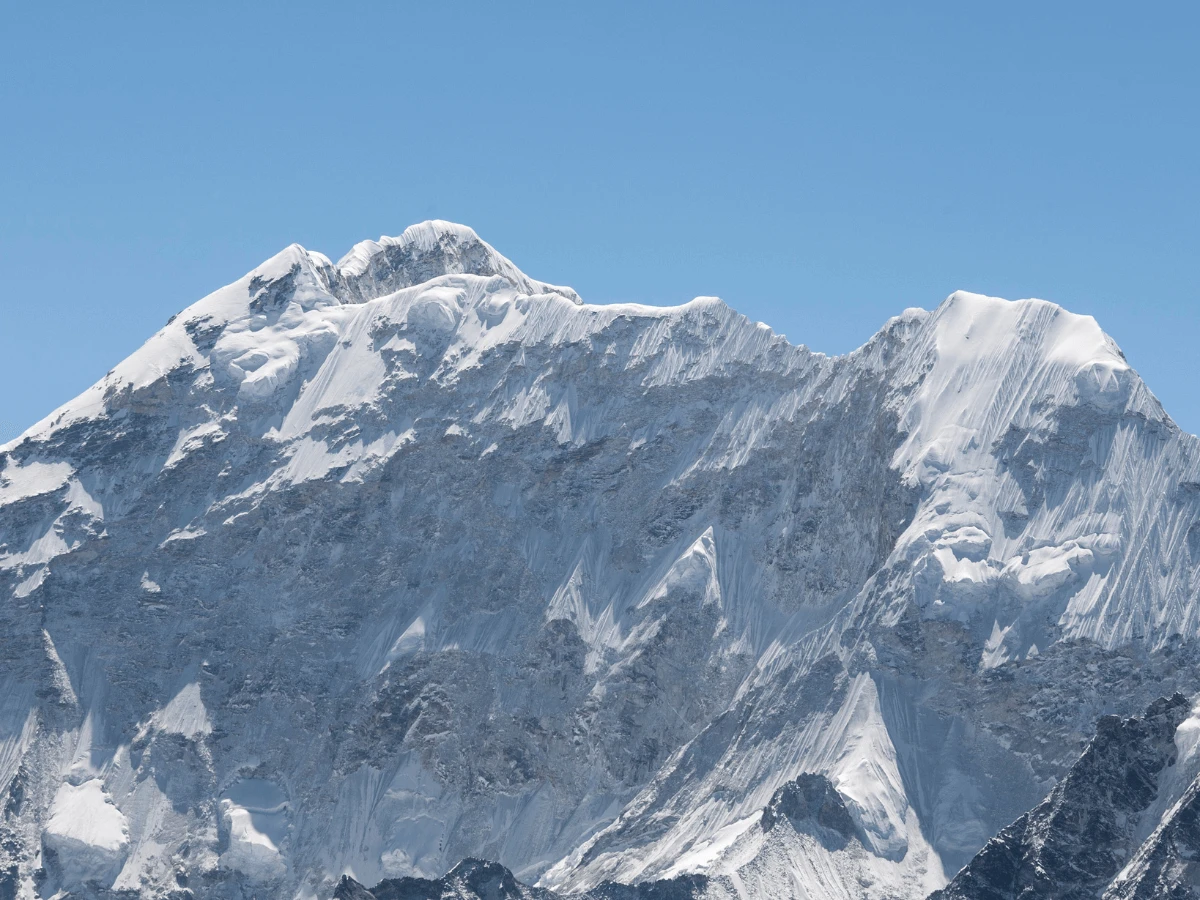
Mount Baruntse is a classic 7,000-meter Himalayan expedition in eastern Nepal, renowned among climbers for its combination of challenge and accessibility. Rising to 7,129 meters (23,389 ft) in the Makalu-Barun region,Baruntse Expedition offers a stepping stone between smaller trekking peaks and the world’s fourteen 8,000-meter giants.
It is often hailed as one of the best preparation climbs for aspiring Everest or eight-thousander climbers. This peak was first summited in 1954 by a New Zealand team, and over the decades, it has become popular for its classical symmetrical beauty and relatively straightforward route.
For mountaineers progressing beyond trekking peaks, Baruntse provides the perfect intermediate challenge. Those who have climbed 6000-meter peaks like Mera Peak Climbing or Island Peak Climbing will find Baruntse to be a natural next objective. It requires more technical skill and endurance than smaller peaks, yet remains achievable for well-prepared climbers under expert guidance.
In short, the Baruntse expedition is ideal for ambitious beginners with proper training and experienced climbers alike, offering an authentic high-altitude adventure without the extreme commitment of an 8000m peak.
Where Is Mount Baruntse Located?
Mount Baruntse lies in the eastern Himalayas of Nepal, nestled between Mount Everest and Mount Makalu. Geographically, it is situated in the Makalu-Barun National Park. Baruntse is bounded by three major glaciers: the Hunku Glacier to its south, the Barun Glacier to the east, and the Imja Glacier to the northwest.
At 7,129 m elevation, Baruntse may be shadowed by its taller neighbours, but it stands as a significant peak in its own right. Its prominence of nearly 1,000 m grants climbers on the summit unparalleled panoramic views of some of the world’s highest mountains – including Everest, Lhotse, Makalu, and even Cho Oyu in the distance. The peak’s location in the Makalu-Barun region means the surrounding terrain is rugged, wild, and less travelled than the busy trails of the main Everest area.
Baruntse Expedition Route & Approach Trek
Most Baruntse expeditions involve a lengthy trek to base camp followed by a climb of the mountain’s South-East Ridge route. There are two main approaches to reach Baruntse Base Camp, both of which journey through spectacular but isolated valleys. Below, we outline the standard route options and what to expect on the approach trek:
Baruntse Expedition Route Map
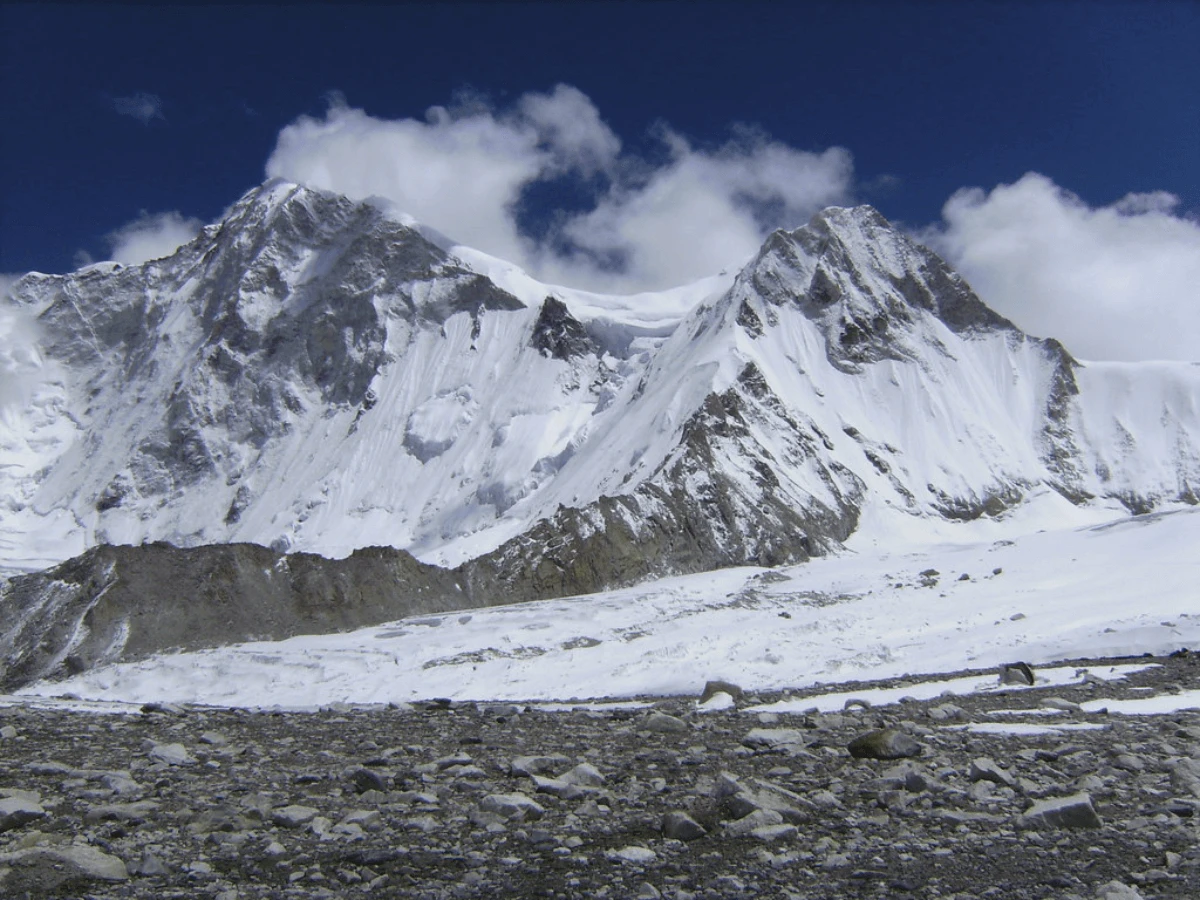
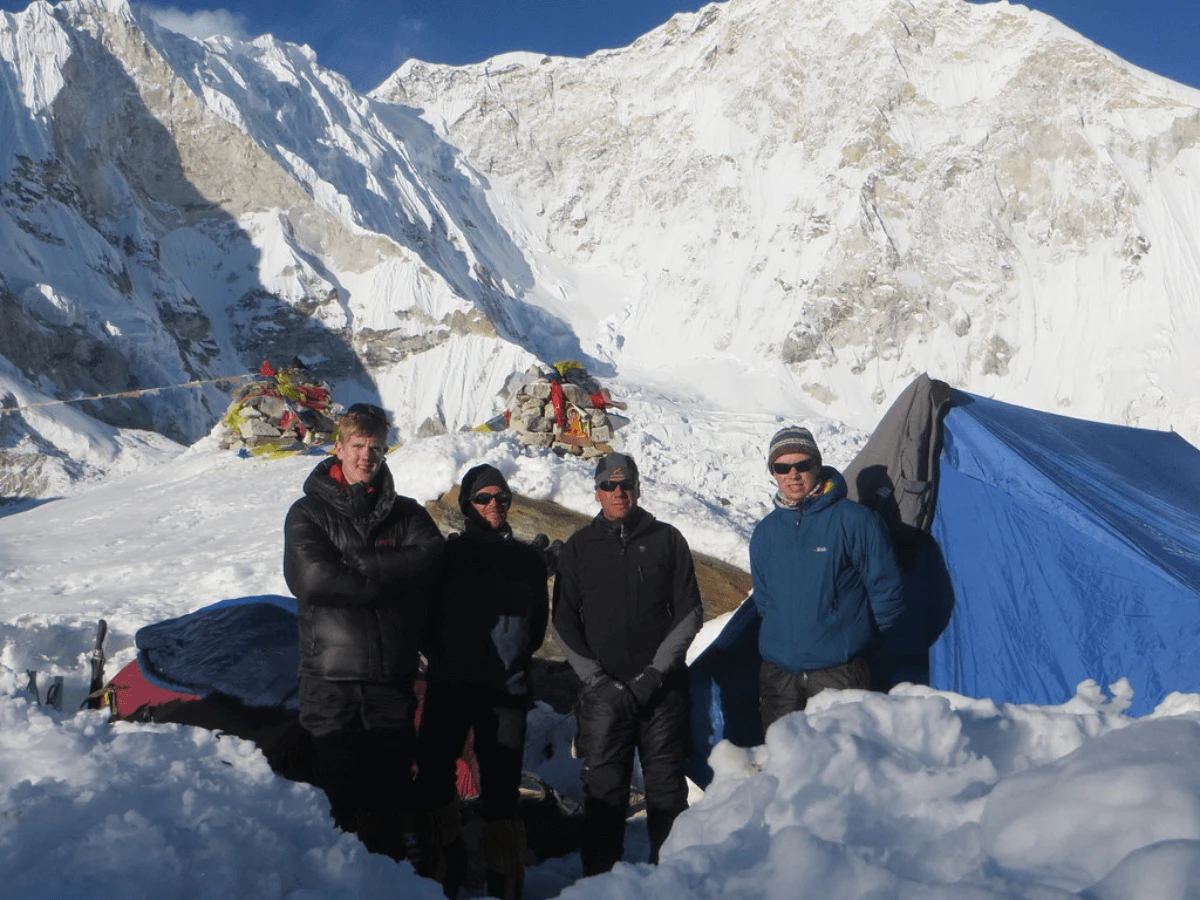
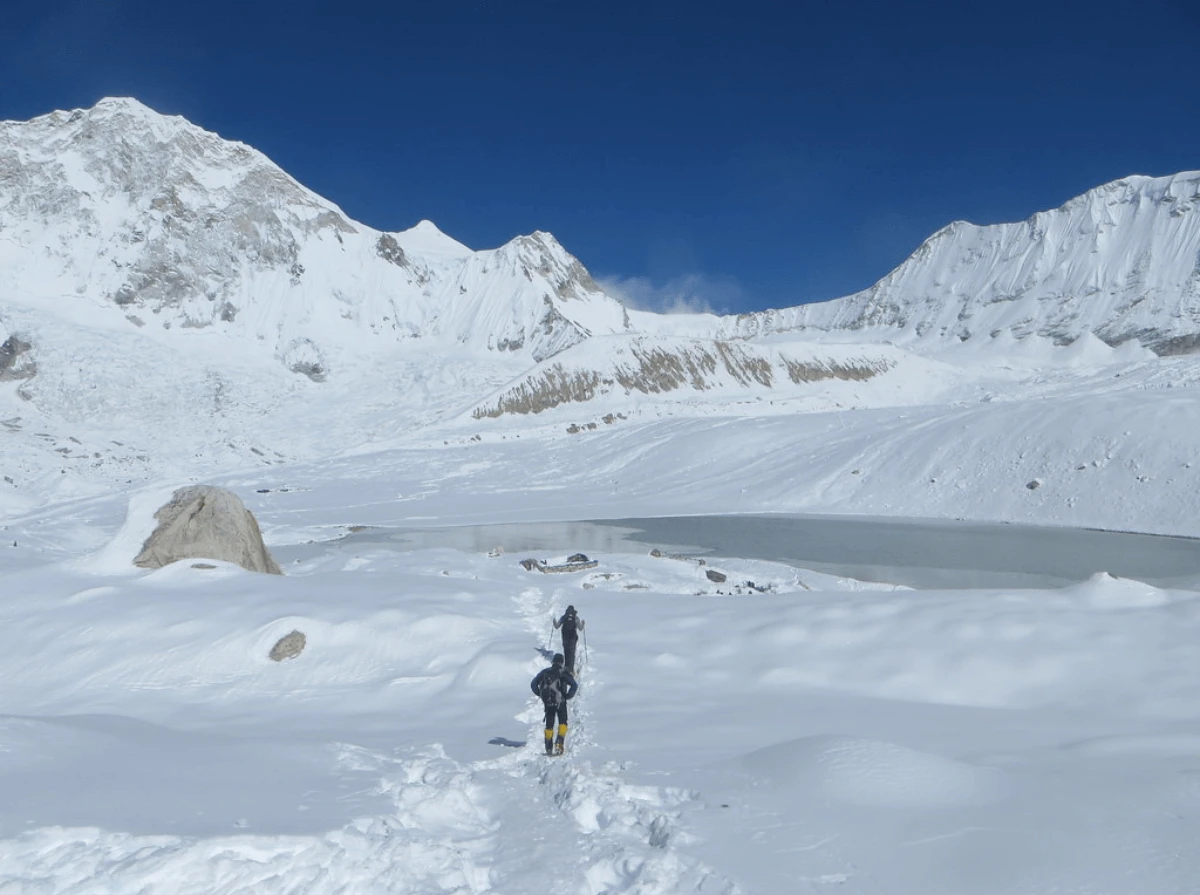
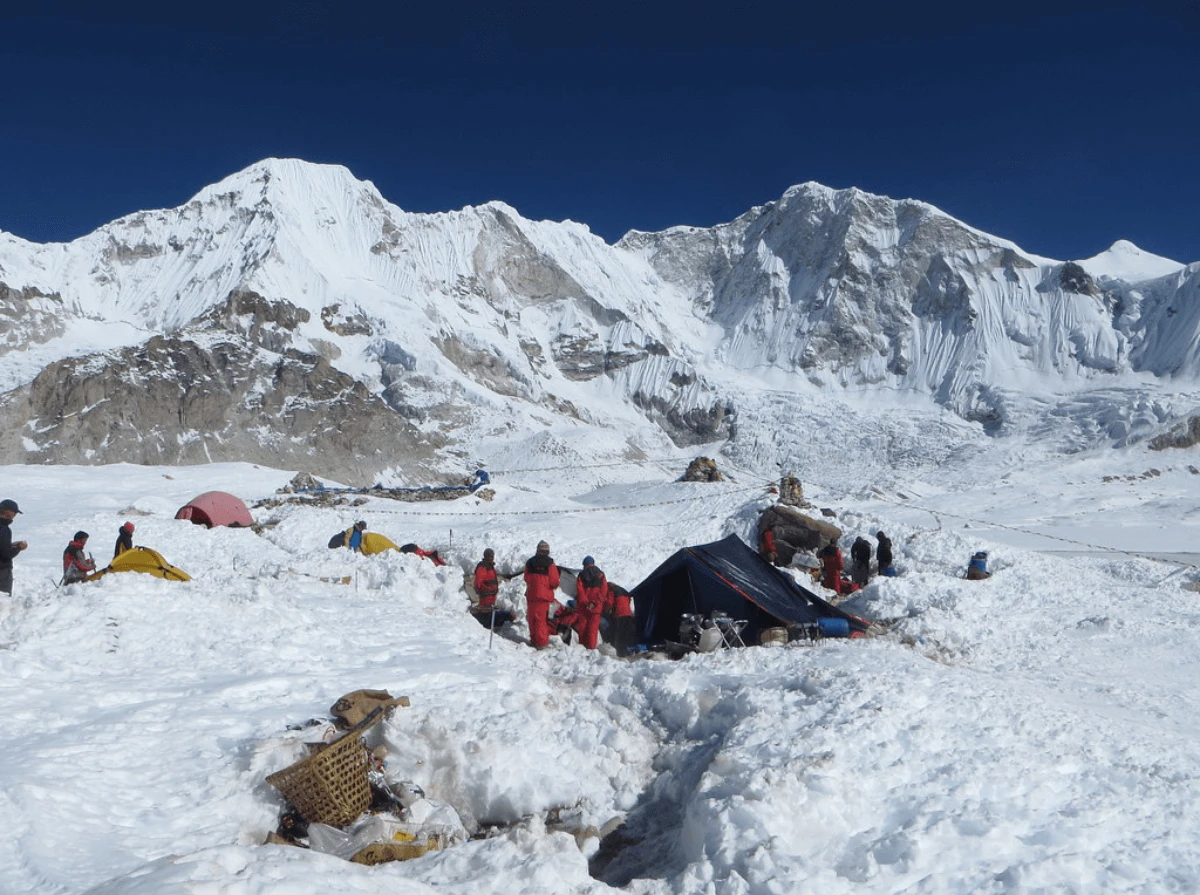
The Baruntse Expedition Itinerary Route begins with a short flight from Kathmandu to Lukla, followed by a 7-10 day trek eastward across high ridges and into the remote Hinku Valley. Baruntse Base Camp is typically established near the head of this valley at approximately 5,400 m elevation. The campsite often sits on rocky moraine or near glacial lakes such as Seto Pokhari (White Lake), just below the Amphu Lapcha Pass and under the shadow of Baruntse’s Westside ridges.
From Base Camp, the climbing route up Baruntse first tackles the westward extension of the mountain. Climbers ascend eastward to gain the West Col and establish Camp 1 on a broad flat section of the glacier.
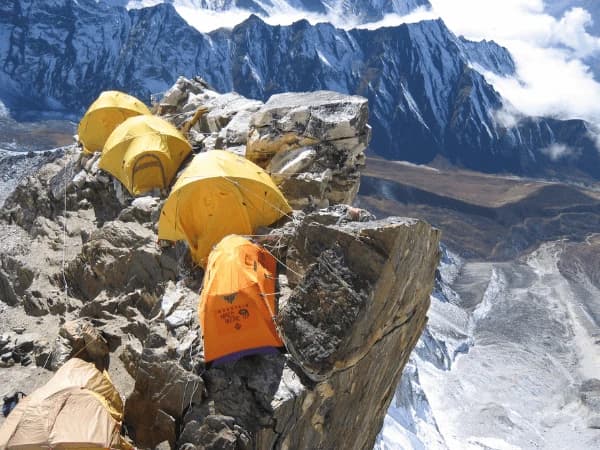
From Camp 1, the path continues onto the South-East Ridge proper. Camp 2 is placed at about 6,400 m on this ridge, typically just below or at the base of Baruntse’s famous ice cliff. Some expeditions also set up an optional Camp 3 (6,800 m) higher up if needed for better summit chances.
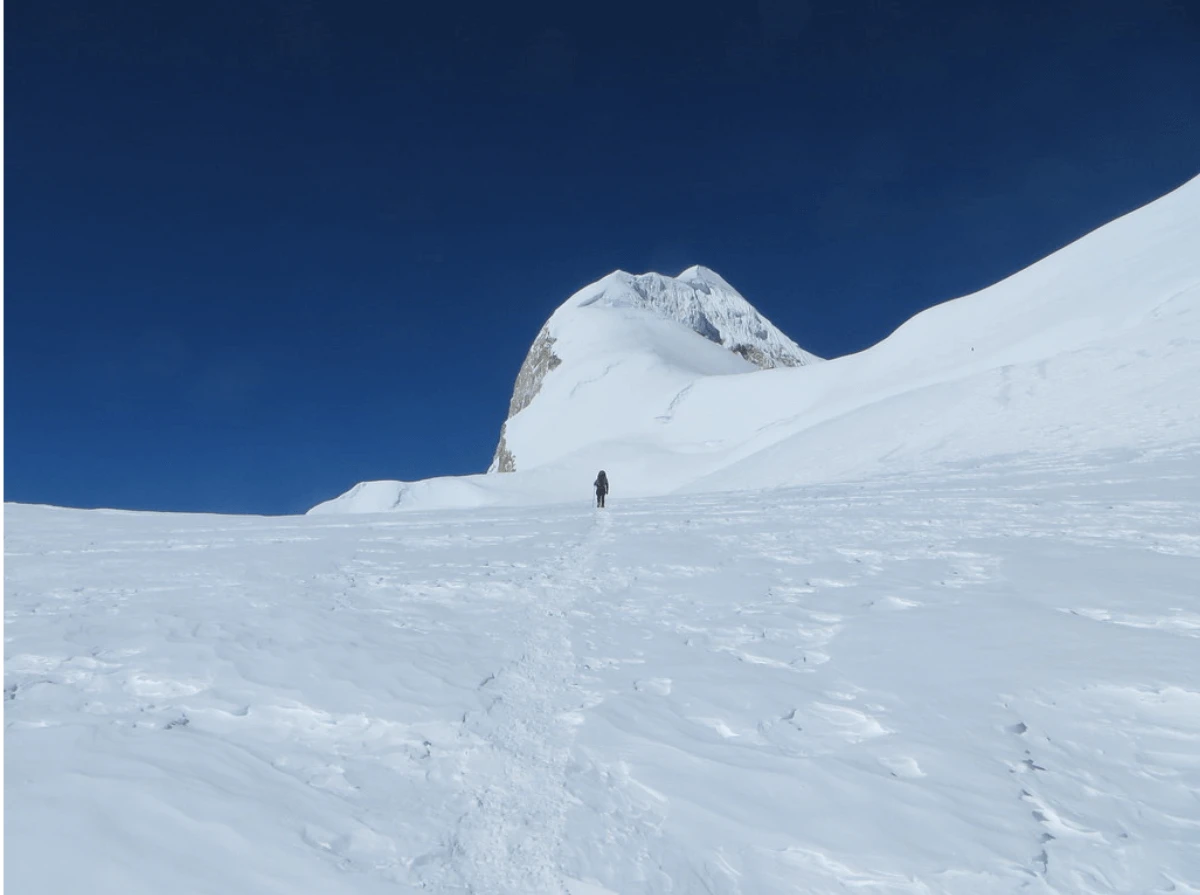
Summit day on Baruntse usually begins well before dawn from Camp 2 (or Camp 3 if used). The route to the summit involves climbing steep snow and ice slopes of up to 50° inclination, including a prominent ice wall around 7,000 m that guards the upper ridge. Fixed ropes are installed on the steepest sections to aid climbers.
After conquering the ice cliff, the final push follows an exposed snow crest leading to the central summit (7,129 m), which is the mountain’s highest point. Reaching the top after 7–10 hours of arduous climbing from high camp, climbers are rewarded with jaw-dropping views that make all the effort worthwhile. The descent retraces the route, usually dropping back to Camp 2 or Camp 1 by the end of summit day.
How Difficult Is the Baruntse Expedition?
Baruntse is often described as an intermediate-level expedition peak – more difficult than trekking peaks like Island Peak, but less extreme than the 8000ers.
However, it would be a mistake to underestimate this mountain: Baruntse’s climb is physically demanding and moderately technical, requiring competency with mountaineering equipment and techniques. Climbers should be prepared for high-altitude extreme weather and some steep ice and snow climbing on the upper mountain.
Technical Challenges on the Baruntse Expedition
The primary technical challenge of Baruntse lies in the upper slopes of the mountain, especially along the South-East Ridge. Several sections of steep 50° ice and snow must be climbed, including the ascent to the West Col and the notorious ice cliff at around 6,800–7,000 m. To tackle these, teams fix ropes along the route.
As an expedition member, you will need to ascend and descend fixed lines with a jumar (ascender) and rappel device, requiring prior knowledge of these techniques. The ice cliff in particular is a near-vertical wall of ice that presents a true test of a climber’s skill and determination– all while fighting the thin air above 22,000 feet.
In addition to steep climbing, the route features crevassed glacier terrain. Crossing ladders or weaving through crevasse fields may be necessary near the West Col and on the approach to Camp 1. Avalanches are a potential hazard on certain slope aspects of Baruntse’s ridges, especially if snowfall has been recent. The steep sections on the summit ridge carry avalanche risk in poor conditions, so part of the challenge is timing the ascent during stable weather and snowpack.
From a technical grading perspective, Baruntse is often rated around “PD+ to AD-” on the alpine scale (Peu Difficile plus to Assez Difficile, i.e., moderately difficult). Climbers must be proficient in using crampons and an ice axe, roped travel, and ascending fixed ropes on both snow and ice. You should be comfortable with techniques like jumaring, abseiling (rappelling), and arresting a fall on steep snow.
In summary, Baruntse’s difficulty is a combination of technical and high-altitude challenges. There are fixed ropes, ice walls, and knife-edge ridges to contend with, demanding solid mountaineering ability. At the same time, the sheer elevation and harsh environment test your fitness and fortitude. With that said, in good conditions and with adequate preparation, Baruntse is achievable – many climbers find it a manageable next step after 6000 m peaks, as long as they come equipped with the necessary skills and determination.
Baruntse Expedition Cost & Package Details
Organising an expedition to Baruntse involves considerable cost, as it requires a full support team, permits, equipment, and logistics over multiple weeks. Baruntse expedition packages offered by Overland Trek Nepal are typically all-inclusive, meaning they cover almost everything from your arrival in Nepal up to the summit attempt and back.
The Baruntse expedition package costs widely in price depending on the operator and inclusions. Overland Trek Nepal offers the Baruntse Expedition cost starting from USD 8999 to 12999per person, depending on the service. The cost covers the climbing permits, Sherpa Guide, Porter, Tent Crew Members, logistics, meals during the trek, and Camp, and other operational costs.
Why Choose a Guided Baruntse Expedition in Nepal with Overland Trek Nepal?
Climbing a 7,000-meter peak is a serious undertaking, and going with an experienced guided expedition can make all the difference. Overland Trek Nepal offers professionally led Baruntse expeditions that maximise your chances of success while prioritising safety and comfort. Here are some compelling reasons to choose a guided Baruntse climb with our team:
- Expert Sherpa Guides and Local Knowledge: Our Baruntse expeditions are led by veteran Sherpa climbers who have intimate knowledge of the mountain’s routes and conditions.
- Safety First Approach: With Overland Trek Nepal, safety is always the top priority. We maintain a high guide-to-climber ratio to ensure each participant gets close attention
- Logistics and Permit Handling: Overland Trek Nepal takes care of all paperwork, permits, and travel arrangements on your behalf.
- High Success Rates & Summit Support: With a guided expedition, your chances of reaching the summit improve significantly. Baruntse may be challenging, but with our strong Sherpa team setting up fixed ropes and camps, you benefit from their hard work and high-altitude capability.
- Experience Building and Training: Overland Trek Nepal’s guides don’t just lead you up the mountain; they also help you become a better mountaineer. We conduct training sessions during the expedition and share our knowledge freely.
- Comprehensive Service and Support: Choosing Overland means joining a well-organised team where all basic needs are well looked after. We provide quality meals and hygienic dining conditions even at base camp, comfortable sleeping arrangements, and amenities like solar charging and heated dining tents where possible.
Lastly, Overland Trek Nepal is a fully licensed, locally-based company. By climbing with us, you are also supporting local Sherpa expertise and communities. Feel free to contact us for more details via email or WhatsApp us at +9779841920870.