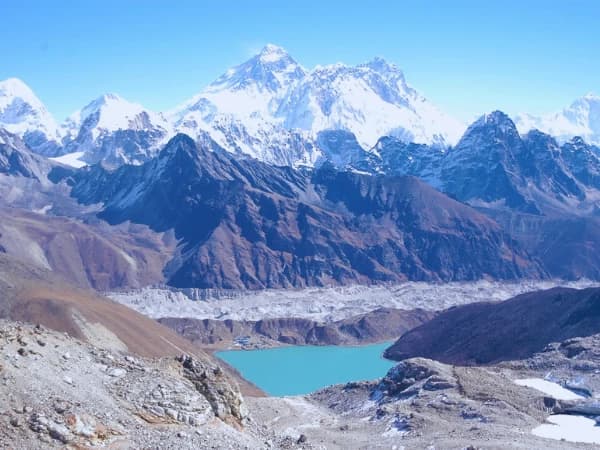
Trekking group at Everest Base Camp (5,364 m) on the 10-day EBC trek
Ama Dablam seen from the Everest Base Camp trail
Trekkers transferring between Ramechhap airport and Kathmandu after the Lukla flight
Trekkers walking from Tengboche to Pangboche on the Everest Base Camp Trek
Trekkers in front of Ama Dablam in the Khumbu region
View More Images

Everest Base Camp Trek - 10 Days

49 reviews in Trip Advisor
Recommended by 99% of travelers
Trip Facts
Duration
10 Days
Trip Grade
Strenuous
Country
Nepal
Maximum Altitude
5,545 m (Kala Patthar)
Group Size
1 - 12 Pax
Starts
Kathmandu
Ends
Kathmandu
Activities
Trekking
Best Time
Mar-May and Sep-Nov

Everest Base Camp Trek 10 Days: overview

The Everest Base Camp Trek 10 Days is a fast, Lukla-to-Lukla trek to Everest Base Camp (5,364 m) and Kala Patthar (5,545 m) for fit trekkers with previous high-altitude experience. It follows the classic route through Namche Bazaar, Tengboche, Dingboche and Lobuche, but has no rest days for acclimatization. With Overland Trek Nepal it costs from USD 1,299 per person, including the Lukla flights, permits, a licensed guide, teahouse lodging and three meals a day.

If you have never trekked above 4,000 m, choose the Everest Base Camp Trek 14 Days instead. It reaches the same places with two acclimatization days and is the itinerary we recommend for most first-time trekkers.

Everest Base Camp Trek 10 Days quick facts

Duration 10 days, Lukla to Lukla (9 days of walking)
Start and finish Kathmandu, with a flight to and from Lukla (2,840 m). In busy seasons flights may run from Ramechhap (Manthali)
Highest point Kala Patthar, 5,545 m
Everest Base Camp 5,364 m, reached on Day 6
Highest overnight Gorak Shep, 5,140 m
Walking per day 4 to 7 hours; 7 to 8 hours on the base camp day
Acclimatization days None
Difficulty Strenuous. No climbing skills needed; previous experience above 4,000 m strongly recommended
Best time March to May and September to November
Accommodation Teahouses, twin sharing
Permits Sagarmatha National Park and Khumbu Pasang Lhamu Rural Municipality (included)
Group size 1 to 12 people
Price From USD 1,299 per person (group rates from USD 999)

Can you do the Everest Base Camp Trek in 10 days?

Yes, you can trek to Everest Base Camp in 10 days if you are fit and already know how your body handles altitude. The 10-day plan walks from Lukla to Gorak Shep in five days, visits Everest Base Camp on Day 6, climbs Kala Patthar on Day 7 and returns to Lukla by Day 9. Because it skips the usual rest days in Namche Bazaar and Dingboche, it is harder on the body than the 12-day or 14-day itineraries, and the risk of altitude sickness is higher.

This is not a shortcut that makes Everest easier. At Overland Trek Nepal we would rather help you choose the right itinerary than sell you the shortest one. If you are not sure, our 12-day or 14-day EBC itinerary gives your body more time to adjust.

Highlights of the 10-day Everest Base Camp Trek

  • Stand at Everest Base Camp at 5,364 meters, beside the Khumbu Icefall.
  • Sunrise from Kala Patthar (5,545 m), the best viewpoint for Mount Everest (8,849 m) on the trek.
  • Views of Lhotse, Nuptse, Ama Dablam, Pumori and Thamserku.
  • The scenic flight to Lukla, one of the most famous mountain airstrips in the world.
  • Namche Bazaar, the Sherpa trading town of the Khumbu, and the monastery at Tengboche.
  • Long suspension bridges over the Dudh Koshi river, including the high Hillary Bridge.
  • Sherpa villages such as Pangboche and Dingboche, and the glacier moraine near Lobuche and Gorak Shep.
  • The full Everest Base Camp experience in only ten days.

Everest Base Camp Trek 10 Days itinerary

The route follows the classic trail from Lukla. The difference is the pace: there are no rest days, so each day moves you closer to base camp while your guide watches how you are coping.

Day Route Overnight altitude Time
1 Fly Kathmandu (or Ramechhap) to Lukla, trek to Phakding 2,610 m 3-4 hrs
2 Phakding to Namche Bazaar 3,440 m 6-7 hrs
3 Namche Bazaar to Tengboche 3,860 m 4-5 hrs
4 Tengboche to Dingboche 4,410 m 5-6 hrs
5 Dingboche to Lobuche 4,910 m 5-6 hrs
6 Lobuche to Gorak Shep, visit Everest Base Camp (5,364 m), back to Gorak Shep 5,140 m 7-8 hrs
7 Sunrise hike to Kala Patthar (5,545 m), descend to Pheriche 4,240 m 6-7 hrs
8 Pheriche to Namche Bazaar 3,440 m 6-7 hrs
9 Namche Bazaar to Lukla 2,840 m 6-7 hrs
10 Fly Lukla to Kathmandu (or Ramechhap) 1,400 m Flight

Walking times are estimates. Weather, trail conditions, your pace and how you feel at altitude can change the daily plan.

How much does the Everest Base Camp Trek 10 Days cost?

The Everest Base Camp Trek 10 Days costs from USD 1,299 per person with Overland Trek Nepal, and less per person for groups.

Group size Price per person
1 person USD 1,299
2 to 3 people USD 1,199
4 to 7 people USD 1,099
8 to 12 people USD 999

What the price includes

  • Round-trip flights between Kathmandu (or Ramechhap) and Lukla, with airport tax and domestic airport transfers.
  • Sagarmatha National Park permit and Khumbu Pasang Lhamu Rural Municipality permit.
  • A government-licensed, English-speaking trekking guide, with his food, lodging, salary, insurance and transport.
  • Teahouse lodging on a twin-sharing basis and three meals a day during the trek, plus a farewell dinner in Kathmandu.
  • Trekking map, first-aid kit, company duffel bag, T-shirt and cap, and all government taxes.
  • Free extras: a Nepali SIM card, trekking poles, a portable oxygen cylinder for emergencies, and a one-hour massage after the trek.

What is not included

  • International flights and the Nepal visa fee.
  • Hotels, lunch and dinner in Kathmandu.
  • Travel insurance with emergency helicopter evacuation.
  • A porter, if you want one: USD 25 per day, shared by two trekkers, carrying up to 20 kg in total.
  • Drinks, hot showers, battery charging, Wi-Fi, tips for your guide and porter, and other personal expenses.

10-Day vs 12-Day vs 14-Day Everest Base Camp Trek

Choosing the right number of days matters more than choosing the shortest package.

  10-Day EBC 12-Day Short EBC 14-Day Standard EBC
Best for Experienced trekkers with very little time Trekkers who want a shorter trip with more breathing room Most first-time EBC trekkers
Pace Fast Moderate to fast Standard
Acclimatization days None Some flexibility Two (Namche and Dingboche)
Physical demand Very high High High but better paced
High-altitude experience Strongly recommended Helpful Helpful but not essential
Recommended for beginners No Case by case Yes

Not sure which one fits you? Tell us your highest altitude so far and your travel dates, and we will compare the itineraries with you.

Is the 10-day Everest Base Camp Trek right for you?

The 10-day itinerary is a good match if you:

  • Have trekked at high altitude before, ideally around or above 4,000 m.
  • Can walk 5 to 8 hours a day, several days in a row, and recover well overnight.
  • Have good cardio fitness and leg strength.
  • Have limited holiday time in Nepal.
  • Will follow your guide's decision to rest, slow down or descend if altitude symptoms appear.

There is no single altitude number that guarantees you will adapt well. What helps most is knowing how your body reacts to sleeping higher each night, cold, lower appetite and long uphill days. A strong marathon runner can still get altitude sickness: fitness helps with the walking, but it does not protect you from altitude.

Itinerary

Trekking times, distances, and elevations in this Everest Base Camp Trek itinerary are approximate and may vary with weather, trail conditions, fitness, and acclimatization.

At Overland Trek Nepal, we keep your trek flexible and comfortable. We can adjust the pace, add rest days, or include scenic side trips such as Nangkartshang Hill and Everest View Hotel based on your needs.

Your comfort, safety, and experience come first. Let us customize your Everest Base Camp adventure your way.

Tour PlanExpand all

Highlights of the day

  • Thrilling flight to Lukla, the starting point of the iconic Everest Base Camp Trek
  • Lukla Airport, one of the most dangerous Airports in the world
  • The trail from Lukla to Phakding is primarily flat and passes through the small settlements of Chheplung, Nachipang, and Koshi Gaun to reach Ghat(2530m).
  • Phakding, a popular rest stop on the way to Everest Base Camp, offers well-facilitated hotels and lodges

Your Everest journey starts with the flight toward Lukla, the main air gateway to the Khumbu region.

After landing and organising the trekking team, you start with a relatively easy first day toward Phakding. The trail passes small settlements, stone walls, mani stones and sections of forest while following the Dudh Koshi Valley.

The first day is intentionally shorter than the days ahead. It gives you time to settle into your trekking rhythm before the steeper climb toward Namche Bazaar.

Max Altitude: 2840 m. Meals: Breakfast, Lunch & DinnerAccommodation: TeahouseDistance: 30 min flight & 3-4 hrs walk

Highlights of the day

  • Trek starts at 8 AM and ends at around 3 PM
  • Trek along the scenic trail through the pine and hemlock forest, passing the Sherpa Villages such as Toktok, Benkar, and Monjo
  • Monjo(2835), the entrance point of Saramatha National Park, where your permits are checked
  • Cross the Hilary Bridge, a popular suspension bridge over the Dudh Koshi River, before reaching Namche
  • Namche Bazaar, a vibrant town on the lap of the Himalayas, offers well-equipped cafes, bars, hotels, ATMs, money exchange, and warm hospitality

Today is one of the first major tests of the trek.

You follow the Dudh Koshi River through villages such as Toktok, Benkar and Monjo. After entering the Sagarmatha National Park area, the trail crosses several suspension bridges before the long climb toward Namche Bazaar.

The well-known Hillary Suspension Bridge is one of the memorable points of the day.

The final ascent to Namche is steady and tiring. Your guide will normally control the pace rather than trying to reach the village quickly.

Namche Bazaar is the main trekking and trading center of the Everest region. You will find lodges, bakeries, cafes, shops, gear stores, and other facilities here.

On longer EBC itineraries, trekkers usually spend additional acclimatization time around Namche. On this 10-day schedule, you continue the following morning.

Max Altitude: 3440 m. Meals: Breakfast, Lunch & DinnerAccommodation: TeahouseDistance: 6-7 hrs

Highlights of the day

  • Trek starts at 8 AM and ends at around 2 PM at Tengboche
  • The trail gradually ascends through the small settlements like Sanasa, Tashinga, and Phungi Thenga
  • Tengboche village, one of the oldest villages on the way to Everest Base Camp, lies on the lap of sacred Mt Khumbila(5761m)
  • Tengboche Monastery, the most significant and oldest monastery in the Khumbu region

The trail out of Namche offers some of the first major Himalayan views of the trek.

On clear days, you may see Everest, Lhotse, Nuptse and the distinctive pyramid of Ama Dablam.

The trail descends toward Phunki Tenga before climbing through forest toward Tengboche.

Tengboche is known for its monastery and its setting beneath some of the best-known peaks in the Khumbu. After arrival, you can rest, take in the mountain scenery and visit the monastery when access and timing allow.

Max Altitude: 3860 m. Meals: Breakfast, Lunch & DinnerAccommodation: TeahouseDistance: 4-5 hrs

Highlights of the day

  • The day starts at 8 AM and ends at around 2 PM
  • Trekking through the flat trail along the Imja Khola, passing the Sherpa villages like Pangboche and Shomare
  • Stunning views of Ama Dablam Peak (6812m) and other surrounding peaks
  • Dingboche, the last Sherpa settlement in the Khumbu region

The trail out of Namche offers some of the first major Himalayan views of the trek.

On clear days, you may see Everest, Lhotse, Nuptse and the distinctive pyramid of Ama Dablam.

The trail descends toward Phunki Tenga before climbing through forest toward Tengboche.

Tengboche is known for its monastery and its setting beneath some of the best-known peaks in the Khumbu. After arrival, you can rest, take in the mountain scenery, and visit the monastery when access and timing allow.

Max Altitude: 4410 m. Meals: Breakfast, Lunch & DinnerAccommodation: TeahouseDistance: 5-6 hrs

Highlights of the day

  • Start your trek at around 8 AM and end at around 2 PM
  • Relatively flat and gradually ascending trail offering scenic natural landscapes and mountain peaks
  • Close view of Lobuche East(6119m) and Lobuche West(6145m)
  • Lobuche, the small village near the Khumbu Glacier, offers a few teahouses
  • Along the way, witness the memorials and monuments dedicated to climbers who lost their lives during the Everest expeditions

The route continues into a much more exposed alpine environment.

You trek toward Thukla and climb past memorials dedicated to climbers who lost their lives in the Everest region.

From here, the trail continues toward Lobuche.

The distance may not look intimidating on a map, but altitude changes the effort. Above 4,500 meters, an easy walking pace at sea level can feel very different.

Walk steadily, avoid racing other trekkers, and keep communicating with your guide.

By Lobuche, you are almost at 5,000 meters and only one trekking day from Everest Base Camp.

Max Altitude: 4910 m. Meals: Breakfast, Lunch & DinnerAccommodation: TeahouseDistance: 5-6 hrs

Highlights of the day

  • Trek starts at 8 AM and ends at around 4 PM
  • Trekking trail above 5,000 m, along the Khumbu Glacier and moraines
  • Gorakshep, the final stop on the Everest Base Camp Trek, offers a few teahouses with limited facilities.
  • Stunning views of towering mountain peaks such as Mt Everest(8848.86m), Lhotse(8516m), Lopuche Peak(6119m), Nuptse(7861m), Pumo Ri(7161m), Khumbutse(6636m), Changtse(7534m), and many more
  • Everest Base Camp at 5364m is the ultimate destination of this Everest Base Camp Trek.

This is the main destination day of the trek.

You leave Lobuche and continue across rough glacial terrain toward Gorak Shep, the final settlement before Everest Base Camp.

After reaching Gorak Shep, you leave unnecessary gear at the lodge and continue toward EBC.

The trail follows the Khumbu Glacier and moraine system. The ground can be uneven, and the altitude makes the walk slower than the distance suggests.

Eventually, you reach Everest Base Camp at 5,364 meters.

During the main climbing seasons, the area can be especially active with expedition teams. Outside expedition periods, the atmosphere is quieter, but the surrounding glacial landscape remains dramatic.

You spend time at base camp before returning to Gorak Shep for the night.

Everest Base Camp itself does not provide the classic full summit view of Everest. That is one reason Kala Patthar is included the following morning.

Max Altitude: 5364 m. Meals: Breakfast, Lunch & DinnerAccommodation: TeahouseDistance: 7-8 hrs

Highlights of the day

  • The day starts at around 6 AM and ends at around 3 PM
  • Early morning hike to Kala Patthar, the popular viewpoint for a close-up view of Mount Everest
  • 360-view of mountain peaks, including Mt. Everest(8848.86m), Lhotse(8516m), Nuptse(7861m), Ama Dablam(6812m).
  • Returning journey towards Pheriche, following the trail along the Khumbu Glacier

You start early for the climb to Kala Patthar.

This is usually the highest point of the 10 Day Everest Base Camp Trek and one of the most demanding short climbs of the itinerary.

From Kala Patthar, weather permitting, you get a wide Himalayan panorama with views toward Mount Everest, Nuptse, Lhotse, Pumori, and surrounding peaks.

After returning to Gorak Shep, you begin the descent.

You retrace the trail through Lobuche before continuing lower toward Pheriche.

Sleeping at a lower altitude after several nights high in the Khumbu often feels noticeably different.

Max Altitude: 5550 m. Meals: Breakfast, Lunch & DinnerAccommodation: TeahouseDistance: 6-7 hrs

Highlights of the day

  • The trek starts at 8 AM and ends at around 3 PM
  • The trail is almost flat and descends through the various small Sherpa settlements
  • Pangboche, the Khumbu region's oldest village, provides deep insights into the area's history and culture.
  • Tengboche, a tranquil mountain village, is renowned for the famous Tengboche Monastery, which serves as the spiritual hub of the Everest Region.
  • Namche Bazaar, a lively Sherpa town situated above 3000 meters, provides trekkers with comfort through its high-quality amenities, including hotels, lodges, coffee shops, bars, pubs, and banks.

Continue down through the upper Khumbu toward Pangboche and Tengboche.

Although much of the return journey loses altitude, the trail is not entirely downhill. There are still climbs and rolling sections.

By the time you return to Namche Bazaar, thicker air, warmer temperatures and better facilities usually make the village feel especially comfortable.

Enjoy your evening in Namche and rest after several demanding days above 4,000 meters.

Max Altitude: 3440 m. Meals: Breakfast, Lunch & DinnerAccommodation: TeahouseDistance: 6-7 hrs

Highlights of the day

  • The trek starts at around 8 AM and ends at around 3 PM
  • The trail descends through the dense forest, which eventually joins the flat trail along the village's sand terrace farmlands.
  • Opportunity to immerse yourself in local Sherpa culture while passing through several villages like Phakding and Monjo
  • Lukla, a lively mountain town located at 2,860 meters above sea level, marks the endpoint of the Everest Base Camp Trek.

Your final walking day retraces the lower Everest route.

You descend from Namche, cross the suspension bridges above the Dudh Koshi, and pass Monjo, Phakding, and several smaller settlements.

The trail eventually climbs gently toward Lukla.

After arriving, you can relax with your trekking team and enjoy your final evening in the Everest region.

Max Altitude: 2840 m. Meals: Breakfast, Lunch & DinnerAccommodation: TeahouseDistance: 6-7 hrs

Highlights of the day

  • Lukla Airport, elevated at 2860m, is one of the highest-altitude airports in the world
  • Scenic flight from Lukla to Kathmandu, witnessing the stunning views of mountains, landscapes, and valleys
  • Kathmandu, the capital of Nepal, provides historical and cultural significance to visitors

Weather permitting, you take your scheduled flight from Lukla back toward Kathmandu or follow the seasonal flight arrangement in operation at the time of your trip.

After arrival, our team will assist with your transfer.

Your Everest Base Camp Trek 10 Days is complete.

Max Altitude: 1400 M. Meals: Breakfast & DinnerAccommodation: N/ADistance: 35 Min Flight
Route Map
Everest Base Camp Trek 10 Days Trip itinenary Map
Altitude Chart
Everest Base Camp Trek 10 Days high altitude-chart map
Cost Details
Required Permits & Documents
  • Your PP Size Photo 2 Copy
  • Your Passport & Nepal Visa Copy
  • Everest National Park entry permits
  • Khumbu Region Municipality Entry Permit Fee.
  • TIMS Card (Trekkers Information Management System)
Meals & Snacks
  • Three meals a day (Breakfast, Lunch, Dinner)
  • Fresh Seasonal Fruits as a dessert after Dinner
  • Farewell dinner in Kathmandu at the end of the trek.
Accommodation
  • Tea house/ Local Guest House, Twin Sharing basis during the trek
Staffs & Crew Member
  • Government-licensed holder, very good English speaker, Overland Trek Nepal experienced trekking Guide/leader.
  • All expenses ( Accommodation, Food, Salary, Transport, Insurance, Medication) for all staff and crew members
Transportation
  • Domestic Airport Pickup & Drop
  • Domestic flight ticket round trip and airport tax, Kathmandu/Ramechhap to Lukla and back to Kathmandu/Ramechhap
Others
  • Trekking Map
  • All government and local taxes
  • Company Duffel bag, t-shirt, & Cap.
  • Some Normal & emergency First aid Medical Kit
  • Overland Trek Nepal trekking appreciation certificate after the successful trek
  • Rescue operation arrangements in case of complicated health conditions (funded by travel insurance).
Excludes
  • Personal Equipment
  • Nepal entry visa fee, International airfare
  • Tea, coffee, any liquid, Things during the trek
  • Tips for guide and porter (Tipping is expected)
  • Travel medical insurance and emergency evacuation cost
  • Lunch and dinner during your stay in Kathmandu & Pokhara
  • Any other expenses that are not mentioned in the price are included in the section
  • Porter Services per day: 25 USD (2 clients, 1 porter, and will carry a total of 20kg)
  • Personal expenses such as Alcoholic beverages, hot shower, water bottle, Hot & cold drinks, hot water, battery charge, donation, etc
Complimentary
  • Nepal SIM Card
  • Trekking Pole/ Stick
  • Overland Trek Nepal Company T-Shirt
  • One Portable Oxygen Cylinder (for emergencies)
  • 1 Hour full-body Trekker’s massage after back from the trek
Add-ons & Options

Customize Your Everest Base Camp Trek

Make your 10-Day Everest Base Camp Trek more comfortable, flexible, and memorable with our handpicked add-ons. Choose only the services you need when booking.

Kathmandu Hotel Upgrades

Including breakfast

  • 3-Star: Single $35 | Double $45
  • 4-Star: Single $60 | Double $70
  • 5-Star: Single $170 | Double $210

Everest View Hotel Upgrade

Enjoy a premium Himalayan stay with stunning Everest views.

  • Single: $180
  • Double: $249
  • Buffet Breakfast: $27/person
  • Buffet Lunch: $35/person
  • Dinner: $39/person

Kathmandu Sightseeing

Private sightseeing with a professional guide covering Pashupatinath, Boudhanath, Swayambhunath, and Kathmandu Durbar Square.

  • Private Car (1–2 pax): $80
  • Scorpio (up to 6 pax): $90
  • Hiace (up to 12 pax): $120
    Entrance fees are paid separately.

Helicopter Upgrades

Save time, avoid flight disruptions, and enjoy spectacular Himalayan views.

  • Kathmandu–Lukla Sharing: $600
  • Kathmandu–Lukla Private: $2,500 (4–5 pax)
  • Lukla–Kathmandu Sharing: $500
  • Lukla–Kathmandu Private: $2,500
  • Gorakshep–Lukla: $800
  • Gorakshep–Kathmandu: $1,500
  • Gokyo–Lukla: $1,300
  • Gokyo–Kathmandu Sharing: $1,800
  • Gokyo–Kathmandu Private: $4,500
  • Everest View Hotel–EBC–Lukla: $1,300 sharing
  • Everest View Hotel–EBC–Kathmandu: $1,500 sharing

Transportation

Ramechhap Transfer – Peak Season

  • Sharing Hiace: $25/person one way
  • Private Car: $130
  • Private Jeep: $150
  • Private Hiace: $170
  • Private Coaster: $250

Salleri–Thamdanda Private Jeep: $500
Kathmandu Airport Transfer: $15 one way

Porter & Trekking Gear

  • Porter: $25/day — carries up to 20 kg
  • Down Jacket Rental: $3/day
  • Sleeping Bag Rental: $3/day

Local SIM Card

  • $10 including local number + 10GB data
  • Network coverage varies by location.
Dates & Availability
Select the date
Nov 2026
Dec 2026
Jan 2027
Feb 2027
Day & Departure Dates
Status
Price
Day & Departure Date
Sunday - Tuesday22 Nov, 2026 - 01 Dec, 2026
Trip Status
Guaranteed
Price
US$1299
Day & Departure Date
Sunday - Tuesday29 Nov, 2026 - 08 Dec, 2026
Trip Status
Guaranteed
Price
US$1299
Day & Departure Date
Monday - Wednesday30 Nov, 2026 - 09 Dec, 2026
Trip Status
Guaranteed
Price
US$1299

Our 10-day Everest Base Camp Trek begins with a fixed morning departure to ensure the best weather conditions for flights and smooth coordination with the day’s trekking schedule. However, we understand that every traveler’s needs are different.

At Overland Trek Nepal, your comfort is our priority. If our standard departure time doesn’t suit you, we’re happy to customize the departure schedule to match your preferences — whether it’s an alternative flight, private transfer, or a delayed start.

We believe in flexibility, personalized service, and creating happy memories, which is why trekkers choose us time and again for their Himalayan adventures.

Let us know your ideal schedule — we’re here to make your Everest dream come true!

Essential Information

Altitude safety on a 10-day Everest trek

A 10-day EBC trek is possible, but it is more demanding than the standard itinerary because the climb is compressed and there are no acclimatization days. Previous altitude experience helps you decide, but it cannot protect you from altitude illness. Your health always comes before the itinerary.

Everest Base Camp is not a technical climb. You do not need ropes or mountaineering skills on the trekking trail. The challenge is altitude, walking many days in a row, cold, and short recovery time. You go from Lukla at 2,840 m to sleeping at Gorak Shep at 5,140 m in five days, which is a big change for the body.

Warning signs to tell your guide about right away

  • A headache that does not go away
  • Nausea or vomiting
  • Dizziness or unusual weakness
  • Strong loss of appetite
  • Trouble walking normally or confusion
  • Shortness of breath while resting
  • Tiredness that keeps getting worse

Mild discomfort does not always mean the trek is over, but worsening symptoms must be taken seriously. Your guide may ask you to rest, stop going higher or go down. The schedule never has priority over your health.

What happens if you cannot continue

If it is not safe to go higher, the options are to stop and rest, descend to a lower village, change the itinerary, see a doctor at the Pheriche health post, or arrange an evacuation if it is medically needed. A helicopter rescue is very expensive, so travel insurance that covers evacuation up to 6,000 m is essential. We coordinate the rescue with your insurer; the cost is paid by you or your insurance.

How difficult is the 10-day Everest Base Camp Trek?

The 10-day Everest Base Camp Trek is strenuous. There is no technical climbing, but you reach more than 5,000 m after five days of steady ascent. The main challenges are:

  • Altitude. You sleep at Namche (3,440 m), Tengboche (3,860 m), Dingboche (4,410 m), Lobuche (4,910 m) and Gorak Shep (5,140 m) on consecutive nights. Less oxygen slows your walking and affects sleep, appetite and recovery.
  • Back-to-back days. There is no rest day between hard days, so tiredness builds up.
  • Terrain. Stone steps, rocky paths, suspension bridges, forest trails and glacial moraine, with steep climbs and descents.
  • Cold. Mornings and nights at Lobuche and Gorak Shep are well below freezing.

How to prepare for the 10-day EBC trek

Arrive in Nepal already fit. Start training at least 2 to 3 months before the trek, depending on your current fitness.

  • Long uphill hikes with a loaded daypack, and stair climbing or hill repeats.
  • Squats, lunges, step-ups and core exercises.
  • Steady cardio such as running, cycling or swimming.
  • Back-to-back hiking days. Walking 8 hours once does not show how you will feel when you must walk again the next morning.

Train for endurance, not speed. At altitude a steady, controlled pace works better than raw fitness. If you can, do a shorter trek at altitude first so you learn how your appetite, sleep and head react up high.

Lukla flights and weather delays

Flights to and from Lukla depend on the weather. Cloud, wind and poor visibility can delay or cancel them. In the busy spring and autumn seasons, flights often run from Manthali Airport in Ramechhap instead of Kathmandu, which means a 4 to 5 hour drive from Kathmandu very early in the morning.

If a flight is cancelled, you may wait for a later flight, fly the next day, change the trekking schedule or take a helicopter at extra cost. No company can guarantee the weather at Lukla. Keep at least one or two spare days in Nepal after the trek before your international flight. On a 10-day trek, a single delay can use up the time you planned to save.

Permits for the Everest Base Camp Trek

Everest Base Camp is in the Khumbu region inside Sagarmatha National Park. You need two permits, and both are included in our price:

Permit Cost for foreign trekkers Where it is checked
Sagarmatha National Park entry permit NPR 3,000 + 13% VAT Monjo, before Namche Bazaar
Khumbu Pasang Lhamu Rural Municipality permit NPR 2,000 Lukla

A TIMS card is no longer needed in the Khumbu because the local municipality permit has replaced it. Fees are set by the authorities and can change, so we confirm the current rules before your departure. Please send us a copy of your passport and visa and two passport photos before the trek.

Accommodation and meals on the EBC trail

You stay in teahouses, small family-run mountain lodges. Rooms are simple twin rooms with beds and bedding. Higher up, at Lobuche and Gorak Shep, toilets are shared and rooms are cold. Namche Bazaar has the widest choice of lodges.

The menus are bigger than most people expect: dal bhat, fried rice, noodles, pasta, soups, potatoes, momos, eggs, porridge, pancakes, Tibetan bread, tea and hot drinks. At high altitude, simple carbohydrate-rich meals are easier to eat. Your appetite may drop, but eating enough is important on a fast schedule.

Bring a reusable bottle and a water filter or purification tablets instead of buying plastic bottles. Most lodges charge extra for battery charging, Wi-Fi and hot showers, and these get less reliable higher up. Carry a power bank and do not count on mobile data in the upper Khumbu.

Best time for the Everest Base Camp Trek 10 Days

The best time for the 10-day Everest Base Camp Trek is spring (March to May) and autumn (September to November). On a short itinerary, reliable weather matters even more because you have few spare days for flight delays.

Season Months What to expect
Spring March to May Mild temperatures, good views, long days and rhododendron forests in bloom. Busy during the Everest climbing season
Autumn September to November Clear skies and sharp mountain views. The busiest season, so book Lukla flights early for October and November
Winter December to February Very cold nights, snow and ice risk, short days. Only for trekkers used to cold mountain conditions
Monsoon June to August Cloud, rain and frequent Lukla flight delays. Not recommended on a tight schedule

Why choose Overland Trek Nepal for a fast Everest Base Camp Trek?

A short itinerary needs more than removing days from a longer trek. It needs clear planning, honest advice and good communication between you and your guide.

  • Experienced local guides. Our licensed guides know the Khumbu well. They manage the daily pace, book lodges, watch how each trekker is coping and change the plan when needed.
  • Honest advice. We do not sell the 10-day route to everyone. If your experience suggests you need more acclimatization, we will tell you.
  • Based in Nepal. We work directly with local staff and suppliers, so we get up-to-date trail and flight information.
  • Flexible planning. Private departures, other dates, porters, hotel upgrades, extra nights, helicopter options and longer EBC itineraries are all possible.
  • Emergency support. Guides carry first-aid supplies and a portable oxygen cylinder and stay in touch with our office throughout the trek.
  • Responsible trekking. Use reusable bottles, carry out your rubbish, respect monasteries and ask before photographing people.

Check your 10-day Everest Base Camp Trek dates

If you have trekked at altitude before, can handle long days back to back and have limited time in Nepal, the Everest Base Camp Trek 10 Days gives you the full EBC experience on a fast, focused schedule.

Before you book, tell us your previous trekking experience, the highest altitude you have reached, your dates, group size and whether you need a porter. Our team will help you decide whether the 10-day itinerary is right for you or whether a longer trek would suit you better.

Check Availability | Send an Inquiry | Talk to an Everest Trek Expert via email or WhatsApp us at +9779841920870

FAQs

The classic Everest Base Camp Trek usually takes around 12-14 days, depending on your pace and chosen itinerary.

Yes, Everest Base Camp is open year-round, but the best time to visit is during spring (March to May) and autumn (September to November).

Yes. A fit and experienced trekker can complete the main Lukla–Everest Base Camp–Lukla route in ten days. The schedule is demanding because it does not include dedicated acclimatisation days. Previous high-altitude trekking experience is strongly recommended, and your guide may change the plan if altitude symptoms or weather create safety concerns.

We do not recommend this itinerary for most beginners. The trek gains altitude quickly and reaches more than 5,000 meters without full acclimatisation days. A first-time high-altitude trekker will usually be better served by a longer Everest Base Camp itinerary that allows more time for adaptation and recovery.

The highest point reached is Kala Patthar at 5,545 meters. This viewpoint offers stunning views of Mount Everest (8,848.86 meters) and nearby peaks like Lhotse (8,516 meters) and Nuptse (7,861 meters).

Yes, altitude sickness is a main concern on this brief EBC trek. The rapid ascent increases the risk of symptoms such as headache, nausea, dizziness, and fatigue.

Yes, 10-day EBC treks include a helicopter return from Gorak Shep or Pheriche to Lukla or Kathmandu. This not only saves time but also avoids the strenuous multi-day descent.

It depends on the season you choose and the altitude. However, the temperature in the Everest region at the time is usually between 5°C and 15°C at lower altitudes, and at night, it ranges between -5°C and -15°C at higher altitudes.

Ten days can be enough for an experienced trekker following a fast itinerary. It is not the ideal duration for everyone. Most first-time high-altitude trekkers benefit from a longer schedule with dedicated acclimatisation days. Choose ten days because it matches your experience, not only because it is faster.

The trek is strenuous rather than technically difficult. You do not normally need climbing skills, but you must walk for several hours on consecutive days while gaining significant altitude. Cold conditions, reduced oxygen, uneven terrain and limited recovery time make the 10-day schedule harder than standard EBC itineraries.

No. This specific itinerary does not include a dedicated rest or acclimatisation day in Namche Bazaar or Dingboche. That is why it is aimed at experienced trekkers. If you want dedicated acclimatisation time, consider the longer 12-day or standard 14-day Everest Base Camp itinerary instead.

The current package starts from US$1,299 for one traveller, with lower per-person rates for larger groups. The final price depends on group size, travel date and optional upgrades. Always check the confirmed inclusion list and current departure price before paying your booking deposit.

Lukla flights depend heavily on weather and visibility. A cancelled flight may be rescheduled, or other transport options may be discussed depending on availability and conditions. Because delays can affect a short itinerary quickly, we strongly recommend keeping extra time in Nepal after your planned trekking schedule.

Yes. You should have travel insurance that explicitly covers trekking to the maximum altitude of the itinerary and emergency helicopter evacuation where medically necessary. Basic policies often have altitude exclusions, so check the exact wording and coverage limit rather than assuming that standard travel insurance is sufficient.

Spring, from March to May, and autumn, from September to November, are generally the best seasons for the Rapid Everest Base Camp Trek 10 Days.

For further information
Please feel free to speak with our travel expert.
Gautam Dhakal
Mr. Gautam Dhakal
[email protected]
You May Also Like
Gokyo Lake View from Renjola
Everest’s Turquoise Lakes
Price From
US$1499
Explore
Everest Base camp Trek by Overland
10% off for Beginner
Price From
US$1499US$1699
Explore
Everest Base Camp Short Trek
Price From
US$1299
Explore
Need Help? Call Us.+977 9851138871