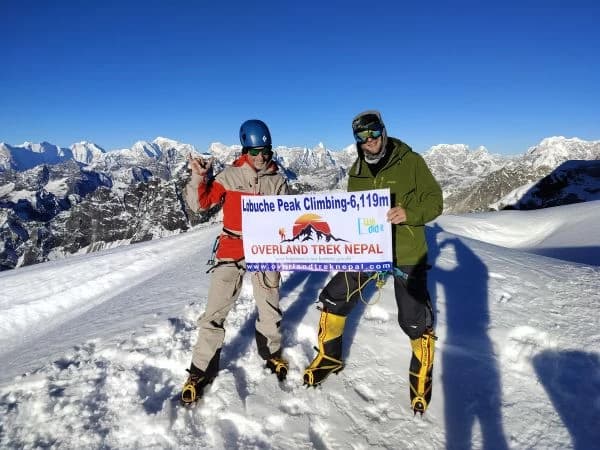
Island Peak climbing is a high-altitude mountaineering expedition to the summit of Island Peak (Imja Tse) at 6,189 meters (20,305 feet) in Nepal's Khumbu region, situated directly south of Lhotse in the heart of the Everest massif. Officially named Imja Tse by the Nepal Mountaineering Association (NMA) and classified as a trekking peak, Island Peak is one of the most popular technical summit objectives in Nepal, attracting over 1,000 climbers each season. The 19-day route is unique in combining the full Everest Base Camp trek, including Kala Patthar (5,550m) and EBC itself (5,364m), with a technical summit via the Kongma La Pass (5,535m), Chukhung Valley, and Island Peak's famous headwall, a steep 50-degree ice and snow face requiring fixed ropes, crampons, and a jumar. From the summit, climbers stand face-to-face with Lhotse (8,516m), the world's fourth-highest mountain, along with Everest, Nuptse, Makalu, Baruntse, and Ama Dablam.
Why Climb Island Peak with Everest Base Camp?
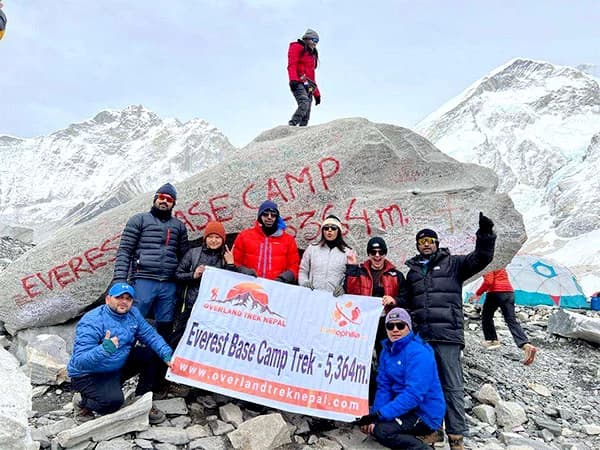
- Two iconic achievements in one expedition. The 19-day itinerary gives you Everest Base Camp (5,364m), Kala Patthar sunrise (5,550m), AND a technical 6,000m summit. Most climbers take two separate trips to achieve what this single package delivers.
- Closest summit to Lhotse in the world, Island Peak sits at the base of Lhotse's south face. The summit view of Lhotse at arm's reach is unlike anything achievable from any other trekking peak in Nepal.
- Ideal technical step-up from EBC. If you've done the Everest Base Camp trek and want the next level of Himalayan experience, Island Peak is the natural progression, same region, same trails, same Sherpa culture, with a genuine mountaineering summit added.
- Moderate technical challenge, achievable with training. Unlike full expedition peaks, Island Peak's technical section (the headwall) can be managed safely by fit beginners with proper guide support and pre-climb training.
- Autumn 2026 window: September 15 – November 20. Post-monsoon conditions bring stable weather, clear skies, and optimal summit conditions. October is the single best month.
- 360-degree Himalayan panorama. Everest, Lhotse, Nuptse, Makalu, Baruntse, Cho Oyu, Ama Dablam, Pumori, all visible simultaneously from the summit at 6,189m.
What is Island Peak? Mountain Facts
Island Peak gets its name from its appearance; when viewed from Dingboche village, the peak appears as an island of rock and snow rising from a sea of glaciers. It was first climbed in 1953 by a British team as a training peak before the first Everest ascent.
|
Fact |
Detail |
|
Official Name |
Imja Tse |
|
Summit Altitude |
6,189 m / 20,305 ft |
|
Classification |
Trekking Peak NMA (Nepal Mountaineering Association) |
|
Location |
Chukhung Valley, Solukhumbu, Khumbu Region, Nepal |
|
First Ascent |
Tenzing Norgay & British team, 1953 |
|
Nearest 8,000m peak |
Lhotse (8,516m) is visible directly from the summit |
|
Difficulty grade |
NMA Grade 2B Moderate Technical |
|
Permit type |
NMA Trekking Peak Permit |
|
Best season |
Spring (Mar–May) & Autumn (Sep–Nov) |
|
Standard duration |
19 days (with EBC) |
|
Summit success rate |
~70–80% with a licensed agency and proper preparation |
|
Technical requirement |
Fixed ropes, crampons, ice axe, jumar moderate headwall |
Island Peak Climbing Cost for 2026 and 2027
The total Island Peak climbing cost depends on group size, season, and service level. Here is a transparent, complete breakdown:
Overland Trek Nepal Package Prices
|
Group Size |
Price Per Person |
|
Solo (1 person) |
USD 2,699 |
|
2–3 persons |
USD 2,599 |
|
4–7 persons |
USD 2,399 |
|
8–12 persons |
USD 2,199 |
Island Peak Climbing Price, What's Included
Included: Round-trip domestic flights (Kathmandu/Ramechhap–Lukla), all meals on trek (3/day), teahouse accommodation throughout, 3-star hotel Kathmandu (3 nights), experienced NMA-licensed climbing guide, porters (1 per 2 climbers, 20kg max), 2 nights tent camp at Island Peak Base Camp, all camping equipment, shared climbing gear (ropes, ice screws, snow bars, ladder, harness), all NMA and national park permits, garbage deposit fee, welcome and farewell dinner, achievement certificate, company T-shirt, duffel bag, trekking poles, Nepal SIM card, 1-hour post-trek massage.
Not included: International airfare, Nepal visa fee (~USD 50 for 30 days), personal travel and evacuation insurance (mandatory above 6,000m), personal climbing equipment (crampons, ice axe, mountaineering boots), tips for guides and porters (expected), personal expenses (WiFi, hot shower, charging, bottled water, alcohol).
Government Permit Fees (2026)
|
Permit |
Spring (Mar–May) |
Autumn (Sep–Nov) |
Winter/Summer |
|
NMA Island Peak Permit |
USD 250 |
USD 125 |
USD 75 |
|
Sagarmatha National Park |
USD 30 |
USD 30 |
USD 30 |
|
Khumbu Pasang Lhamu Municipality |
USD 20 |
USD 20 |
USD 20 |
|
TIMS Card |
USD 20 |
USD 20 |
USD 20 |
|
Garbage Deposit |
USD 500 |
USD 500 |
USD 500 |
Note on the garbage deposit: The USD 500 garbage deposit is refunded in full upon returning to Kathmandu with evidence that no waste was left on the mountain. Overland Trek Nepal manages this process on your behalf. All permit fees and the garbage deposit are included in the package price.
All permits are included in Overland Trek Nepal's package. No hidden costs.
Best Time to Climb Island Peak, Season Guide 2026 & 2027
Choosing the right Island Peak climbing season is the most important factor in summit success after physical preparation.
Autumn Season (September–November) Best for 2026
The autumn Island Peak climbing season runs from approximately September 15 to November 20. This is the most popular and optimal window:
- September: Trails recover post-monsoon quickly. Clear skies build steadily through the month. Fewer climbers than in October. Temperatures at Base Camp average 5°C to +5°C in daytime.
- October: Peak climbing conditions. The entire Khumbu region opens up with crystal-clear visibility and stable summit windows. The headwall and fixed ropes are in optimal condition. The most recommended month for Island Peak climbing.
- November: Excellent visibility and significantly fewer crowds. Colder (–15°C at Base Camp at night). All teahouses remain fully open through mid-November.
Book autumn 2026 departures at least 3–4 months ahead. October slots fill by July.
Spring Season (March–May) Alternative for 2026 & 2027
- March: Cool and quiet. Some high-altitude snowfall. Less foot traffic on the EBC trail.
- April: Prime spring window. Rhododendron forests in bloom on the lower trails. Strong summit demand, book early.
- May: Warmer temperatures. The peak Everest expedition season means busier trails. Pre-monsoon clouds build in the afternoons by late May.
Seasons to Avoid
- Monsoon (June–August): Heavy rainfall, trail flooding, severely reduced visibility, elevated risk of rockfall and avalanche on the headwall approach.
- Winter (December–February): Extreme cold (–25°C at Base Camp), partial teahouse closures above Dingboche, very high frostbite risk on the technical headwall section.
How Difficult is Island Peak Climbing?
Island Peak is rated NMA Grade 2B, moderately technical, placing it above Mera Peak in difficulty but significantly below full expedition peaks like Ama Dablam or Lobuche East in exposure. Here is what each phase involves:
Trekking Phase Days 1–12 (Lukla to Chukhung via EBC and Kongma La): The first 12 days follow the classic EBC route with the addition of the demanding Kongma La Pass crossing (5,535m) on Day 12. This high mountain pass separates the Khumbu Glacier from the Chukhung Valley and provides exceptional acclimatisation. You cross above 5,500m twice before the summit attempt. No technical gear required during the trekking phase.
Pre-Climb Training Day 13 (Base Camp): A short approach to Island Peak Base Camp (5,100m) followed by 2–3 hours of practical training: crampon technique, ice axe arrest, rope management, jumar/ascender use, harness fitting. Your Overland Trek Nepal guide runs this session.
Summit Day Day 14:
- Start: 1:00–2:00 AM from Base Camp
- Phase 1 (Base Camp to glacier): Rocky scramble and moraine crossing, 1–2 hours. No technical gear.
- Phase 2 (Glacier approach): Crampons on for the broad glacier walk to the headwall base,1.5–2 hours.
- Phase 3 (The Headwall technical crux): A 50-degree ice and snow face, approximately 200m high, with fixed ropes throughout. This is the most challenging section, which requires a jumar, an ice axe, and calm footwork. Takes 2–3 hours ascending.
- Phase 4 (Summit ridge to summit): Narrow ridge with exposure on both sides, 30–45 minutes. Crampons required throughout.
- Descent: Rappel on fixed ropes back down the headwall, then retrace to Chukhung. Total summit day: 10–12 hours.
Key insight: The trekking phase and acclimatization through EBC and Kongma La make Island Peak's summit day significantly safer and more achievable than shorter itineraries. The headwall is genuinely technical; this is not a walk-up like Mera Peak, but it is well
Why book with Overland Trek Nepal?
- Government-licensed, NMA-registered climbing agency
- 99% traveler recommendation rate (49 TripAdvisor reviews)
- In-house Sherpa climbing team, your guide is with you from Lukla to summit, not a freelancer hired at Chukhung
- Transparent all-inclusive pricing, permits, garbage deposit, flights, meals, gear all included
- Flexible booking: 10% deposit secures your spot; balance due 30 days before departure
- Complimentary: Nepal SIM card, trekking poles, company T-shirt, duffel bag, 1-hour post-trek massage, achievement certificate
- 24/7 emergency support with helicopter evacuation coordination
- Free trip customization: add Gokyo Valley, upgrade accommodation, extend acclimatization
Contact our climbing expert: Mr. Gautam Dhakal | +977 9851138871 | [email protected] WhatsApp: +977 9841920870
within reach for physically prepared climbers with competent guide support.