Visa information and procedure for Chulu West Peak
Obtaining a Nepal visa is a straightforward process; you can get an arrival visa upon landing at Tribhuvan International Airport. Just bring your valid passport and a passport-sized photo to receive a visa from the Immigration desk quickly. You also have the option to apply online via the Nepal Immigration website or visit a Nepalese Embassy in your home country.
All foreigners, except Indian citizens, require a visa to enter Nepal. Chinese citizens can obtain a Gratis Visa, which is valid for 150 days, while SAARC nationals (excluding Afghanistan) can stay for 30 days without a fee.
We recommend getting a minimum of a 15-day visa for the Pisang Peak expedition.
Nepal Visa cost:
- 15-day Visa costs $30 per person
- 30-day Visa costs $50 per person
- 90-day Visa costs $125 per person
Essential Travel Insurance
Travel insurance is essential for climbing Chulu West, requiring basic mountaineering skills and the use of technical gear. Always choose the best travel insurance plan that covers all the potential risks and uncertainties, including medical emergencies, flight cancellations, travel problems, rescue missions, lost luggage, and other related expenses.
Getting travel insurance not only covers your financial costs but also increases your confidence before starting and enjoying the trip to the fullest.
Best Time for Chulu West Peak Climbing
The best time to climb the Chulu West Peak is during the Spring and Autumn Seasons.
- Spring (March, April, May) is one of the two best seasons for climbing Chulu West. This pre-monsoon period offers climbers generally stable weather and increasing temperatures as the weeks go by: The hillsides covered in blossoms (rhododendron forests below Pisang are gorgeous in March/April). The moderate temperatures and mostly stable weather make it a popular time for big expeditions, too.
- Autumn (September, October, November) is the other prime climbing season in Nepal and is an excellent time for Chulu West. Consistently clear post-monsoon skies yield fantastic photography and views. The trails have a festive feel in October as it’s high season and also time for Nepali festivals. The chance of summiting is usually high in autumn due to good weather.
Accommodation & Camping During the Climb to Chulu West Peak
- Comfortable teahouses during the trekking phase
- Full-service camping setup from Base Camp onward
- Quality tents, sleeping gear, and logistics handled
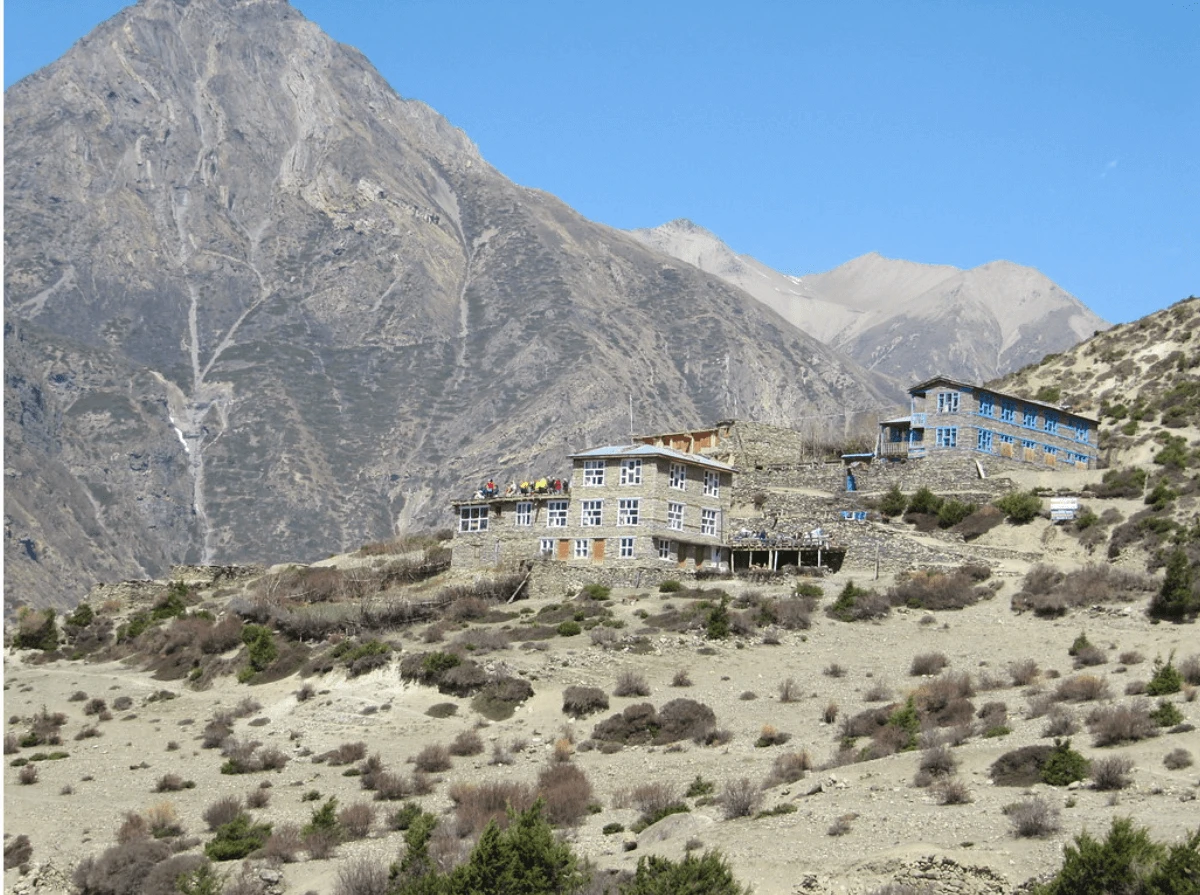
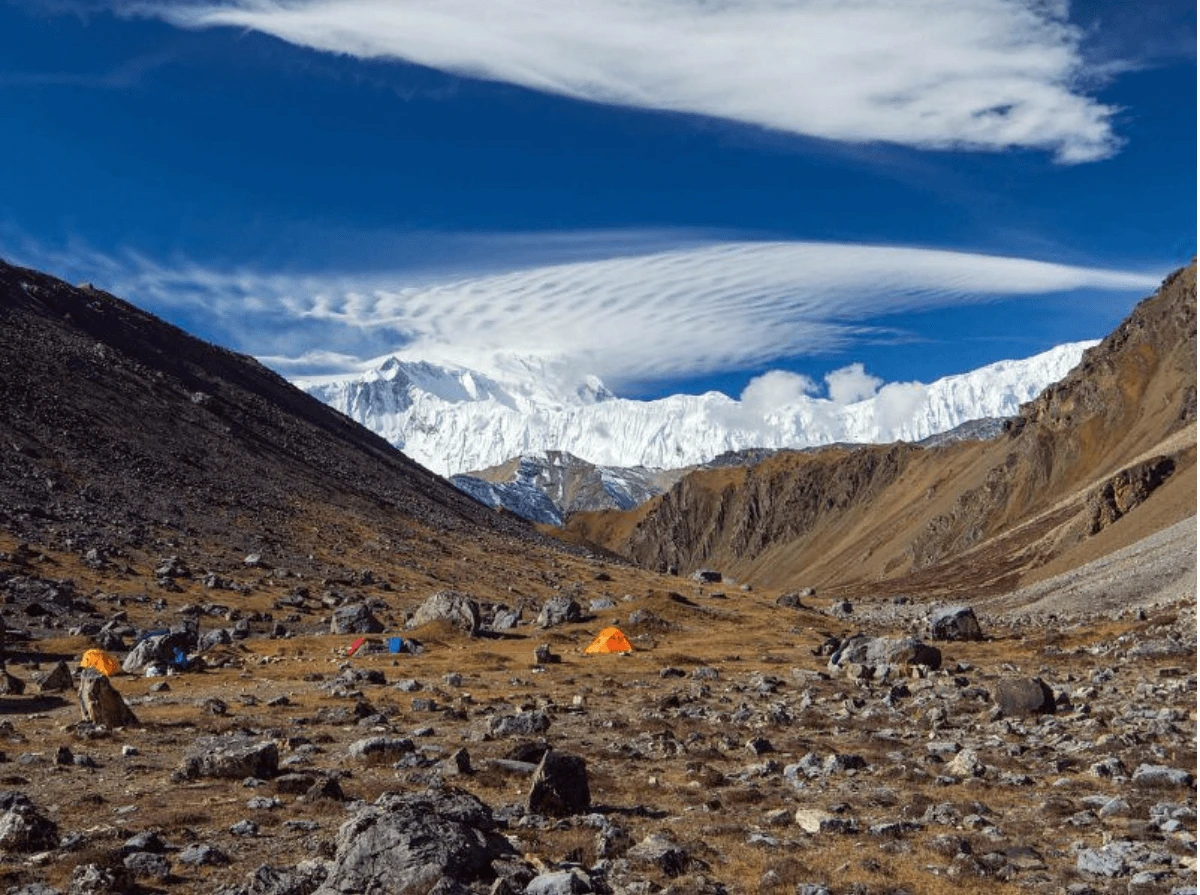
Accommodation on the Chulu West Peak climb includes both teahouse stays and tented camping. During the Annapurna Circuit segment, you’ll sleep in cosy mountain teahouses with twin rooms and shared bathrooms. These offer basic but clean amenities, ideal for acclimatisation and rest. Once we reach Base Camp, we switch to high-altitude expedition camping.
Overland Trek Nepal provides all camping gear: tents, insulated sleeping mats, kitchen tents, and toilet tents. Our support team ensures your campsite is warm, secure, and well-equipped. Whether it’s a teahouse or a tent, your comfort and safety are always our priority.
Meals During the Chulu West Peak Climb
- Hygienic, energy-rich meals throughout the climb
- Freshly prepared by the teahouses and the expedition cook team
During the Chulu West Peak Climbing expedition, your meals are carefully planned to meet the energy demands of high-altitude trekking and mountaineering. While trekking along the Annapurna Circuit, you’ll dine at local teahouses offering Dal Bhat, noodles, soups, pancakes, and more.
Once we shift to full expedition mode at Base Camp and High Camp, our trained kitchen staff prepares warm, nutritious meals daily. Expect dishes like pasta, rice, vegetables, soups, and hot drinks. We also ensure clean drinking water and regular hydration. Overland Trek Nepal prioritises your health, hygiene, and comfort on the trail.
Permits & Documentation for Chulu West Peak Climbing
Climbing Chulu West requires a special climbing permit issued by the Nepal Mountaineering Association (NMA), since Chulu West is classified as a “Trekking Peak” (also known as NMA Peak). Overland Trek Nepal will secure this permit on your behalf as part of our service, but for your knowledge:
Permit Categories: Chulu West is an NMA Group “B” peak. You need an NMA Permit card.
- Spring (March to May): USD $250 per person (the highest because spring is considered prime climbing season).
- Autumn (Sept to Nov): USD $125 per person.
- Annapurna Conservation Area Project Permit Card that costs USD 25.
Required Gear & Equipment for Chulu West Peak Climbing
Personal Clothing & Footwear
Layering is the key to clothing on an expedition that ranges from hot trekking days to freezing summit nights. You’ll need layers for head-to-toe. Here’s a checklist of personal clothing and footwear:
Base Layers and Insulating Layers
Trekking Shirts
- Fleece Jacket & Heavy Down Jacket.
- Waterproof/Windproof Jacket (Hardshell)
Waterproof Pants (Hardshell trousers)
- Trekking Pants: 1-2 pairs of quick-dry trekking trousers for hiking in the lower parts.
- Climbing Pants: Insulated down or synthetic pants
Sun hat &Warm beanie or wool
- Balaclava or Buff (neck gaiter)
- Gloves
Footwear:
- Trekking Boots: Sturdy, comfortable hiking boots for the approach trek.
- Climbing Boots: For Chulu West, you need mountaineering boots that are crampon-compatible.
- Camp Shoes/Sandals
- Gaiters
- Trekking and Expedition socks
Underwear: Choose whatever comfortable undergarments you prefer for trekking.
Technical Climbing Gear
For the ascent of Chulu West, you will need specialised climbing equipment. Overland Trek Nepal can provide some group climbing gear (like ropes), but personal technical gear must either be brought by you or rented. Here’s the technical kit list:
- Climbing Harness: A comfortable, padded harness that fits over your climbing layers.
- Climbing Helmet: A UIAA-approved climbing helmet (adjustable) to protect from rock/ice fall and to wear during any roped sections or near steep slopes.
- Crampons: Mountaineering crampons, 12-point, step-in, or hybrid binding
- Ice Axe: A classic mountaineering ice axe.
- Trekking Poles: Not technical gear per se, but worth listing.
- Ascender (Jumar): A mechanical ascender device for going up fixed ropes.
- Carabiners: Carry at least 3 locking (screwgate) carabiners and 2-3 non-locking (snapgate) carabiners.
- Belay/Rappel Device: An ATC-guide or figure-8 or similar device for abseiling (rappelling) and belaying if needed.
- Prusik Loops/Safety Tether: It’s wise to have a couple of 5-6mm prusik cords (slings) for safety backup on rappel or for crevasse rescue scenarios.
- Snow Bar/Anchor: Provided by guides for the group, not needed personally.
- Climbing Tape, small repair kit: Some climbers bring a bit of duct tape (around a water bottle) for quick fixes, also tape for feet to prevent blisters.
Overland Trek Nepal provides fixed ropes and anchor gear for the route, so you don’t need to bring that. The guides will set up the ropes before or during the climb.
Altitude Sickness Prevention during Chulu West Peak Climbing

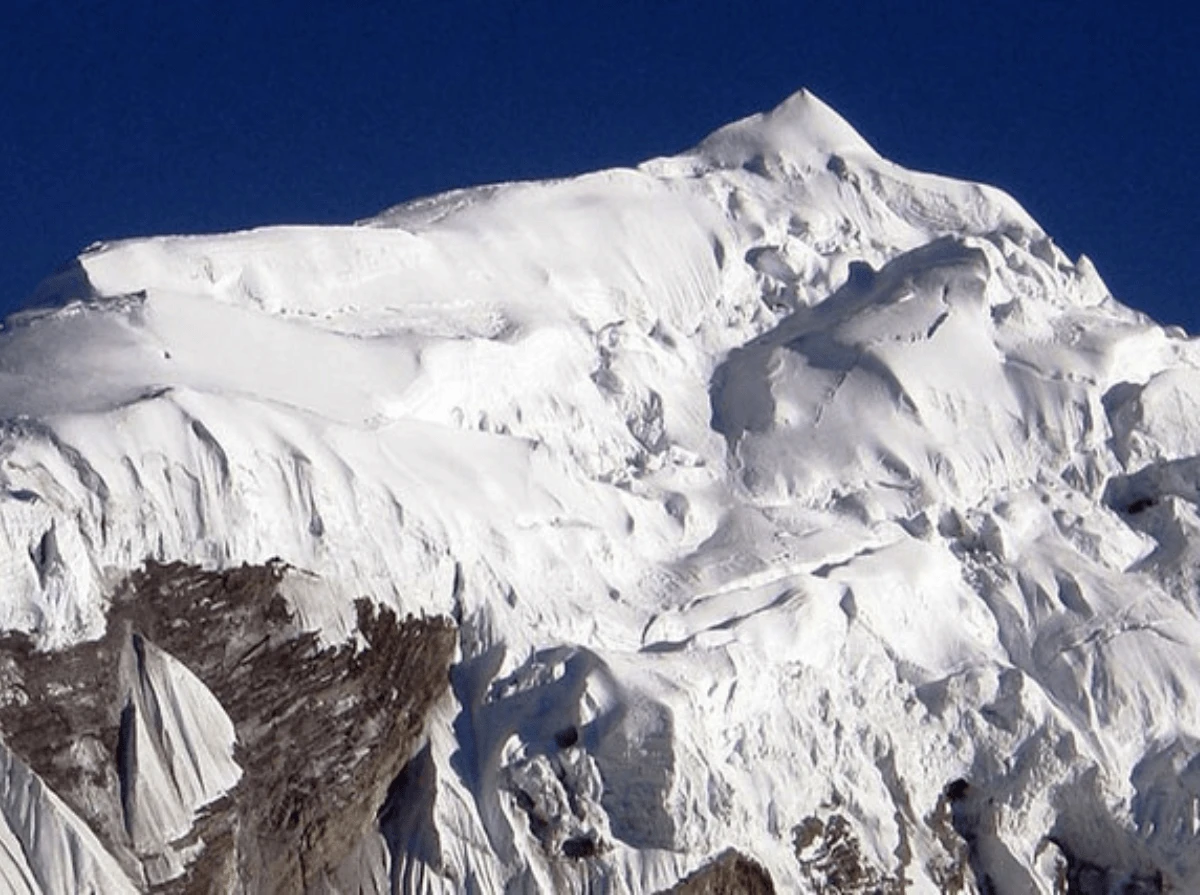
Climbing to 6,419m is a serious undertaking, and altitude sickness (Acute Mountain Sickness) is a real concern.
Overland Trek Nepal prioritises your safety by building in measures to prevent altitude sickness and managing it properly if it occurs. Here are the key practices and advice regarding altitude:
- One of the most effective ways to prevent AMS is by ascending slowly. Our itinerary is designed with a conservative gain in sleeping altitude each day.
- We constantly remind you to drink plenty of fluids. Aim for 3-4 litres of water per day.
- We provide a diet high in carbohydrates during the trek/climb.
- Our guides usually carry some Diamox in the first aid kit for emergency use.
- Our guides are trained to recognise AMS symptoms in you, even if you might not. We do daily (sometimes morning and evening) health check-ins.
- Our guide encourages you to walk at a pace where you can still breathe comfortably and talk.
- If AMS symptoms become severe, we implement our emergency plan immediately.
- We often encourage trekkers to keep an eye on each other, too.
By following these protocols, Overland Trek Nepal has an excellent record of acclimatising climbers successfully.
Acclimatization Days during Chulu West Peak Climbing
We have built specific acclimatisation days into the itinerary, as briefly mentioned, and it’s worth explaining why we have them and what we do on those days:
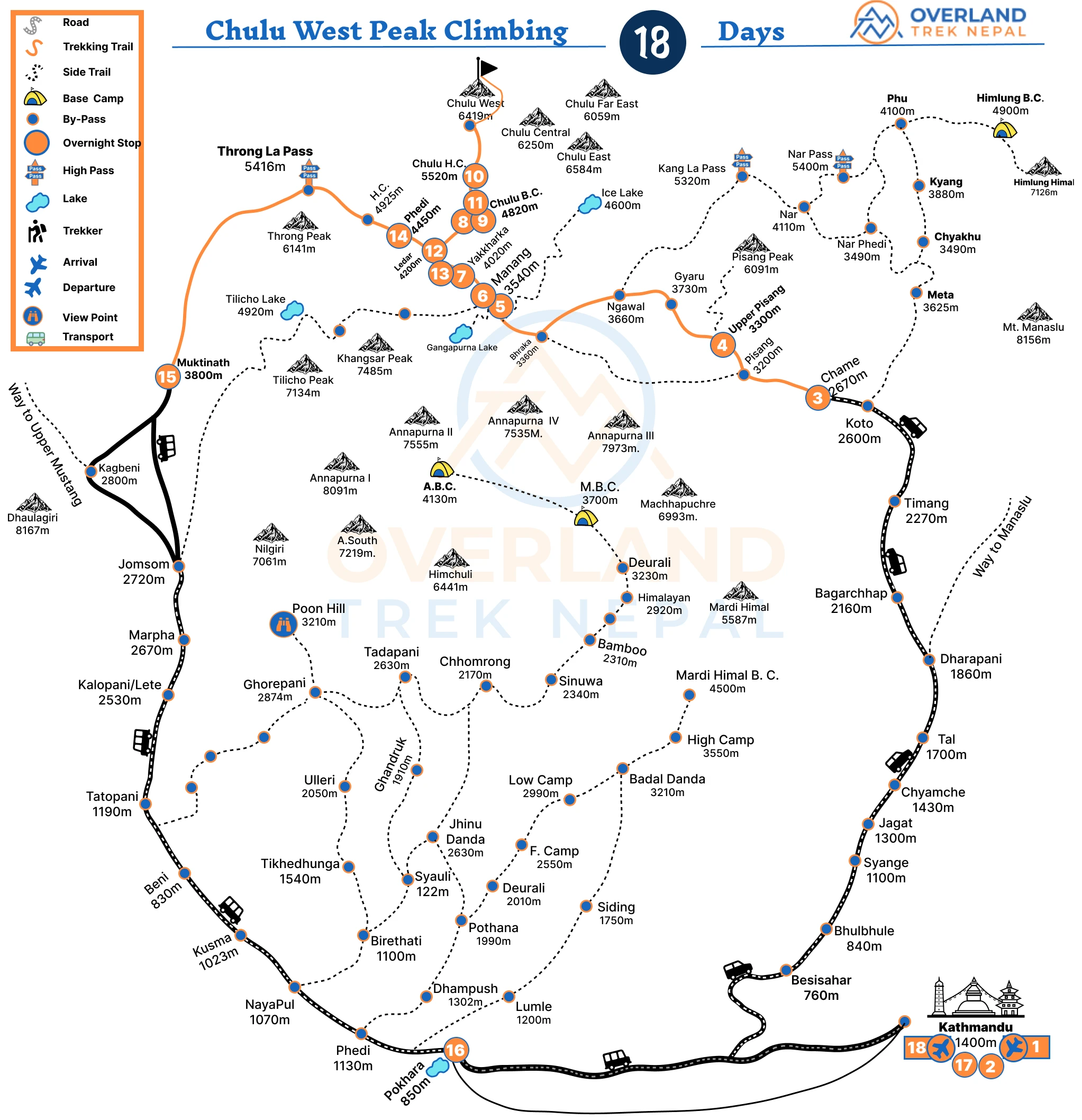
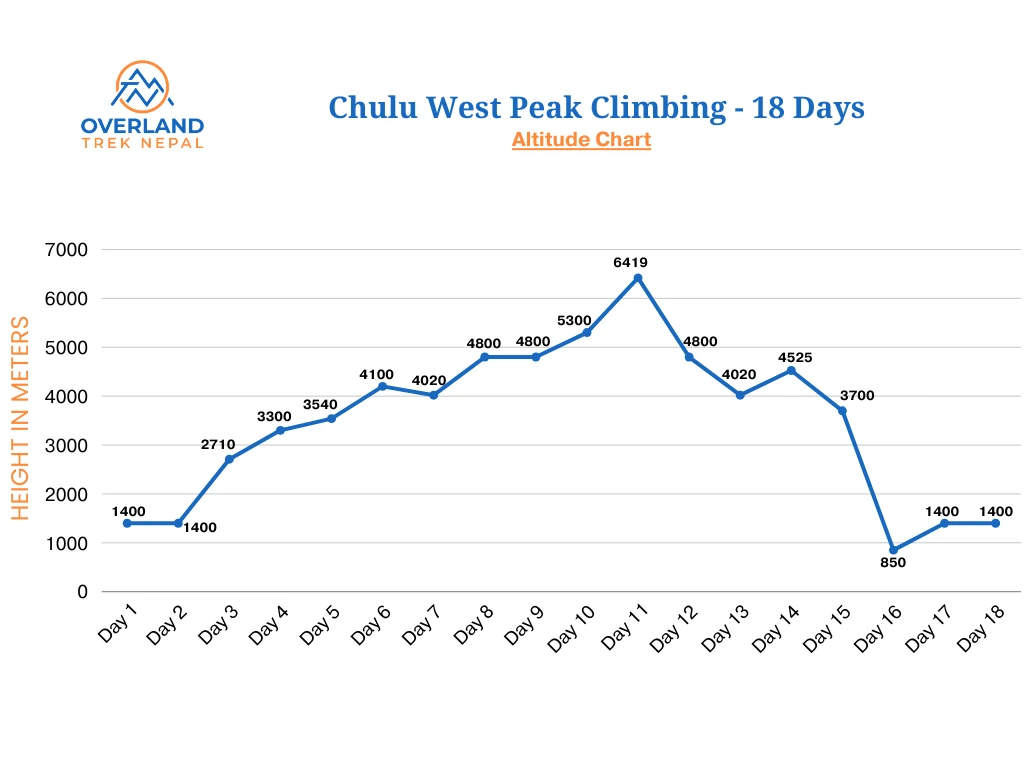
- Manang Acclimatisation (3540m) – After ascending steadily for several days, you will spend a day in Manang as an acclimatisation day. This is at around the 3,500m mark, a classic altitude to pause (since beyond 3,000m the effects of altitude become noticeable for many).
- Base Camp Acclimatisation (4800m) – Once you reach Chulu West Base Camp, you will spend a day as an extra acclimatisation & training.
- We also use the day for training – practice using fixed ropes, etc., which is physically mild but keeps you moving.
- And of course, lots of rest and hydration. You might feel a mild headache when you arrive at base camp; usually, by after the acclimatisation day, you feel stronger.
This day is critical because next we’ll be moving to 5,300m (high camp) and then 6,419m (summit). Skipping a day at base camp could risk us having un-acclimatised climbers on summit day – not advisable.
In our experience, those who acclimatise well can move faster and stronger later, and ironically, often finish the whole trek/climb in the same overall time because they don’t get sick or have to turn back. So it’s an investment in success.
Climbing Sherpa Guide for Chulu West Peak
One of the biggest advantages of climbing with Overland Trek Nepal is our experienced and dedicated team of guides and climbing Sherpas. They are the backbone of a successful expedition. Here’s what you can expect from them and why their role is so crucial:
On the approach trek, you’ll have an English-speaking trekking guide (often also the lead climbing guide) who manages the daily logistics: setting the pace, coordinating with tea houses for meals and rooms, handling permit checkpoints, and monitoring the group’s well-being.
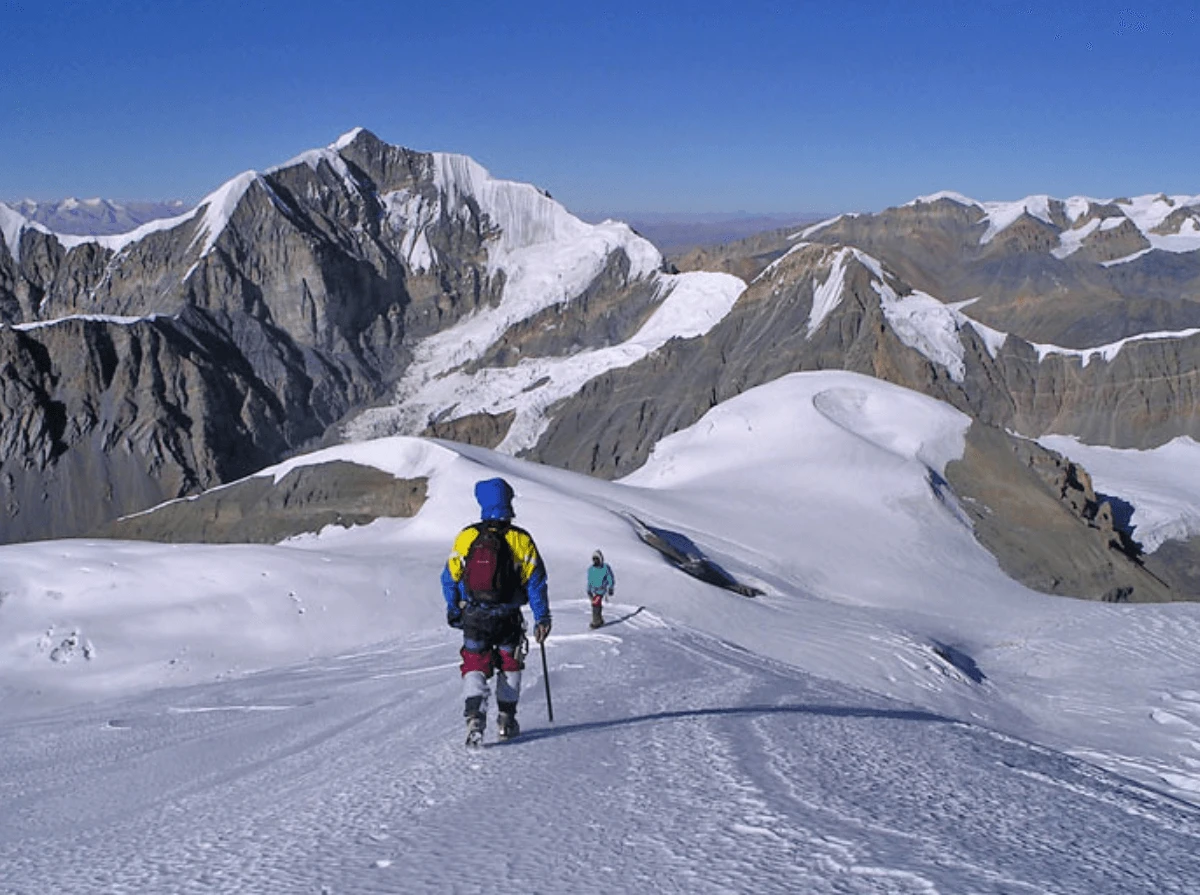
Climbing Sherpa(s): When it comes to the climb above base camp, our Climbing Sherpas are the heroes. These are highly skilled climbers, often with ascents of many 6000m peaks, and sometimes 7000m or 8000m experience under their belt.
- Route Finding & Fixing: They scout the safest path to climb Chulu West. If crevasses have opened or conditions have changed, they find alternatives. They will fix ropes on steep or icy sections before or during the summit push
- Safety & Support: On summit day, a Sherpa might short-rope a client who is a bit unsteady or give a hand across a crevasse. They often carry a backpack with emergency gear – a med kit, oxygen cylinder if we deem it necessary, radio, etc.
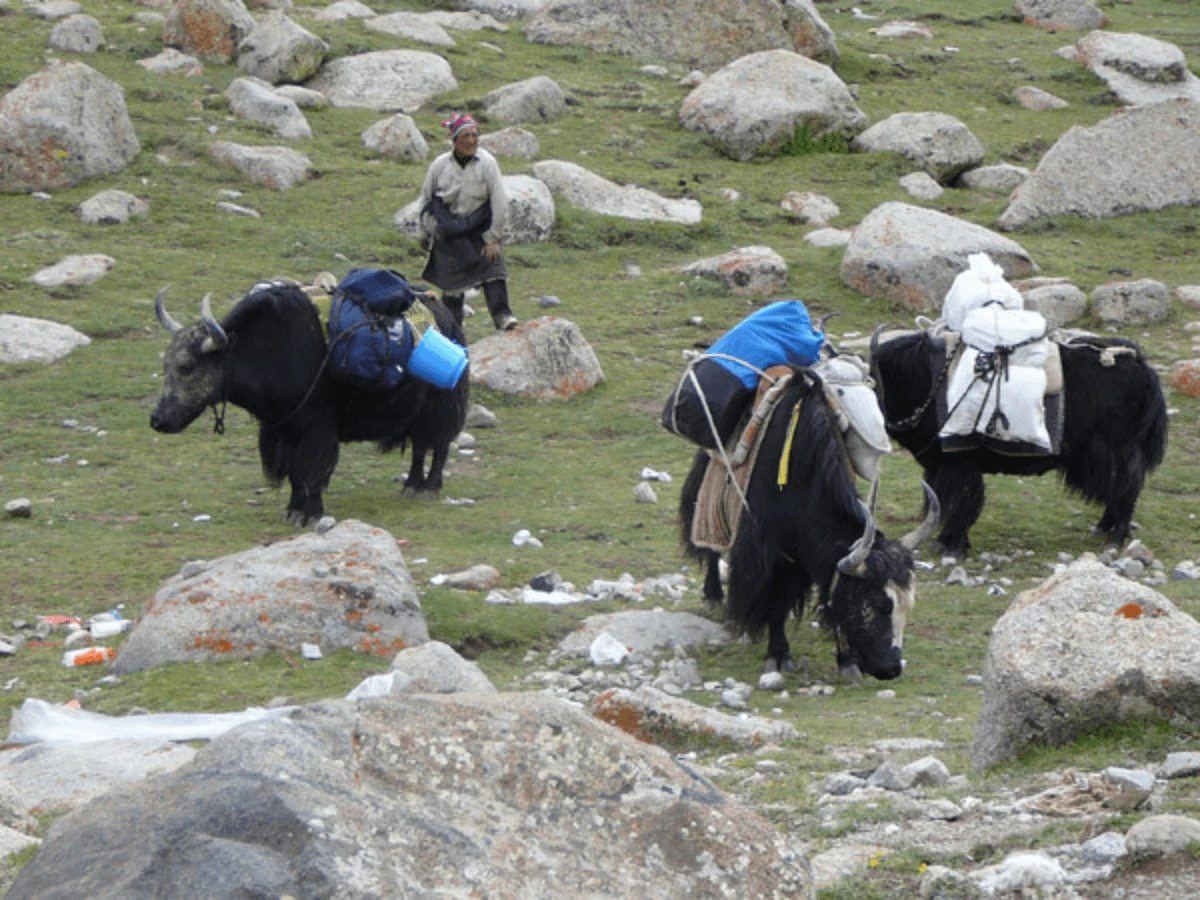
- Porters: Let’s not forget the hardworking porters in the team. While not “guides”, they carry loads between camps, enabling the expedition to function. They usually go ahead and reach the next stop and deposit your duffel so it’s there when you arrive. Guides ensure porters are not overloaded.
In summary, our guides and Sherpas are your guardians, mentors, and teammates on the mountain. They greatly increase your margin of safety and success: Nepal Trekking Routes’ content even emphasises having professional guides to overcome Chulu West’s challenges. With Overland Trek Nepal, you have some of the best.
Easy Booking and Secure Payment System
Booking a Chulu West Peak expedition is easy via Overland Trek Nepal's website by filling out the Contact Us form. Alternatively, you can reach us directly on WhatsApp at +9779841920870 for more details and personalised options.
To confirm your reservation, please pay a 20% deposit. The remaining balance is due upon arrival in Nepal. Payments can be made via various gateways on our website. Also, we do accept payment by VISA or Mastercard, but the bank will charge an extra 3.5% on the total cost.