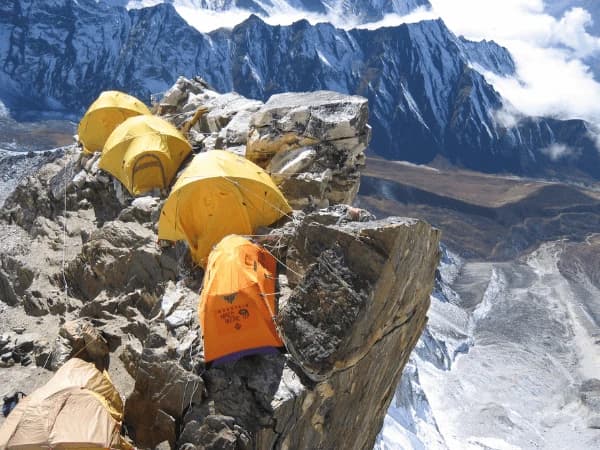
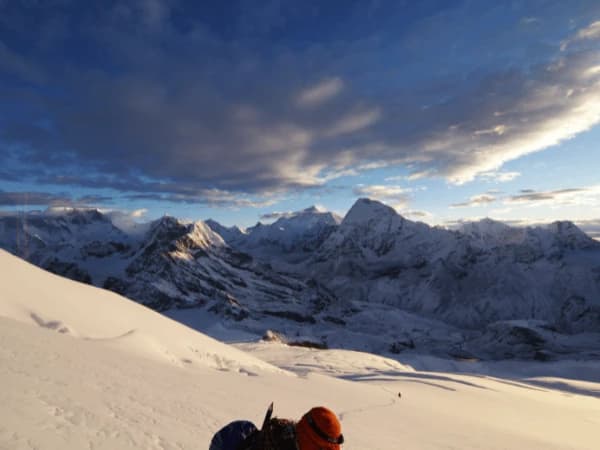
Lobuche Peak climbing is a high-altitude mountaineering expedition to the Lobuche East summit at 6,119 meters (20,075 feet) in Nepal's Khumbu region, near Everest Base Camp. Classified as a trekking peak by the Nepal Mountaineering Association (NMA), it is one of the most popular beginner-friendly 6,000m climbs in the world, attracting over 400 climbers each season. The standard 18-day route combines the classic Everest Base Camp trek with a technical summit attempt on Lobuche East, crossing the Khumbu Glacier, ascending fixed ropes on steep ice and snow slopes, and reaching a summit with direct views of Everest (8,849m), Lhotse (8,516m), Nuptse (7,861m), and Ama Dablam (6,812m).
Why Climb Lobuche Peak? Key Highlights
- Closest trekking peak to Mount Everest, Lobuche sits at the foot of the Khumbu Icefall, giving you summit views of the world's highest mountain at arm's reach.
- Ideal first 6,000m summit, unlike Ama Dablam or Mera Peak, Lobuche East is classified as a non-technical trekking peak requiring only basic mountaineering skills and pre-climb training.
- Combines two iconic experiences, The 18-day itinerary passes through Everest Base Camp (5,364m) and Kala Patthar (5,550m) before the summit push, offering dual achievement.
- Autumn 2026 window: September 15 – November 20. This is the best available season for stable weather, clear skies, and low precipitation in the Khumbu Valley.
- 360-degree Himalayan panorama. From the summit, you can see Everest, Lhotse, Nuptse, Ama Dablam, Makalu, Cho Oyu, Pumori, Thamserku, and the entire Khumbu region.
- Sherpa culture and ancient monasteries, including Tengboche Monastery, Sherpa villages of Namche Bazaar and Dingboche, and the Chukpi Lhara Memorial.
What is Lobuche Peak? Mountain Facts
Lobuche is a massif with two summits above the Khumbu Glacier in Sagarmatha National Park, Nepal. Here are the key facts every climber should know:
|
Fact |
Detail |
|
Summit (East) |
6,119 m / 20,075 ft |
|
Summit (West) |
6,145 m / 20,161 ft expedition peak |
|
Classification |
Trekking Peak (NMA) East only |
|
First Ascent |
Laurence Nielson & Ang Gyalzen Sherpa, April 25, 1984 |
|
Location |
Khumbu, Solukhumbu District, Sagarmatha Zone, Nepal |
|
Nearest landmark |
Everest Base Camp (~2 km) |
|
Permit type |
NMA Trekking Peak Permit |
|
Best season |
Spring (Mar–May) & Autumn (Sep–Nov) |
|
Typical duration |
18–21 days, including EBC |
|
Success rate |
Approximately 75–85% with a licensed agency and proper acclimatization |
Lobuche Peak vs. Island Peak vs. Mera Peak: Which Should You Choose?
This is one of the most common questions from first-time peak climbers in Nepal. Here's a direct comparison:
|
Feature |
Lobuche East |
Island Peak (Imja Tse) |
Mera Peak |
|
Altitude |
6,119 m |
6,189 m |
6,476 m |
|
Technical difficulty |
Moderate |
Moderate |
Low–Moderate |
|
Fixed ropes required |
Yes (steep ice) |
Yes |
Minimal |
|
Prior experience needed |
Recommended |
Basic |
Minimal |
|
EBC combination |
Yes (natural route) |
Yes (separate detour) |
No |
|
Everest views from the summit |
✅ Direct, closest |
✅ Good |
✅ Excellent |
|
Best for |
Trekkers ready for real climbing challenge |
First-time summit climbers |
Non-technical summit seekers |
|
Duration (standard) |
18 days |
19 days |
17 days |
|
Permit cost (autumn) |
USD 125 |
USD 125 |
USD 125 |
Verdict: If you've done Everest Base Camp before and want a genuine mountaineering experience, Lobuche East is the natural next step. If this is your first-ever summit attempt, consider Island Peak first. If you want the highest trekking peak with minimal technical risk, choose Mera Peak.
Best Time to Climb Lobuche Peak Autumn 2026 & 2027 Seasons
Autumn Season (September–November) — Recommended for 2026 & 2027
September 15 – November 20 is the ideal Lobuche Peak climbing window for autumn departures. Post-monsoon skies clear rapidly by mid-September, delivering crisp visibility and stable summit conditions. October is consistently the single best month, with daytime temperatures at Lobuche Base Camp averaging 5°C to +5°C and summit winds generally calm between 6 AM and 9 AM.
- September: Trails are lush and green post-monsoon. Fewer crowds. Some lingering cloud in the early weeks.
- October: Peak conditions. Clear skies, stable weather, perfect summit windows. Book early.
- November: Excellent visibility. Colder nights (–15°C at high camp). Fewer climbers after mid-November.
Spring Season (March–May) — Alternative Option
March through May offers warmer temperatures and the busiest climbing season. Most Everest expedition teams use this window, creating more foot traffic on the EBC route. Summit days are slightly warmer but can have stronger afternoon winds.
Seasons to Avoid
- Monsoon (June–August): Heavy rainfall, trail flooding, poor visibility, increased avalanche and landslide risk.
- Deep winter (December–February): Extreme cold, frequent snowfall, high-camp temperatures below –20°C, limited teahouse services.
How Difficult is Lobuche Peak Climbing?
Lobuche Peak is rated moderately technical, sitting between a strenuous high-altitude trek and a full mountaineering expedition. Here's what to expect:
Trekking Phase (Days 1–11): The EBC approach is challenging due to altitude gain, not technical terrain. Daily walking is 4–8 hours on well-established trails. No technical gear required.
Climbing Phase (Days 12–13):
- High Camp to Crampon Point (~1.5–2 hours): Rocky, steep ascent. Crampons and ice axe are used from Crampon Point onwards.
- Crampon Point to Summit Ridge (~3–4 hours): Fixed ropes on a 40–50 degree ice and snow slope. Jumar/ascender required. This is the technical crux.
- Summit Ridge to Summit (~30–45 minutes): Narrow, corniced ridge requiring careful foot placement and balance.
- Descent (~4–5 hours): Rappel on fixed ropes back to High Camp, then hike to Pheriche.
Physical requirements: Strong cardiovascular fitness, ability to carry a 10–15kg daypack for 8+ hours, and comfort with heights and exposed ridges.
Prior experience recommended: Everest Base Camp trek or any multi-day high-altitude trek above 4,500m. Basic crampon and rope skills are taught by guides on-site during pre-climb training (Day 12).
Book Lobuche Peak Climbing Autumn 2026 & 2027
Autumn 2026 departures are filling fast. October is already our highest-demand month, so we recommend booking at least 3–4 months in advance to secure your guide, accommodation along the route, and Lukla flights.
Why book with Overland Trek Nepal?
-
Government-licensed, NMA-registered agency with 10+ years of operating in the Khumbu region
-
99% traveler recommendation rate (49 reviews, TripAdvisor)
-
In-house climbing team with certified IFMGA/NMA mountain guides
-
Transparent pricing, no hidden costs, permits included
-
24/7 emergency support with helicopter evacuation coordination
-
Flexible booking: 20% deposit secures your spot; balance due 30 days before departure
-
Free trip customization: add Gokyo Valley, Chola Pass, or extra acclimatization days
-
kg daypack for 8+ hours, and comfort with heights and exposed ridges.
Prior experience recommended: Everest Base Camp trek or any multi-day high-altitude trek above 4,500m. Basic crampon and rope skills taught by guides on-site during pre-climb training (Day 12).