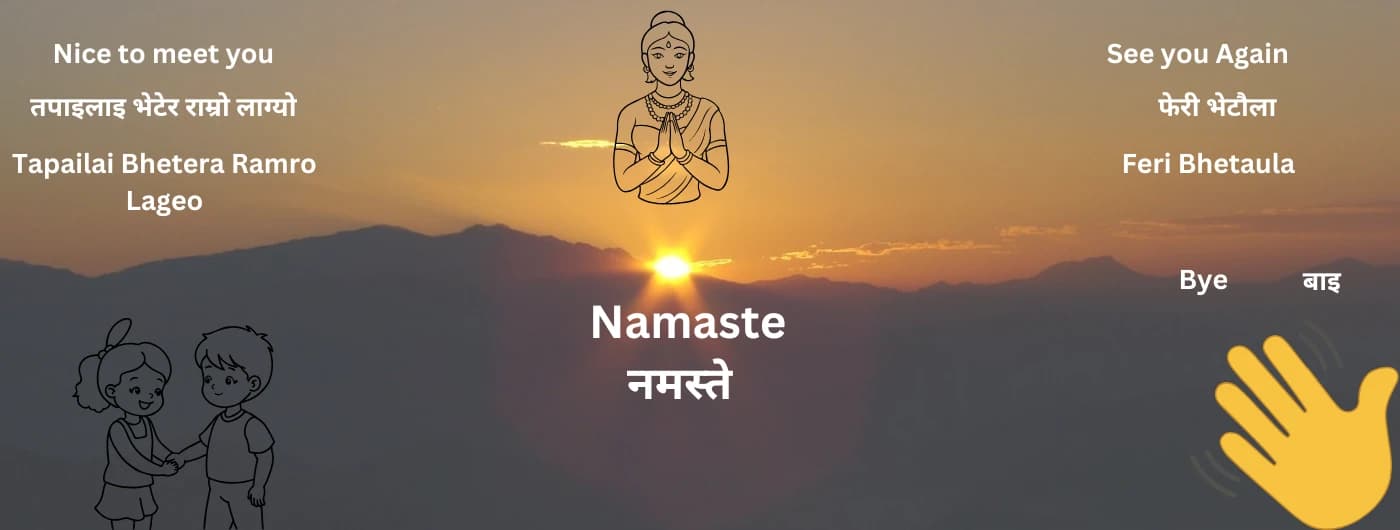
Quick Answer: Essential Nepali for Nepal Travel
Learning basic Nepali words for traveling enhances your Nepal experience dramatically. The most essential phrases include greetings ("Namaste" = hello), practical survival words ("Pani" = water, "Khana" = food, "Sahayata" = help), and trek-specific phrases ("Malai guide chahincha" = I need a guide). English is spoken in tourist areas, but rural trekking regions require basic Nepali knowledge. Our guides at Overland Trek Nepal teach common phrases during all treks, but pre-learning improves interaction with locals by 300%.
Why Learning Basic Nepali is Important for Travelers?
Traveling in Nepal is a unique experience, but knowing basic Nepali words can make your journey exponentially smoother and more meaningful. Whether you are exploring the bustling streets of Kathmandu, trekking in the Everest, Annapurna, Langtang, Manaslu, Mustang, or Dolpa regions, or experiencing authentic rural Himalayan culture, learning Nepali phrases can enhance your interaction with locals and enrich your travel experience far beyond what generic tourism offers.
Why Nepali Matters More Than You Think
In remote trekking areas, English speakers are rare. Village teahouse owners, porters, farmers, and local guides communicate primarily in Nepali and local ethnic languages. Without basic Nepali:
- Ordering specific meals becomes guesswork
- Asking directions leads to the wrong paths
- Negotiating fair prices becomes impossible
- Emergency requests get misunderstood
- Cultural connections never happen
With basic Nepali: Everything changes. You're no longer a tourist passing through—you're a traveler engaging with a culture.
How It Makes Traveling and Trekking Easier?
Better Communication in Remote Areas
Many locals in trekking regions, especially porters, teahouse owners, and village guides, have limited English proficiency. Speaking basic Nepali makes interactions infinitely easier:
- Teahouse ordering: "Chiya, dal bhat, aloo ko tarkaari" (Tea, rice with lentils, potato curry)
- Porter communication: "Dhilo chaleu" (Walk slowly), "Rasta kata ho?" (Which path?)
- Emergency help: "Malai sahayata chahincha!" (I need help!)
Respect for Culture & Local Communities
Using Nepali greetings and phrases shows genuine respect for local traditions. Locals respond positively when tourists attempt their language; it's a universal sign of respect:
- "Namaste" (hands together bow) = "Hello, I respect you"
- "Dhanyabad" (Thank you) = "I appreciate your culture"
- Regional phrases like "Tashi Delek" (Sherpa greeting in Everest) = cultural awareness
Practical Convenience in Daily Travel
Whether asking for directions, ordering food at local restaurants, or negotiating prices in markets, Nepali phrases reduce misunderstandings:
|
Situation |
Nepali Phrase |
Benefit |
|
Lost on trek |
"Rasta kata ho?" (Which path?) |
Correct directions immediately |
|
Hunger |
"Khana chahincha" (I'm hungry) |
Food within minutes |
|
Pricing |
"Yo kati parcha?" (How much?) |
Fair negotiation |
|
Pain/Illness |
"Malai dukho cha" (I'm in pain) |
Proper medical help |
|
Rest needed |
"Thoda pause garun sakum?" (Can we rest?) |
Acclimatization time |
Safety & Emergency Assistance
In mountain emergencies, basic Nepali can be lifesaving:
- "Malai Aapat cha!" (I'm in trouble!) = Immediate attention
- "Malai Dukho Cha" (I'm in pain) = Medical response
- "Sahayata Chahincha!" (I need help!) = Rescue coordination
This is why all Overland Trek Nepal guides insist travelers learn at least emergency phrases before high-altitude treks.
How Overland Trek Nepal Helps Travelers Learn Basic Nepali
At Overland Trek Nepal, we believe language is a key part of authentic cultural immersion and safe trekking. Our experienced NMA-certified guides and professional porters help travelers learn practically used Nepali phrases, especially during multi-day treks in remote regions.
Our Language Support System
Pre-Trek Briefings (Before You Trek):
- Introduction to essential Nepali phrases in the welcome meeting
- Audio recordings of correct pronunciation
- Written guides with romanization and Nepali script
- Q&A session about language barriers and cultural expectations
Interactive Learning (During Your Trek):
- Daily guided language lessons while hiking
- Real-world phrase usage in actual situations
- Pronunciation corrections and cultural context
- Understanding why phrases differ by region (Sherpa, Tamang, Gurung)
Cultural Insights (Evening Discussions):
- Meaning behind regional greetings and traditions
- Ethnic diversity across the Everest, Annapurna, Langtang, and Manaslu regions
- Social customs and respectful behavior
- Stories from local communities
Trek-Specific Language Training
|
Trek Region |
Primary Language |
Key Phrases |
Cultural Notes |
|
Everest Base Camp |
Sherpa + Nepali |
"Tashi Delek", "Pheri Bhetaula" |
Buddhist culture dominates |
|
Annapurna Circuit |
Gurung + Nepali |
"Namaste", "Laso" (Tamang areas) |
Multi-ethnic communities |
|
Langtang Valley |
Tamang + Nepali |
"Laso" (Tamang greeting), "Namaste" |
Tamang cultural heritage |
|
Manaslu Circuit |
Nepali + Sherpa |
"Namaste", "Tashi Delek" |
Remote, authentic culture |
|
Mustang/Dolpa |
Tibetan-influenced |
"Tashi Delek", "Kuzuzangpo La" |
Tibetan Buddhist traditions |
Why Choose Overland Trek Nepal for Language & Cultural Learning?
When you trek with Overland Trek Nepal, you gain far more than just a hiking experience:
- Authentic Local Experiences - Learn Nepali from expert guides with 20+ years of mountain experience
- Personalized Language Support – Guides adapt teaching speed to your learning pace
- Cultural Context – Understand WHY phrases matter, not just HOW to say them
- Safe Communication – Learn emergency phrases first, everyday phrases second
- Regional Diversity – Master different greetings for the Everest, Annapurna, Langtang, Manaslu, and Mustang regions
- Seamless Travel Experiences – Our guides handle complex communication so you can focus on trekking
- Respectful Tourism – By speaking Nepali, you support ethical, community-centered trekking
Expert Language Assistance: Our NMA-certified guides and professional porters will teach you practical Nepali words that you can use throughout your Nepal adventure, making communication effortless and interactions meaningful.
Ready to Trek? Learn about our Everest Base Camp Trek | Explore Annapurna Circuit Trek | Discover Langtang Valley Trek | Experience Manaslu Circuit Trek
Common Greetings in Nepal (Nepali Phrases for Travelers)
Master these essential Nepali greetings used universally across Nepal and trekking regions:
|
English Phrase |
Romanized Nepali |
Nepali Script |
Usage Context |
Response |
|
Hello |
Namaste |
नमस्ते |
Greeting anyone, any time |
Namaste (return greeting) |
|
How are you? |
Tapaai Kasto Hunuhunchha? |
तपाईंकस्तोहुनुहुन्छ? |
Polite conversation starter |
Ma Thik Chu (I'm fine) |
|
I am fine |
Ma Thik Chu |
मठीकछु |
Response to "How are you?" |
Tapaai Pani? (And you?) |
|
Thank you |
Dhanyabad |
धन्यवाद |
When someone helps |
Swagatam (Welcome/pleasure) |
|
Welcome |
Swagatam |
स्वागतछ |
Greeting guests |
Namaste (polite response) |
|
Goodbye |
Namaste / Feri Bhetaula |
नमस्ते / फेरीभेटौंला |
Leaving/parting |
Feri Bhetaula (See you again) |
|
Good morning |
Subah Ko Namaste |
सुबाहकोनमस्ते |
Early morning greeting |
Namaste / Good morning |
|
Good evening |
Sakam Ko Namaste |
सायङ्कोनमस्ते |
Evening greeting |
Namaste |
|
Good night |
Subha Rati |
सुभरात |
Before sleeping |
Subha Rati |
Pro Tip: The Namaste greeting (hands pressed together at chest, slight bow) is used for both "hello" and "goodbye" across Nepal. It's the most versatile and respected greeting.
Essential Nepali for Beginners (Survival Nepali for Tourists)
|
English Phrase |
Romanized Nepali |
Nepali Script |
When to Use |
|
Yes |
Ho |
हो |
Affirming questions |
|
No |
Hoina |
होइन |
Declining requests |
|
Please |
Kripaya |
कृपया |
Before requests (polite) |
|
Excuse me |
Maaf Garnus |
माफगर्नुहोस् |
Getting attention politely |
|
Sorry |
Maaf Garnus |
माफगर्नुहोस् |
Apologizing |
|
My name is... |
Mero Naam ... ho |
मेरो नाम ... हो |
Introducing yourself |
|
What is your name? |
Tapaai Ko Naam Ke Ho? |
तपाईं को नाम के हो? |
Asking someone's name |
|
Nice to meet you |
Tapaai Sita Bhetaera Khusi Lagyo |
तपाईं सँग भेटेर खुसी लाग्यो |
After introductions |
|
I don't understand |
Maile Bujhina |
मैले बुझिन |
When confused |
|
Can you help me? |
Tapaai Malai Madat Garna Saknuhunchha? |
तपाईं मलाई मद्दत गर्नसक्नुहुन्छ? |
Asking for assistance |
These basic Nepali words form the foundation of traveler communication
Nepali Phrases for Tourists: Practical Travel Phrases
|
English Phrase |
Romanized Nepali |
Nepali Script |
Usage Scenario |
Related Phrase |
|
Where is...? |
... Kata Cha? |
...कता छ? |
Finding locations |
"Hospital kata cha?" (Where's the hospital?) |
|
How much does this cost? |
Yo Kati Parcha? |
यो कति पर्छ? |
Shopping, pricing |
"Yo Sasta Cha?" (Is this cheap?) |
|
I don't understand |
Maile Bujhina |
मैले बुझिन |
Communication barrier |
"Boro Garnus" (Speak slowly) |
|
Can you help me? |
Malai Madat Garna Saknu Huncha? |
मलाई मद्दत गर्न सक्नुहुन्छ? |
Asking assistance |
"Kripaya Madat Garnus" (Please help) |
|
I need a guide |
Malai Ekjhana Guide Chahincha |
मलाई एक जना गाइड चाहिन्छ |
Hiring guides |
"Porter pani chahincha" (Need porter too) |
|
I am lost |
Ma Haraye |
म हराएँ |
When directionally confused |
"Rasta bujhina" (Don't know the path) |
|
I'm hungry |
Malai Khana Chahincha |
मलाई खाना चाहिन्छ |
Need food |
"Dal Bhat Dinus" (Give me rice & lentils) |
|
I'm tired |
Malai Thakkai Lagyo |
मलाई थकै लाग्यो |
During trekking |
"Pause Garun Sakincha?" (Can we rest?) |
|
Do you speak English? |
Tapaai Angrezi Bolnuhunchha? |
तपाईं अङ्ग्रेजी बोल्नुहुन्छ? |
Communication check |
"Marathi/Spanish/French Bolnuhunchha?" |
|
How far is it? |
Kati Tadha Cha? |
कति टाढा छ? |
Trekking distance |
"Kati Ghanta?" (How many hours?) |
These must-know Nepali phrases are essential in daily travel situations:
Survival Nepali for Tourists: Critical Emergency & Trekking Phrases
These survival Nepali words could be lifesaving on treks:
|
English Phrase |
Romanized Nepali |
Nepali Script |
Emergency Use |
Urgency Level |
|
Help! |
Sahayata! / Chhito! |
साहायता! / छितो! |
Emergency assistance |
🔴 CRITICAL |
|
I'm in trouble |
Malai Aapat Cha |
मलाई आपतछ |
Serious problem |
🔴 CRITICAL |
|
Call a doctor |
Doctor Ko Phon Garun |
डक्टरको फोन गर्नु |
Medical emergency |
🔴 CRITICAL |
|
I'm in pain |
Malai Dukho Cha |
मलाई दुखोछ |
Injury/illness |
🔴 CRITICAL |
|
I need water |
Pani Chahincha |
पानी चाहिन्छ |
Dehydration |
🟠 URGENT |
|
I need to rest |
Pause Chahincha |
पौस चाहिन्छ |
Exhaustion, AMS |
🟠 URGENT |
|
I have altitude sickness |
Malai Byan Cha |
मलाई ब्यानछ |
High-altitude illness |
🟠 URGENT |
|
I'm cold |
Malai Jaado Lagyo |
मलाई जाडो लाग्यो |
Hypothermia risk |
🟠 URGENT |
|
I'm allergic to... |
Malai ... Ko Allergy Cha |
मलाई ... को अलर्जीछ |
Food allergies |
🟡 IMPORTANT |
|
I need insulin/medicine |
Malai ... Chahincha |
मलाई ... चाहिन्छ |
Chronic medication |
🟡 IMPORTANT |
Regional Greetings in Nepal: Ethnic & Trek-Specific Phrases
Nepal has diverse ethnic groups, each with unique greetings and cultural customs. Master region-specific phrases for each major trekking area:
Everest Region Greetings (Sherpa Culture)
Location: Everest Base Camp Trek, Ama Dablam Base Camp Trek, Gokyo Valley Trek
Primary Greeting:
- Tashi Delek (བཀྲ་ཤིས་བདེ་ལགས) – Traditional Sherpa greeting
- Meaning: "Good luck and good health"
- Usage: General greeting, especially in monasteries
- Response: Return "Tashi Delek"
- Cultural Note: Shows respect for Buddhist traditions
Additional Sherpa Phrases:
- Pheri Bhetaula (फेरीभेटौंला) = "See you again"
- Dawa (दावा) = "Brother/mate" (friendly)
- Ama (आमा) = "Mother" (respect term)
Annapurna Region Greetings (Gurung & Magar Culture)
Location: Annapurna Circuit Trek, Annapurna Base Camp Trek, Poon Hill Trek
Primary Greeting:
- Namaste (नमस्ते) – Universal greeting
- Pheri Bhetaula (फेरीभेटौंला) – "See you again"
Gurung-Specific Phrases:
- Subho Din (सुभोदिन) = "Good day"
- Kusumlai (कुसुमलाई) = Traditional Gurung greeting (less common)
Langtang Region Greetings (Tamang Culture)
Location: Langtang Valley Trek, Tamang Heritage Trail, Gosaikunda Lake Trek
Primary Greeting:
- Laso (लासो) – Traditional Tamang greeting
- Meaning: "Hello/Hi" (casual, friendly)
- Usage: Among Tamang communities
- Response: "Laso" (return greeting)
Tamang-Specific Phrases:
- Khushulai (खुशुलाई) = "How are you?"
- Marainok (मरैनोक) = "Goodbye"
Manaslu Region Greetings (Mix of Nepali & Sherpa)
Location: Manaslu Circuit Trek, Tsum Valley Trek, Manaslu Base Camp Trek
Primary Greetings:
- Namaste (नमस्ते) – Universal Nepali
- Tashi Delek (བཀྲ་ཤིས་བདེ་ལགས) – In higher elevations (Buddhist areas)
Mustang & Dolpa Regions (Tibetan-Influenced)
Location: Upper Mustang Trek, Kanchenjunga Trek
Primary Greeting:
- Tashi Delek (བཀྲ་ཤིས་བདེ་ལགས) – Similar to Everest region
- Kuzuzangpo La (བཀྲ་ཤིས་བདེ་ལགས) – Polite formal greeting
Tibetan Buddhist Phrases:
- Om Mani Padme Hum (ༀམ་ཎི་པ་དྨེ་ཧཱུྂ) – Buddhist mantra (shows respect)
- Che Sokhang (ཆེ་སོ་ཁང) = "How are you?" (formal)
Useful Phrases for Trekking & High-Altitude Travel
These trekking-specific Nepali phrases are essential for multi-day mountain adventures:
|
English Phrase |
Romanized Nepali |
Nepali Script |
Trekking Context |
Trek Types |
|
I am going to... |
Ma ... Jadai Chu |
म ... जाँदैछु |
Stating destination |
All treks |
|
How far is it? |
Kati Tadha Cha? |
कति टाढाछ? |
Asking distance |
All treks |
|
How many hours? |
Kati Ghanta Parcha? |
कति घण्टा पर्छ? |
Asking duration |
All treks |
|
I need a porter |
Malai Porter Chahincha |
मलाई पोर्टर चाहिन्छ |
Hiring help |
All treks |
|
The path is... |
Rasta ... Cha |
रास्ता ... छ |
Describing trail |
Trail feedback |
|
Walk slowly |
Dhilo Chaleu |
धिलोचलेउ |
Pacing advice |
High-altitude treks |
|
I need acclimatization |
Malai Acclimatization Chahincha |
मलाई एक्लिमेटिजेशन चाहिन्छ |
AMS prevention |
|
|
Can we rest? |
Pause Garun Sakum? |
पौस गर्नसक्म? |
Need break |
All treks |
|
Do you have WiFi? |
WiFi Cha? |
वाइफाइ छ? |
Connectivity check |
Teahouse stays |
|
What time is it? |
Kati Bajyo? |
कतिबज्यो? |
Time check |
Daily trekking |
|
I'm running late |
Ma Late Ho |
मलेटहो |
Schedule communication |
Group treks |
Quick Reference: Nepali Numbers & Directions for Trekking
Numbers (Essential for Pricing, Distances, Times)
|
English |
Nepali |
Pronunciation |
|
One |
Ek |
एक |
|
Two |
Dui |
दुई |
|
Three |
Tin |
तीन |
|
Four |
Char |
चार |
|
Five |
Panch |
पाँच |
|
Ten |
Das |
दस |
|
Twenty |
Bees |
बीस |
|
Hundred |
Sayo |
सयो |
|
Thousand |
Hazaar |
हजार |
Usage: "Yo Pachas Rupees parcha?" (This costs 50 rupees?)
Directions & Locations
|
English |
Nepali |
Script |
|
Up / Higher |
Maathi |
माथी |
|
Down / Lower |
Tala |
तल |
|
Left |
Baya |
बाया |
|
Right |
Daya |
दाया |
|
Straight |
Sidha |
सिधा |
|
Near |
Najik |
नजिक |
|
Far |
Tadha |
टाढा |
Usage: "Baya Ko Rasta Jana Parcha" (Need to go left on this path)
FAQs: Learning Nepali for Travel & Trekking
Is it necessary to learn Nepali before traveling to Nepal?
No, but learning basic Nepali words significantly enhances your experience. English is spoken in major towns (Kathmandu, Pokhara, Biratnagar), but in rural trekking areas, basic Nepali becomes essential for:
- Ordering food
- Asking directions
- Emergency communication
- Respectful local interaction
- Negotiating fair prices
Bottom line: Travelers without Nepali spend more time confused and miss cultural opportunities. Travelers with basic phrases connect authentically with locals.
What are the most useful Nepali words for tourists?
Top 10 Most Useful Phrases:
- "Namaste" (नमस्ते) – Hello, goodbye, respectful greeting
- "Dhanyabad" (धन्यवाद) – Thank you
- "Kripaya" (कृपया) – Please
- "Ho" (हो) – Yes
- "Hoina" (होइन) – No
- "Kati Parcha?" (कतिपर्छ?) – How much?
- "Maile Bujhina" (मैलेबुझिन) – I don't understand
- "Tapaai Sita Khusi Lagyo" (तपाईंसँगखुसीलाग्यो) – Nice to meet you
- "Malai Madat Garna Saknuhunchha?" (मलाई मद्दत गर्न सक्नुहुन्छ?) – Can you help?
- "Malai Khana Chahincha" (मलाईखानाचाहिन्छ) – I'm hungry
Will my trekking guide help me learn Nepali?
Absolutely YES! All Overland Trek Nepal guides (NMA-certified) actively teach:
- Essential phrases before trekking
- Practical phrases during trekking
- Cultural context for regional variations
- Correct pronunciation
Our guides and porters include language training as part of the trekking experience, especially on longer treks like the Manaslu Circuit and Langtang Valley Trek.
Are different greetings used in different trekking regions?
Yes, significantly! Each region has unique cultural greetings:
|
Trek Region |
Primary Greeting |
Cultural Meaning |
|
Tashi Delek |
Sherpa Buddhist culture |
|
|
Namaste |
Hindu-influenced Gurung |
|
|
Laso |
Tamang cultural greeting |
|
|
Tashi Delek |
Tibetan Buddhist traditions |
Learning region-specific phrases shows respect for local cultures and enhances connection with communities.
Is English widely spoken in Nepal?
Mixed answer:
- Yes, in Kathmandu, Pokhara, major tourist towns
- Yes, among tourism workers (guides, hotel staff, restaurants)
- No in remote villages, teahouses on trails
- No among porters, local farmers, villagers
Reality: Outside tourist hubs, English becomes increasingly rare. High-altitude trekking areas have almost zero English speakers except your guide.
How can learning Nepali improve my trekking experience?
Dramatic improvements include:
- Better Accommodation: Communicate specific dietary needs to the teahouse owners
- Authentic Meals: Order local dishes (dal bhat, momo, gundruk), not tourist menus
- Connection with Porters: Thank them properly, understand their lives
- Safety: Communicate health issues to guides (headache, altitude sickness)
- Local Knowledge: Hear stories, history, and cultural explanations in Nepali
- Respect: Locals respond warmly to travelers attempting their language
- Problem-Solving: Navigate minor issues (lost items, weather changes) independently
Result: Trekking becomes cultural immersion, not just physical activity.
Can I learn Nepali quickly?
Yes! Most travelers can learn functional Nepali in 2-4 weeks:
Week 1: Greetings, basic courtesy, survival words. Week 2: Practical phrases (asking directions, ordering food) Week 3: Trek-specific phrases, regional variations Week 4: Conversational confidence, cultural nuances
Methods:
- Duolingo app (5-10 min daily)
- YouTube pronunciation videos
- Practicing with Nepali communities online
- Pre-trek orientation with guides
What's the best way to practice Nepali before your trip?
Effective Practice Methods:
Language Apps (10-15 min daily)
- Duolingo (free, fun)
- HelloTalk (chat with native speakers)
- Google Translate voice function
YouTube Videos
- "Nepali for Travelers" channels
- Pronunciation guides
- Cultural context videos
With Guides Pre-Trek
- Video calls with your guide
- Pronunciation practice
- Cultural Q&A sessions
Community Practice
- Local Nepali communities in your country
- Language exchange meetups
- Cooking Nepali food while learning food words
During Trek (Most Effective)
- Daily interaction with locals
- Real-world usage (emergency phrases, questions)
- Guide corrections and feedback
- Immersion learning
Will knowing Nepali help me negotiate prices?
Absolutely! Speaking Nepali helps in:
Markets:
- "Yo Sasta Cha?" (Is this cheap?)
- "Kati Min Garna Saknu?" (Can you reduce the price?)
- "Teesra Bhag Katau" (Give me one-third off)
Teahouses:
- Discussing meals and prices
- Getting local prices (not tourist markup)
- Ordering multiple days of food
Transportation:
- Negotiating porter wages
- Understanding fair bus prices
- Avoiding overcharging
Result: You'll pay 20-30% less in villages where English is unknown.
How can Overland Trek Nepal help me learn Nepali?
Our comprehensive language support includes:
- Pre-Trek Language Briefings – Learn essential phrases before departing Kathmandu
- Professional Guide Instruction – NMA-certified guides with language training expertise
- Daily Interactive Sessions – Learn real phrases during actual trek situations
- Cultural Context – Understand WHY phrases matter across different ethnic groups
- Trek-Specific Training – Different lessons for the Everest, Annapurna, and Manaslu regions
- Emergency Phrase Emphasis – Safety-focused language training
- Post-Trek Practice – Resources to continue learning after your trek
Book Your Trek Now & Start Learning:
- Everest Base Camp Trek – Sherpa language immersion
- Annapurna Circuit Trek – Gurung cultural phrases
- Langtang Valley Trek – Tamang language learning
- Manaslu Circuit Trek – Diverse ethnic language exposure
Conclusion: Why Nepali Matters for Your Nepal Adventure
Learning these basic Nepali words for travelers will exponentially enhance your experience while trekking and touring Nepal. Whether you're in the Everest, Annapurna, Langtang, Manaslu, Mustang, or Dolpa regions, using these Nepali phrases for tourists will help you interact with locals, navigate with confidence, and experience authentic mountain culture.
Survival Nepali for tourists is not just about communication; it's about respecting the culture, traditions, and people of Nepal. Every phrase you learn is a bridge to human connection in one of the world's most beautiful mountain regions.
Make sure to practice these phrases and use them on your journey to Nepal. Happy travels! (सुखदयात्रा - Sukhada Yatra)
Ready to Trek & Learn Nepali Together?
Contact Overland Trek Nepal today to book your trek and start your Nepali language journey:
📱 WhatsApp: +977 9841920870 ☎️ Phone: +977 9851138871 📧 Email: [email protected] 🌐 Website: https://overlandtreknepal.com/ m
Resources
Official Government & Tourism:
Language & Cultural Resources: 3. Wikipedia - Nepali Language 4. Britannica - Languages of Nepal
Trekking & Mountain Culture: 5. International Mountain Travel Association 6. Adventure Travel World Summit - Nepal 7. Nepal Mountaineering Association
Language Learning: 8. Duolingo - Nepali Learning 9. BBC Learning English - Global Languages
Regional Cultural Information: 10. Sherpa Culture & Heritage 11. Tamang Culture & Traditions