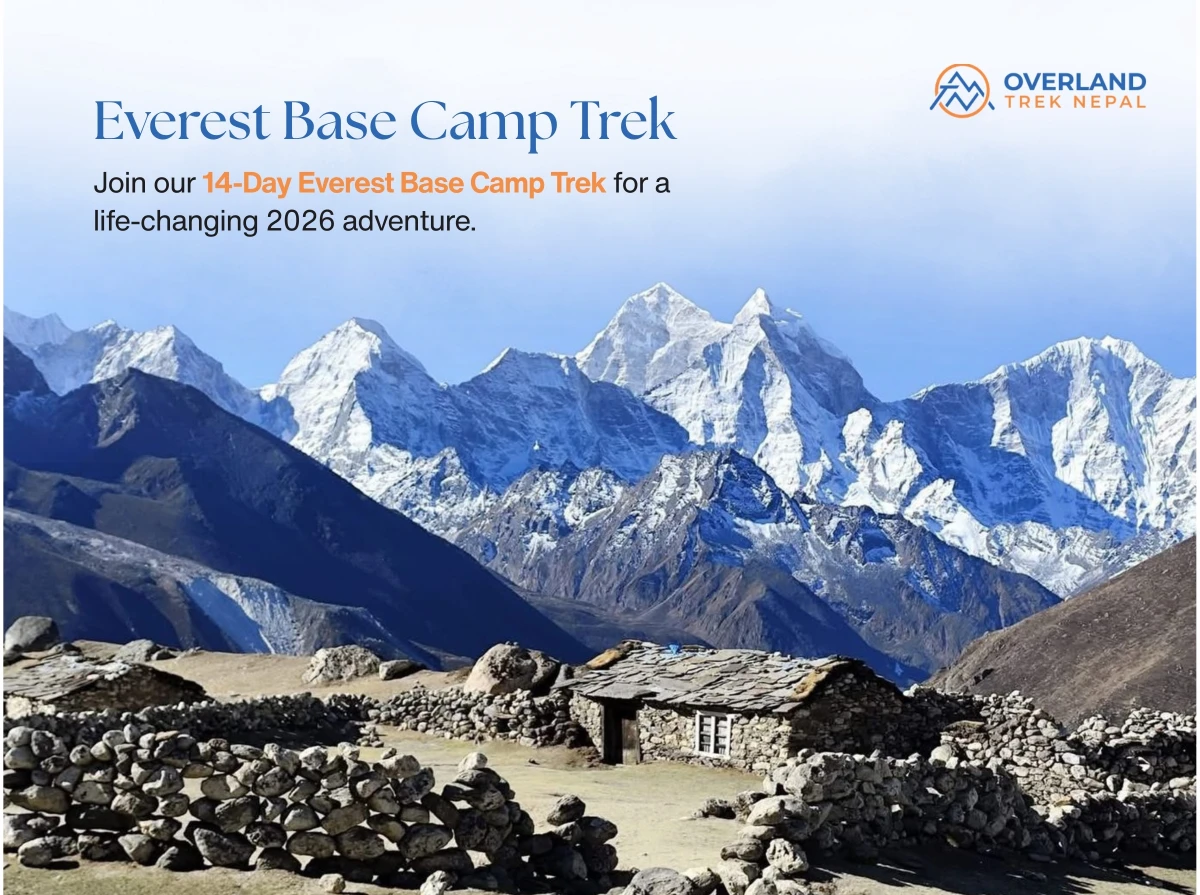
Everest Base Camp Trek
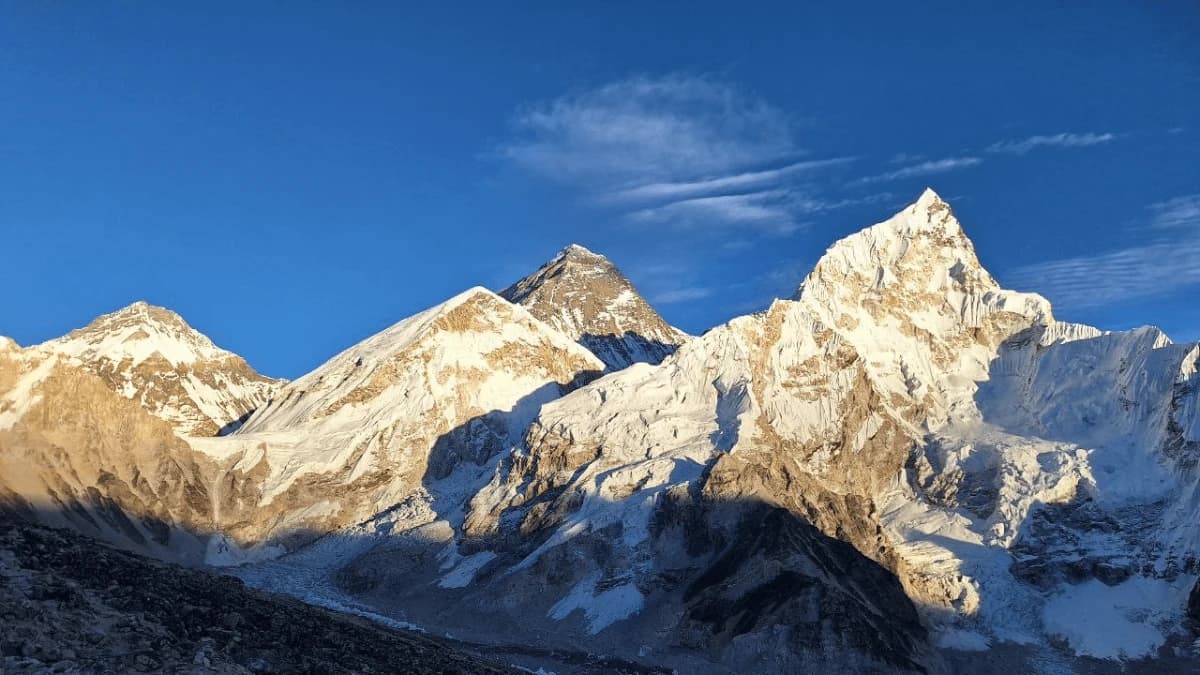
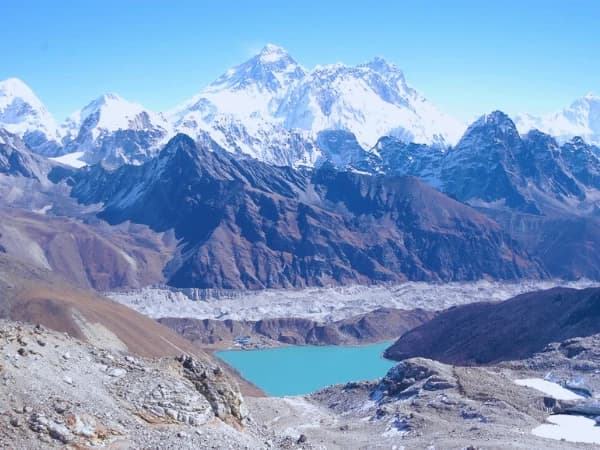
Everest View from Kalapaththar
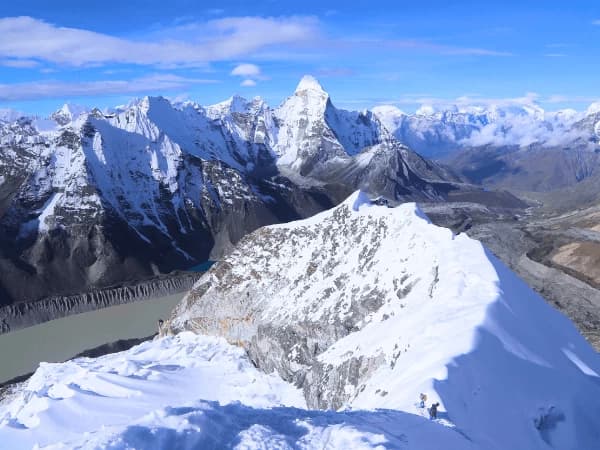
Mount Amadablam View
Golden Hour on the top of Mt. Everest
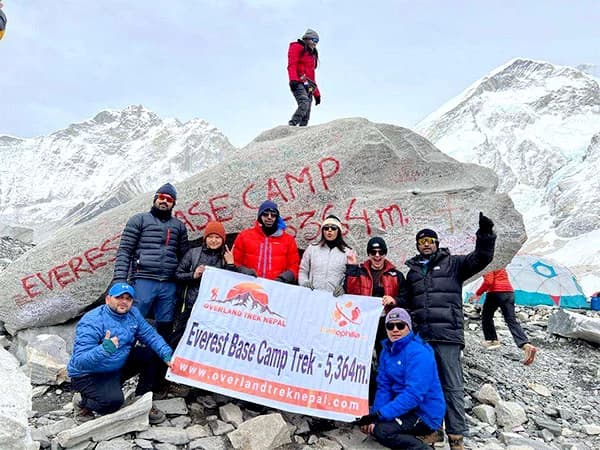
Travelers in EBC
View More Images

Everest Base Camp Trek - 14 Days

49 reviews in Trip Advisor
Recommended by 99% of travelers
Trip Facts
Duration
14 Days
Trip Grade
Strenuous
Country
Nepal
Maximum Altitude
5,555 m.
Group Size
1 - 20
Starts
Kathmandu
Ends
Kathmandu
Activities
Trekking & Hiking
Best Time
Mar-May and Sep-Nov

The Everest Base Camp Trek is one of the world's most iconic trekking journeys, located in Nepal's Khumbu region inside Sagarmatha National Park, a UNESCO World Heritage Site. This 14-day trek covers approximately 130 km (81 miles) round trip, reaching Everest Base Camp at 5,364 meters and the highest viewpoint, Kala Patthar, at 5,545 meters. Standing at the foot of Sagarmatha, the Nepali name for Everest, meaning "Goddess of the Sky",  is not just a hike. It is a pilgrimage.

Quick Answer: The Everest Base Camp Trek reaches an altitude of 5,364m and covers 130 km round-trip over 14 days.

Difficulty: The trek is considered moderate to challenging. No technical climbing skills are required.

Best Time: The best time for the Everest Base Camp Trek is autumn (September–November) and spring (March–May).

Cost: The Everest Base Camp Trek cost typically ranges from $1,200 to $2,000 USD for a fully guided package.

You will walk through Sherpa villages, cross suspension bridges over glacial rivers, and witness breathtaking Himalayan views every single day. Yes, it gets tough at 5,364 meters, but the view from the top is worth every breathless step.

Overland Trek Nepal has guided over 3,000 trekkers to Everest Base Camp with a 100% success rate. We know which trails to take, when to slow down, and exactly where to stand for that perfect view of Everest. Let us walk you through everything you need to know.

Why Choose the Everest Base Camp Trek?

If you're on the fence, here's a nudge. The EBC trek is the "peak" of all trekking experiences and yes, that pun is fully intended.

Reach Everest Base Camp (5,364m) — Where History Is Made

Stand on the moving rock and ice of the Khumbu Glacier at the literal feet of the world's highest mountain. This is where every Everest summit attempt begins.

Sunrise at Kala Patthar (5,545m) — The Best View of Everest

Here's something most people don't know: you can't actually see Everest's summit from Base Camp, it's too close! That's why the itinerary includes Kala Patthar at 5,545m for a sunrise view that will stay with you forever.

The Lukla Flight — The World's Most Thrilling Approach

They call it "thrilling." We call it the best rollercoaster ride in the Himalayas. This 30-minute scenic flight drops you straight into the mountains and signals that the adventure has truly begun.

Tengboche Monastery — Spiritual Heart of the Khumbu

The largest monastery in the Khumbu region sits at 3,810m with Ama Dablam towering behind it. When monks chant at dusk, and the mountains glow outside — that's pure magic.

Sherpa Culture — Walking Through Living History

You aren't just walking through a national park. You're walking through people's homes. Experience the legendary hospitality of the Sherpa people, their traditions, and their resilience.

Namche Bazaar — Gateway to High Altitude

Imagine a city carved into a mountain bowl at 3,440m. The Sherpa capital, the last place to get a decent cappuccino, and your acclimatization base before heading into serious altitude.

The Big Peaks — Everest Is Just the Beginning

It's not only Everest. The EBC trekking route frames Lhotse (8,516m), Nuptse (7,861m), and the stunning Ama Dablam (6,812m) — which looks, quite simply, like a mother protecting her child.

Everest Base Camp Trek — At a Glance

Detail Information
Total Duration 14 Days
Trekking Days 11–12 Days
Total Distance 130 km (81 miles) round trip
Daily Walking 4–7 hours average
Everest Base Camp Altitude 5,364m
Highest Point 5,545m — Kala Patthar
Difficulty Moderate to Challenging
Accommodation Teahouse / Mountain Lodges
Group Size 1 to 20 Trekkers
Guides Government-Certified Local Guides
Trek Type Teahouse Trek in Nepal

Everest Base Camp Trek Difficulty — Is It Right for You?

Let's have a heart-to-heart. Do you need to be an Olympic athlete to complete the Everest Base Camp Trek? Absolutely not. The trek is classified as moderate to challenging — not a walk in the park, but definitely not climbing K2 either. There are no ropes, no ice axes, and no technical climbing. You just need a pair of broken-in boots and a good attitude.

The 'Can I Do It?' Checklist

  • Walk 4–7 hours a day?: The pace is "bistarai, bistarai" slowly, slowly. No racing.

  • Carry a light daypack (6–8 kg)? Just your water, camera, and a jacket. Porters carry the heavy duffel.

  • Basic cardio fitness?: If you can jog 5km or hike weekends without collapsing, you're ready.

Who Is This Trek Good For?

  • First-time high-altitude trekkers: Great infrastructure, well-marked trail, teahouses every few hours.

  • Experienced hikers: A classic world-class route with proper challenges.

  • Solo travelers, couples, groups, and families: Ages 12–70+ with good health.

  • Photography and culture enthusiasts: Every day is a new frame-worthy landscape.

Who Should Not Trek EBC?

  • People with severe respiratory or heart conditions

  • Trekkers are unwilling to follow the acclimatization schedule

  • Those expecting city-level luxury at high altitude

The Secret Weapon: Acclimatization

The biggest challenge on EBC isn't the distance, it's the thin air. That's why two mandatory Active Rest Days are built into the itinerary, at Namche Bazaar and Dingboche. On these days, we hike higher and sleep lower, the proven "hike high, sleep low" strategy that teaches your body to extract more oxygen and dramatically reduces the risk of Altitude Mountain Sickness (AMS). It's not just safe, it's smart planning.

Physical Preparation

Start training 2–3 months before your trek. Cardio exercises (jogging 5km), leg strength training (squats, lunges), and weekend hikes with a loaded daypack of 6–8 kg are the most effective preparations for the Everest Base Camp Trek.

EBC Trek — Stage-by-Stage Distance & Altitude

Knowing what's ahead is half the battle. Here is the complete breakdown of every stage on the EBC trekking route.

Route / Stage Distance Duration Altitude
Lukla → Phakding 6.2 km / 3.8 mi 3–4 hrs 2,610m
Phakding → Namche Bazaar 10 km / 6.2 mi 6–7 hrs 3,440m
Namche Acclimatization Hike 1.1–1.5 km 1–4 hrs Up to 3,962m
Namche → Tengboche 9.2 km / 5.7 mi 5–6 hrs 3,810m
Tengboche → Dingboche 9.1 km / 5.6 mi 4–5 hrs 4,441m
Dingboche → Lobuche 7.9 km / 4.9 mi 4–5 hrs 4,910m
Lobuche → Gorak Shep 4.1 km / 2.5 mi 3–4 hrs 5,140m
Gorak Shep → EBC 3.5 km / 2.2 mi 3–4 hrs 5,364m ✓ EBC
Gorak Shep → Kala Patthar 2.0 km / 1.2 mi 2–3 hrs 5,545m ✓ Highest

Total round-trip trekking distance: approximately 130 km (81 miles), spread over 11–12 walking days at a safe, acclimatization-friendly pace.

Best Time for Everest Base Camp Trek

The best time for the Everest Base Camp Trek is autumn (September–November) and spring (March–May). These two windows offer the most stable weather, clearest mountain views, and safest trail conditions.

Season Months Conditions Verdict
Autumn Sep–Nov Dry trails, crystal-clear skies, vibrant festivals BEST ★★★★★
Spring Mar–May Blooming rhododendrons, warmer temps, climbing season active GREAT ★★★★
Winter Dec–Feb Extreme cold, heavy snow, very few crowds Experts Only ★★
Monsoon Jun–Aug Heavy rain, leeches, Lukla flight delays Not Recommended ★

Autumn (September–November) — Peak Season

Day: 10–15°C at lower altitudes. Night: -5 to -15°C at high altitude. Dry trails, exceptional visibility, and the festive energy of Nepal's Dashain and Tihar seasons. This is the most popular window for very good reasons.

Spring (March–May) — Second Best

Day: 15–20°C in lower areas. Night: -5 to -10°C at altitude. The hillsides bloom red and pink with rhododendrons. Everest expedition teams are active at Base Camp — a thrilling sight you won't forget.

Winter & Monsoon — Our Honest Take

Avoid June–August (heavy rain, leeches, frequent Lukla flight cancellations) and January–February (deep snow, extreme cold) unless you are a very experienced trekker who genuinely loves solitude and freezing temperatures.

A Day in the Life on the EBC Trail

What does a typical day with Overland Trek Nepal actually feel like? Here's a picture.

Time What Happens
6:00 AM Natural wake-up. Donkey bells, birdsong, and mountains glowing pink, no alarm needed.
6:30–7:00 AM Breakfast: porridge, eggs, toast, pancakes, and as much hot tea as you can drink.
7:30 AM Hit the trail. Crisp air. Chatting with your guide, photographing yaks, crossing suspension bridges.
12:00 PM Lunch stop at a teahouse. Fried noodles, Sherpa stew, or dal bhat. Legs get a rest.
4:00–6:00 PM Arrive at the lodge. Read, journal, play Uno (the unofficial game of the Himalayas), or just sit by the heater.
7:30 PM Dinner, then guide briefing for tomorrow — terrain, gear, departure time. Early to bed to recharge.

Safety on the Everest Base Camp Trek

High altitude is beautiful but unforgiving. Safety is the non-negotiable foundation of every Overland Trek Nepal journey.

1. Daily Health Checks

Every morning and evening, guides check oxygen saturation with a pulse oximeter. We track your stats to catch any altitude issues before they become problems.

2. Supplemental Oxygen on Standby

Bottled oxygen is carried on every trek. Rarely needed, but always there, like a seatbelt.

3. Helicopter Evacuation Network

Direct emergency links to helicopter rescue teams operating in the Khumbu. In serious situations, you are never stuck.

4. Safe, Treated Drinking Water

Stomach illness can end a trek faster than altitude sickness. Treated water access is ensured throughout the route.

The Golden Rule: Listen to your guide. If they say drink more water, you drink. If they say slow down, you slow down. On the mountain, your guide is the authority — and that's exactly how it should be.

Food & Accommodation — Teahouse Trekking in Nepal

People always ask: "Do I sleep in a tent?" Not at all. The Everest Base Camp Trek is a classic teahouse trek in Nepal, where you stay in mountain lodges every night along the route.

The Teahouses

Rustic, cozy wooden lodges with twin beds, a mattress, a pillow, and a blanket. Bedrooms are not heated, only the communal dining hall has a central stove. Pro tip: Bring a sleeping bag rated to -15°C to -20°C. This is non-negotiable above 4,500m.

The Food

You will not go hungry. Teahouse menus are impressively large for mountain lodges.

  • Breakfast: Oatmeal, toast, eggs (any style), and pancakes

  • Lunch / Dinner: Dal bhat (rice and lentils — the trekker's best friend), momo (dumplings), thukpa (noodle soup), fried rice, pasta, Sherpa stew, spring rolls, and Sherpa-style pizza at lower altitudes

  • Drinks: Milk tea, ginger tea, lemon tea, hot chocolate, black coffee — available at every teahouse

Vegetarian Tip: Go vegetarian on the trek. Meat is carried up by a porter, and freshness is not guaranteed above 4,000m. Save the steak for Kathmandu.

Why Choose Overland Trek Nepal for Your EBC Trek?

There are a hundred agencies in Kathmandu. Here's the difference.

Why Us What It Means for You
3,000+ Trekkers Guided 100% EBC success rate, a proven track record, not a claim.
Nepal-Based, Local Company No middlemen. Your money supports Nepali families directly.
Government-Certified Guides Not just map-readers, certified Sherpas with years of experience and stories that will stay with you.
No Hidden Costs Price includes permits, Lukla flights, food, lodge, guide, and porter. No surprises.
Safety First, Always Daily oximeter checks, supplemental oxygen, and helicopter evacuation contacts on every trek.
Free Gear Provided Duffel bag, trekking poles, and OTN T-shirt included and yours to keep.
Family Treatment If you're slow, we wait. If you're sick, we care. We finish together.

Customize Your Everest Trekking Package

One size does not fit all. Your trek, your rules.

Short on Time? — 11-Day Heli Return Trek

Trek all the way to Everest Base Camp and Kala Patthar, then fly back by helicopter from Gorak Shep to Lukla, saving two days and treating yourself to an aerial view of the Himalayas.

Want Luxury? — Premium Lodge Upgrade

Upgrade to lodges with electric blankets and attached bathrooms in the lower regions (Phakding, Namche, Tengboche). Above 4,500m, teahouses are teahouses, but we'll make the lower nights special.

Want More? — Gokyo Lakes Extension

Add 4 days to include the turquoise Gokyo Lakes (4,700m) and the Gokyo Ri viewpoint one of the most beautiful detours in all of Nepal.

Heli-Return Option

Trek up, fly down. Save your knees on the descent and feel like a movie star gliding past Everest on the way out.

Video Gallery
Everest View from Kalapathhar
Itinerary

Embark on the iconic Everest Base Camp Trek with the experts at Overland Trek Nepal. Our professional Everest Base Camp Trek itinerary prioritizes your safety through proven acclimatization schedules, making it a top choice for both beginners and experienced hikers. At Overland Trek Nepal, we specialize in flexibility; we can customize your Everest Base Camp Trek to match your specific fitness goals and time constraints. Trust Overland Trek Nepal to deliver a well-organized, world-class journey to the base of the world's highest peak.

Tour PlanExpand all

The flight into Kathmandu with a panoramic view of the valley below and the Himalayan ranges towering above the clouds is stunning. Once you land and check out from the Tribhuvan International Airport our agent will greet and welcome you, and drive you to your hotel, later on, in the evening you’ll be assisted with all of your travel requirements for the trek by your guide, well settled everything and will be ready for tomorrow.

Max Altitude: 1,400 m. Meals: NAAccommodation: 3-Star Hotel in KathmanduDistance: 20 min from Airport

Early morning your guide will come to pick you up for a flight to Lukla a picturesque mountaintop settlement that starts your Everest adventure after you get to Lukla You will have a delicious Breakfast then sort through your possessions and head out on your adventure.

Descend past Chauri Kharka village to the Dudh Koshi River, a lovely trail that follows the river’s bank leading to Phakding (2,610m), a small Sherpa settlement hidden in the verdant Dudh Koshi Valley. On the route, you’ll pass by Khumbila, a sacred peak sacred among Sherpas, climbing this peak is prohibited making it one of the Khumbu’s few unclimbed summits.

Once you arrive at Phakding take a stroll around the village chat with the locals, or stop by one of the cafés for a hot beverage if you’re not too tired.

Max Altitude: 2,840 Meals: Breakfast/ Lunch/ DinnerAccommodation: Local Guest HouseDistance: 30 min Flight, 3-4 hrs Walk

After your early morning, super-hot breakfast, Set out for Namche Bazaar, Nepal’s “Sherpa capital.” The trail today passes the Dudh Koshi, a milky glacial river up to Monjo, walks across numerous suspension bridges including the renowned Hillary Suspension Bridge, and through mesmerizing pine and conifer forests.

Before arriving at the Sagarmatha National Park entrance arrange your permits for inspection, after the permits are checked trek down alongside the Dudh Koshi River to Jorsale, from here, it’s a tough climb up to Namche Bazaar, the Everest Region’s economic powerhouse, brace yourself as from here you’ll catch your first glimpse of Mount Everest

Max Altitude: 3,440 m. Meals: Breakfast/ Lunch/ DinnerAccommodation: Local Guest HouseDistance: 6-7 hrs

Namche Bazaar is the heart of the Everest region. This is your first day of acclimatization as you climb higher, your body will need to adapt to the higher altitudes due to thin air there are several vantage points in the village where you can go for an acclimatization hike. Everest Region’s finest bakeries, cafés, restaurants, shops, and the only ATM in this region can be found here.


Interact with the friendly locals or hike up to any of the vantage points for stunning views of the Himalayas, before sunrise to witness Mount Everest, Ama Dablam, Thamserku, Kongde, and Lhotse are all illuminated by the sun’s rays, during the day explore the Sherpa Culture Museum Learn about Sherpa culture and customs at the.

An upward hike from Shyangboche Airport to Everest View Hotel is a great way to acclimate while seeing Mount Everest, Thamserku, and Ama Dablam up close, hike to the Khumjung and Kunde settlements, or visit Sir Edmund Hillary’s school in Khumjung, the first school in the Everest Region and visit 400 years old Khumjung Monastery where the skull of Yeti, the abominable snowman, is said to be kept.

Max Altitude: 4,800 m. Meals: Breakfast/ Lunch/ DinnerAccommodation: Local Guest HouseDistance: 2-3 hrs

The trail today provides amazing sights of the Himalayan ranges. Himalayan giants Everest, Nuptse, Lhotse, Ama Dablam, Thamserku, and Kwangde can be seen from the trail, passing through Oak, Juniper, Confers, and Rhododendron forests.

Tengboche is the destination for today’s trek, A close-up view of Ama Dablam, widely regarded as one of the world’s most picturesque peaks can be seen from here. The Khumbu region’s oldest Buddhist monastery Tengboche Monastery emerges over the settlement, explores the monastery, and attends to the monks’ trance-inducing hum and chanting.

Additionally, the golden rays of the sun brushing over the snowy mountains at dawn and dusk, are not to be missed.

Max Altitude: 3,860 m. Meals: Breakfast/ Lunch/ DinnerAccommodation: local TeahouseDistance: 4-5 hrs

On your way to Dingboche, you’ll pass through the plains and meadows to the Imja Khola (River) views of Island Peak and Ama Dablam are breathtaking, the settlement of Pangboche is home to the region’s largest permanent Sherpa settlement where you’ll experience a unique Sherpa ambiance, lifestyle and delicious local cuisine. From Pangboche proceed to Dingboche in the afternoon.

Max Altitude: 4,410 m. Meals: Breakfast/ Lunch/ DinnerAccommodation: TeahouseDistance: 5-6 hrs

Take a day to acclimate to the high altitude at Dingboche.

This is your second day for acclimatization, trekkers and climbers have plenty to do here, an acclimatization hike to Nangkatshang or Nagarjun hill (5,100 m), named after a Buddhist monk who lived on the hilltop, is one of the Khumbu region’s most beautiful viewpoints, there are no difficult aspects to this uphill trek expect of some loose rocks be careful. However, no technical climbing is required, and there is nothing to be concerned about other than the altitude.

Makalu, Lhotse, Ama Dablam, Kantega, Thamserku, and other peaks can be seen in a 360-degree panorama. Ama Dablam’s entire mountain can be seen from here, you can also get a good look at the Imja glacier from the top. Relax or go for a walk once you head back to the village.

Max Altitude: 5,555 m. Meals: Breakfast/ Lunch/ DinnerAccommodation: TeahouseDistance: 3-4 hrs

Today wake up early and after breakfast continue to Lobuche, a tiny village with spectacular views of Lobuche, Pumori, and Nuptse, through steep mountain terrain, because of the high altitude, walking may be difficult, so take frequent breaks and stop for lunch along the way in Thukla (4,600 m).

At Thukla Pass, you’ll pass by memorial stupas built in honor of mountaineers who died while attempting to climb Mount Everest; notable among the stone tributes are those honoring alpinists Scott Fischer, Rob Hall, and late climbing record-holder Babu Chiri Sherpa.

From the trail, you can see the border Himalayan peaks that separate Nepal and Tibet. Lobuche is a small settlement made up of a few local homes and teahouses that offer basic services.

Max Altitude: 4,910 m. Meals: Breakfast/ Lunch/ DinnerAccommodation: TeahouseDistance: 5-6 hrs

Today’s hike will take you to Everest Base Camp, your dream of reaching the base of the world’s highest peak the place you’ve wanted to visit since the start of your journey. Although today’s trek is one of the most memorable of your entire adventure, it is challenging, and you may become physically weaker as the elevation rises and the oxygen level drops. So, take it slowly and steadily, as directed by your guide.

Gorak Shep is only 2 hours away from Lobuche, climb up to Everest Base Camp around 2-3 hours after taking a lunch break and leaving your heavy belongings at the Gorakshep teahouse.

The Everest Base Camp is, at an elevation of 5,364 meters (17,598 feet) Mountain climbers use the base camps, which are basic campsites while climbing Everest.

Max Altitude: 5,140 m. Meals: Breakfast/ Lunch/ DinnerAccommodation: TeahouseDistance: 7-8 hrs

Very early morning hike to Kala Patthar, the most popular overlook in the Everest Region, At 5,550 meters, Kala Patthar is the highest point on your trek as the summit of Mount Everest is not visible from Everest Base Camp, hikers flock to Kala Patthar to get a closer look at the world’s highest mountains, Mount Everest, Pumori, Nuptse, and Lhotse, which form a snowy ring around Kala Patthar.

Enjoy a 360-degree panoramic view of these Himalayan vistas and witness the sun’s flaming rays illuminate Mount Everest’s snowy peak from the top of Kala Patthar.

Later, return to Gorak Shep and have a super-hot breakfast then proceed to Pheriche.

Max Altitude: 5,555 m. Meals: Breakfast/ Lunch/ DinnerAccommodation: TeahouseDistance: 6-7 hrs

The hike today will bring you back to Namche bazaar, after breakfast, retrace your steps back through lush green tropical forest and raging river. Once you arrive at Namche take a quick rest and stroll around, the place has lots of attractions to offer.

Max Altitude: 3,440 m. Meals: Breakfast/ Lunch/ DinnerAccommodation: TeahouseDistance: 6-7 hrs

After an early morning breakfast head to the Hillary Suspension Bridge, then towards Lukla via various small settlements. Once you reach Lukla celebrate your achievement as well as your last night in the mountains.

Max Altitude: 2,840 m. Meals: Breakfast/ Lunch/ DinnerAccommodation: TeahouseDistance: 6-7 hrs

Take a morning flight, which will be a picturesque flight that takes 35 minutes to reach Kathmandu also, during the main season, if there is no direct flight to Lukla  Than will take the flight to Ramechhap, then from there, take a shared jeep to Kathmandu. Apart from the compelling views of the mountains you conquered and the other parts of the two Himalayan ranges, if the weather permits, on the flight. When you reach Kathmandu, you will be greeted by our representative and will be transferred to the hotel. The rest of the day is free to either have leisure time or go out on lively Thamel, full of souvenir shops, trekking equipment shops, handicrafts, etc. After a successful day and attainment of the objectives set on the tour, an inviting farewell dinner with a Nepali course and cultural dance is arranged by Overland Trek Nepal this evening, after dinner you will get your successful trip achievement certificate and then back to the Hotel.

Max Altitude: 1,400 m. Meals: Breakfast & DinnerAccommodation: 3-Star Hotel in KathmanduDistance: 30 min Flight & 20 min Drive

Our staff will drop you off at the airport, you’ll bid farewell to your newfound friends as well as Nepal.

NOTE: All of the trekking hours and distances mentioned above are estimates and should only be used as a general guideline.

Max Altitude: 1,400 m. Meals: BreakfastAccommodation: NADistance: 20 min to Airport
Route Map
ebc-trek-map
Altitude Chart
everest-base-camp-trek-height-chart
Cost Details
Required Permits & Documents
  • Passport  & Photos
  • Everest National Park entry permits
  • Khumbu Region Municipality Entry Permit Fee.
  • TIMS Card (Trekkers Information Management system)
Meals & Snacks
  • Three meals a day (Breakfast, Lunch, Dinner)
  • Fresh Seasonal Fruits as a dessert after Dinner
  • Farewell dinner in Kathmandu at the end of the trek.
Accommodation
  • Two-night accommodation in Kathmandu with breakfast in 3-star Hotel
  • Tea house/ Local Guest House Twin Sharing basis during the trek
Staffs & Crew Member
  • Government Licensed Holder very well English speaking Overland Trek Nepal experienced trekking Guide.
  • All the Expenses ( Accommodation, Food, Salary, Transport, Insurance, Medicin) of All Staff & Crew member
Transportation
  • Airport pick-up and drop by private vehicle
  • Domestic flight ticket round trip and airport tax Kathmandu to Lukla and back to Kathmandu
Others
  • Trekking Map
  • All government and local taxes
  • Company Duffel bag, t-shirt & Cap.
  • Some Normal & emergency First aid Medical Kit
  • Overland Trek Nepal trekking appreciation certificate after the successful trek
  • Rescue operation arrangements in case of complicated health conditions (funded by travel insurance).
Excludes
  • Personal Equipment
  • Nepal entry visa fee, International airfare
  • Tips for guide and porter (Tipping is expected)
  • Lunch and dinner during your stay in Kathmandu
  • Travel medical insurance and emergency evacuation cost
  • Porter Services per Day 25 USD (2 Clints 1 porter and will carry a total of 20kg)
  • Personal expenses such as Alcoholic beverages, hot shower, water bottle, cold drinks, hot water, battery charge, donation, etc
  • Any other expenses that are not mentioned on the price include the section
Complimentary
  •  
  • Trekking Pole/ Stick
  • Overland Trek Nepal company T-Shirt & Cap
  • One Portable Oxygen Cylinder (for emergencies)
  • Nepali SIM Card, but the Data You Have to pay for
  • 1-hour full-body Trekker's massage after returning from the trek
  •  
Add-ons & Options

Customize Your Comfort | Elevate Your Experience | Personalize Every Step

Maximize your 14-day EBC adventure with exclusive add-ons. Simply select your preferred upgrades during online booking.

1. Kathmandu Hotel Upgrades

Relax in comfort before and after your trek.

  • 4-Star Hotel: Single $60 | Double $70

  • 5-Star Hotel: Single $170 | Double $210 (Includes breakfast, hot showers, and Wi-Fi)

2. Himalayan Luxury Upgrades

  • Hotel Everest View (3,880m): Single $180 | Double $249 (Iconic views of Mt. Everest; Meal buffets available from $27)

  • Full Trek Lodge Upgrade: $200/person (Best available luxury lodges trail-wide)

3. Helicopter Transfers

Skip the trek down or the Lukla flight lines.

  • KTM ⇌ Lukla: Sharing $500–$600 | Private $2,500

  • Gorakshep to Lukla: $800 (Sharing)

  • Gorakshep to Kathmandu: $1,500 (Sharing)

4. Kathmandu Cultural Tour

Private guided tour of UNESCO World Heritage sites.

  • Private Car (1–2 pax): $80

  • Scorpio Jeep (Up to 6 pax): $90

  • Hiace Van (Up to 12 pax): $120
Dates & Availability
Select the date
Mar 2026
Apr 2026
May 2026
Jun 2026
Jul 2026
Aug 2026
Sep 2026
Oct 2026
Nov 2026
Dec 2026
Jan 2027
Feb 2027
Mar 2027
Apr 2027
May 2027
Jun 2027
Day & Departure Dates
Status
Price
Day & Departure Date
Sunday - Saturday08 Mar, 2026 - 21 Mar, 2026
Trip Status
Guaranteed
Price
US$1399US$1559
Save US$160
Day & Departure Date
Sunday - Saturday15 Mar, 2026 - 28 Mar, 2026
Trip Status
Guaranteed
Price
US$1399US$1559
Save US$160
Day & Departure Date
Sunday - Saturday22 Mar, 2026 - 04 Apr, 2026
Trip Status
Guaranteed
Price
US$1399US$1559
Save US$160
Day & Departure Date
Sunday - Saturday29 Mar, 2026 - 11 Apr, 2026
Trip Status
Guaranteed
Price
US$1399US$1559
Save US$160
Day & Departure Date
Monday - Sunday30 Mar, 2026 - 12 Apr, 2026
Trip Status
Guaranteed
Price
US$1399US$1559
Save US$160
Day & Departure Date
Tuesday - Monday31 Mar, 2026 - 13 Apr, 2026
Trip Status
Guaranteed
Price
US$1399US$1559
Save US$160

This trip departs early in the morning as per our fixed schedule. However, your comfort matters most—if the timing doesn’t suit you, we’re happy to customize the departure. At Overland Trek Nepal, flexibility is our promise, and your happiness is our priority.

Essential Information

Permits and Regulations for Everest Base Camp Trek

There are two specific permits that are necessary for the Everest Base Camp Trek:

1. Sagarmatha National Park Permit

  • Cost: NPR 3,000 (approximately USD 25) for foreigners

  • NPR 1,500 for SAARC nationals

  • Obtained in Kathmandu or at the park entrance in Monjo

2. Khumbu Pasang Lhamu Rural Municipality Permit

  • Cost: NPR 3,000 (approximately USD 17)

  • Obtained in Lukla or arranged in Kathmandu

Both permits are included in our package price, and we handle all the paperwork for you. You'll need:

  • Passport (original and copies)

  • 2 passport-size photos

  • Completed application forms (we provide these)

Everest Base Camp Trek: Booking & Payment Guide

As a government-registered operator with over 10 years of experience, Overland Trek Nepal provides a secure and seamless booking process for your journey to Everest.

1. How to Book Your Trek

You can confirm your Everest Base Camp Trek through any of the following methods:

  • Direct Online Booking: Select your dates and book directly via our website package.

  • Email Inquiry: Send your details to our team for a custom itinerary.

  • Instant Contact: Reach out via our official contact channels for immediate assistance.

2. Booking Requirements

To finalize your reservation, we require a 20% deposit of the total trek cost. Please provide the following documents:

  • Passport Copy: A clear digital scan/photo.

  • Travel Insurance: Proof of coverage for high-altitude trekking.

  • Passport-Sized Photos: For trekking permits and local documentation.

3. Secure Payment Methods

We offer multiple flexible payment options for your convenience:

  • Online Payment Gateway: Securely pay via credit/debit card on our website.

  • Bank Transfer: Direct wire transfer to our corporate account.

  • Western Union: Global remittance for quick confirmation.

FAQs

The total weight limit including hand and main luggage is 15 Kg as the plane to Lukla from Kathmandu are very small.

Yes, it is possible to do Everest Base Camp Trek in 14 days with proper acclimatization.

Yes, Overland Trek Nepal can arrange a Helicopter Rescue Service in the urgent scenario if you get mountain sickness.

Yes, most of the teahouses provide Wi-Fi facilities during your stay with some extra cost. It will cost around $2-5 per device depending on the location of the teahouses.

Better to buy a water purification tablet if you want to drink water directly from the tap or natural spring. However, mineral water and filtered water are also available in teahouses that would cost around $1-3 per bottle.

The cost ranges from USD 1,000 - USD 1,400 for budget packages to USD 1,400 - USD 2,000 for standard packages. Luxury options can cost USD 3,000 - USD 5,000+. Our packages include flights, permits, guide, accommodation, and meals.

Yes! You must have insurance covering high-altitude trekking (up to 6,000m) and emergency helicopter evacuation. We cannot accept trekkers without proper insurance.

Everest Base Camp trek requires these essential items which include, a warm layered clothing, waterproof jacket and pants, good trekking boots, sleeping bag, daypack, sunglasses, sunscreen, personal medications, and toiletries.

The round-trip distance from Lukla to Everest Base Camp is approximately 130 kilometers (80 miles). On a standard 12-day trek, you will cover roughly 11–15 km per day. While the distance isn't extreme, the thinning oxygen makes every mile feel twice as long.

Yes, Overland Trek Nepal offers a 10-day EBC Trek for experienced hikers or those with limited time. This usually involves a flight to Lukla and a more demanding pace, or a helicopter return to save 3-4 days of descent.

While solo trekking was previously common, new 2023/2024 regulations strongly recommend or require hiring a licensed guide for safety in high-altitude regions. Overland Trek Nepal provides solo travelers with private guides to ensure 100% safety and permit compliance.

The Everest Base Camp Trek reaches its highest point at Kala Patthar (5,545m / 18,192ft), which offers the best view of Mt. Everest. The actual Base Camp sits slightly lower at 5,364m.

Major credit cards are accepted in Kathmandu and Namche Bazaar, but they often carry a 3-4% surcharge. For the rest of the Everest Base Camp Trek, cash (Nepali Rupees) is king. We recommend carrying $300–$500 in local currency for snacks, Wi-Fi, and charging.

Yes! You can rent high-quality down jackets and -20°C sleeping bags for about $2–$3 per day in Thamel. This saves you from buying expensive gear you might only use once for your Everest Base Camp Trek.

For further information
Please feel free to speak with our travel expert.
Gautam Dhakal
Mr. Gautam Dhakal
info@overlandtreknepal.com
We highly recommend this team

It's been a wonderful journey.
We are happy that we were so lucky and used the services.
I would even call it a “perfect journey through time and space”:
The guide's professionalism, care for us, love for...

read more +
E
Elena- Russia
March 24, 2025
Up to EBC!

Great communication, amazing customer service, and a wonderful experience. Nick was
extremely accommodating and courteous. Highly recommended for anyone who wants to
visit the beautiful mountains of Nepal! Will definitely use them again for my next trip!

M
Margaret- Malaysia
November 30, 2024
EBC through Cho La pass

We did the EBC trek in october 2024. It was a big dream for my friends and I (we were 3) to do it just after our studies. We contacted Nick and he made everything clear, he was disponible and...

read more +
Kevin H
Kevin H- France
October 21, 2024
You May Also Like
Gokyo Lake View from Renjola
Price From
US$1399
Explore
island-peak-climbing-with-everest-base-camp-19-days
Seasonal Offer Discount 10%
Price From
US$2699US$2999
Explore
Need Help? Call Us.+977 9851138871