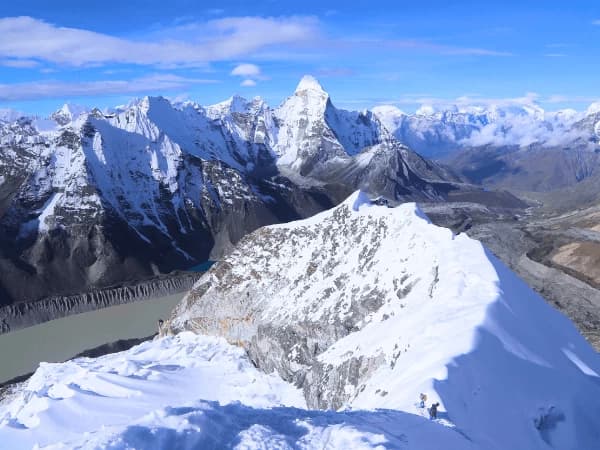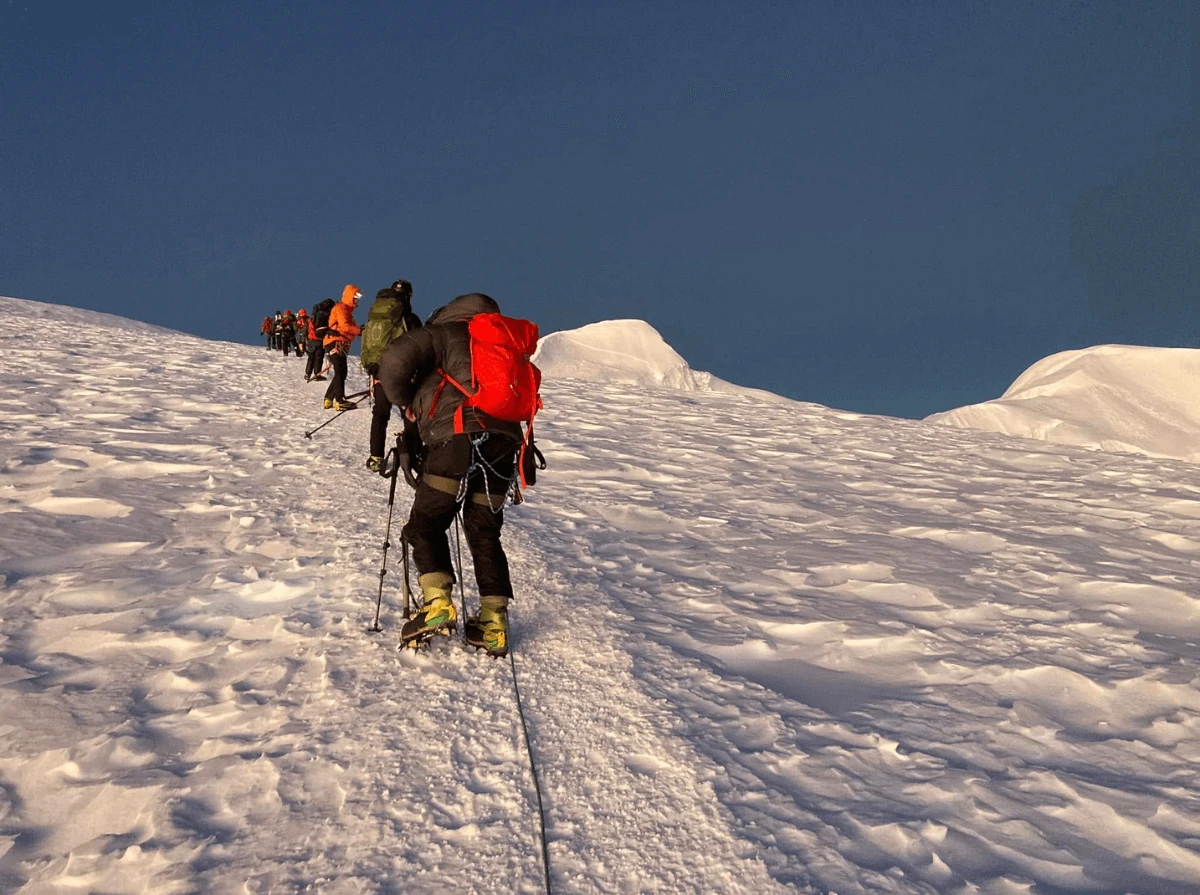
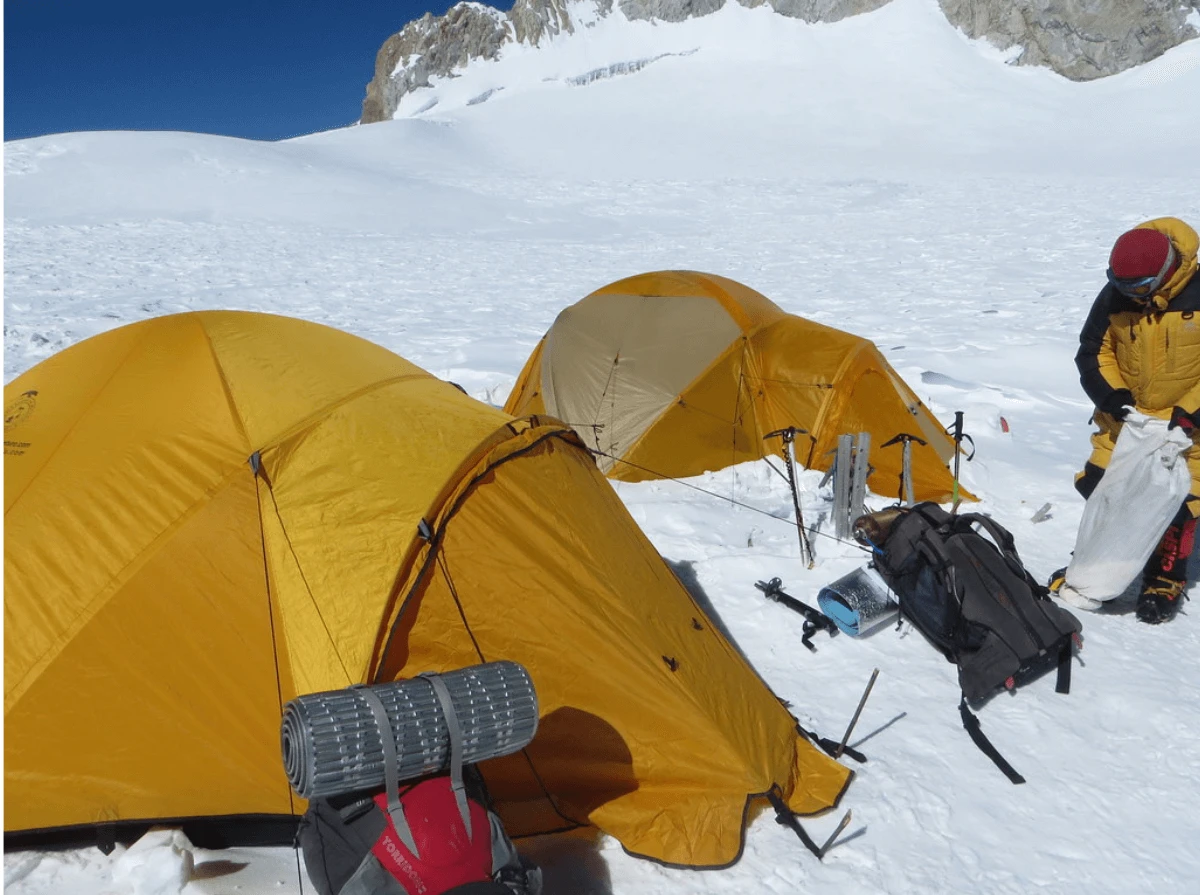
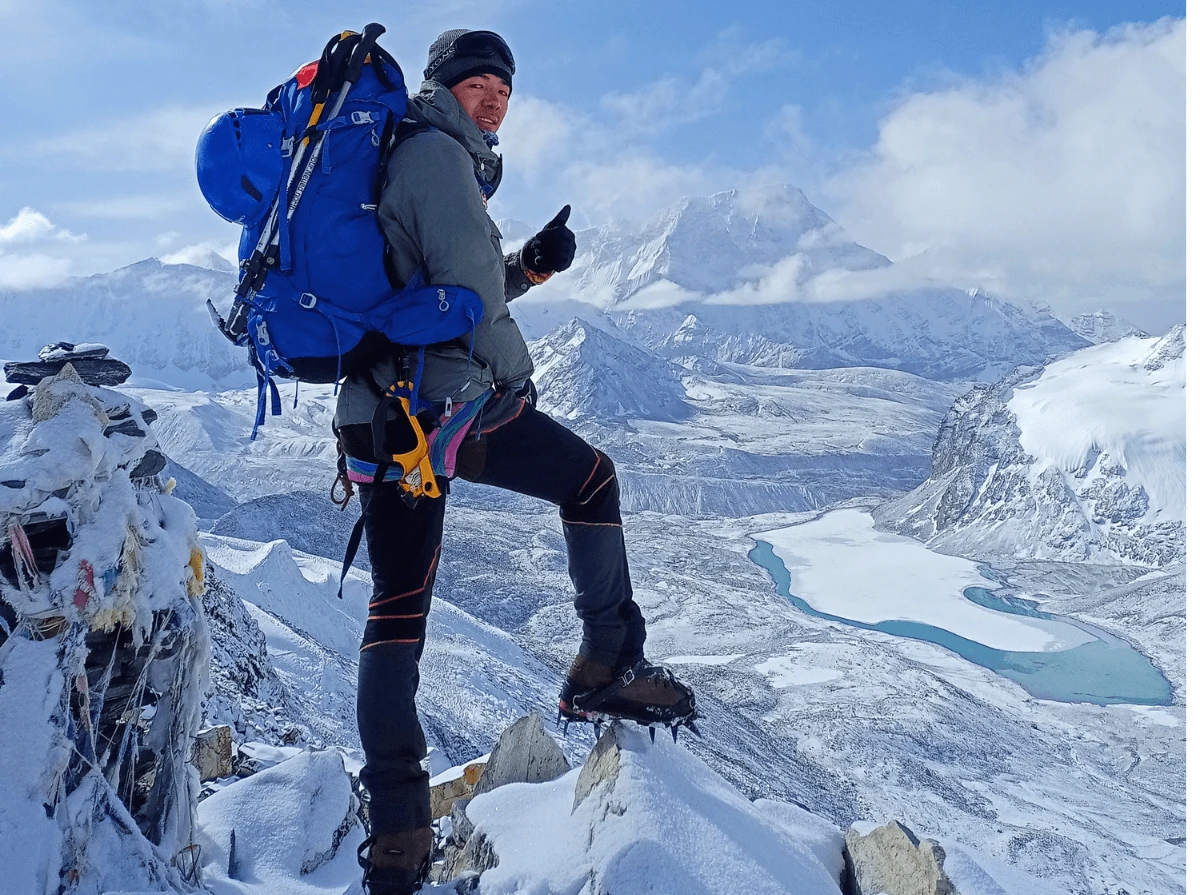
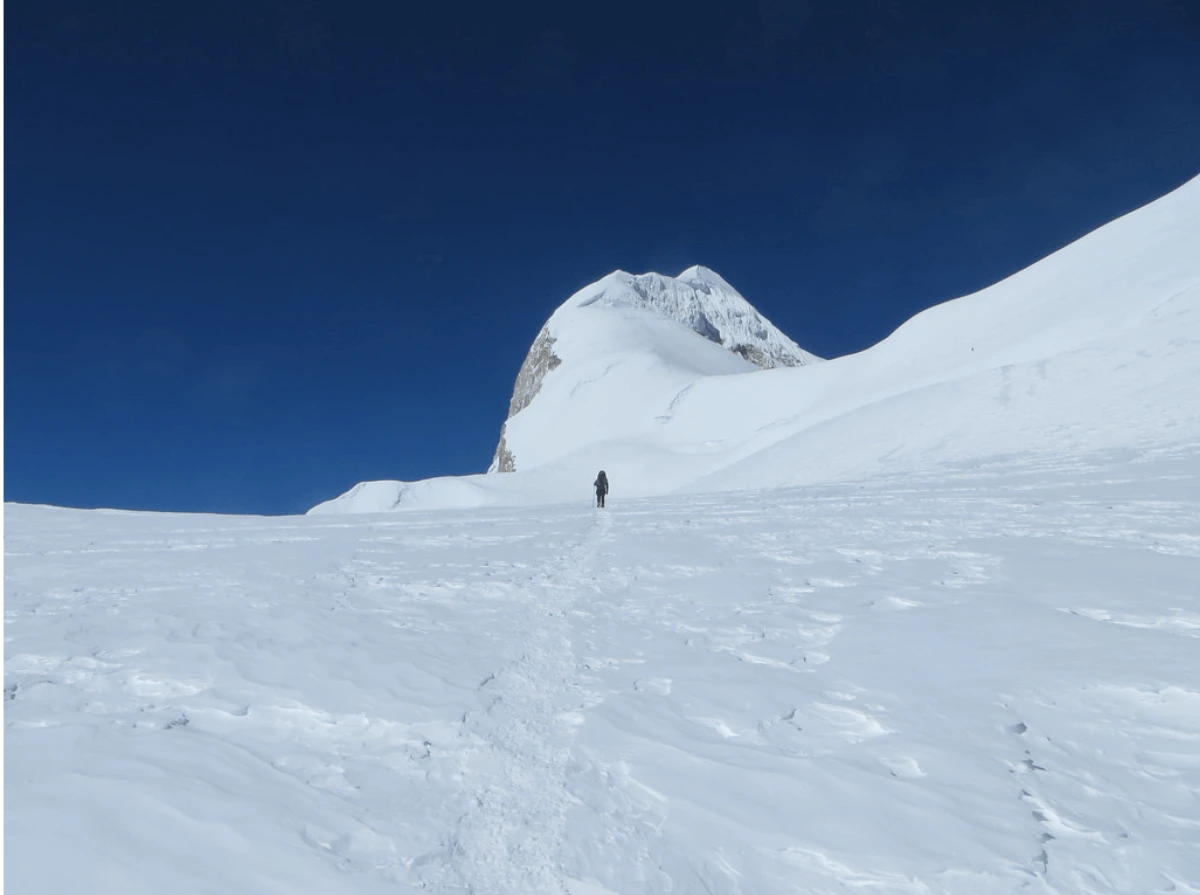
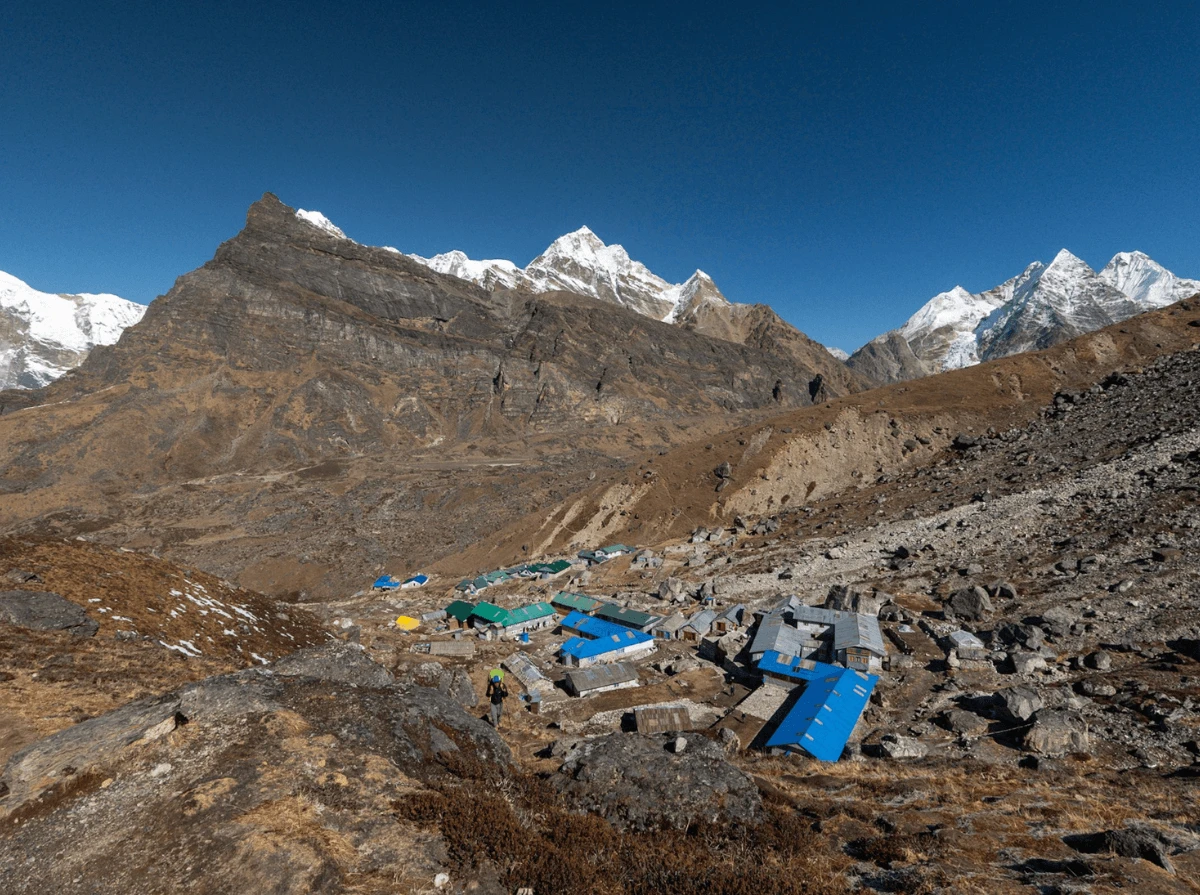
Baruntse with Mera Peak Expedition
View More Images

Baruntse with Mera Peak Expedition - 32 Days

49 reviews in Trip Advisor
Recommended by 99% of travelers
Trip Facts
Duration
32 Days
Trip Grade
Technically Challenging
Country
Nepal
Maximum Altitude
7,129 m.
Group Size
1 - 12 Pax
Starts
Kathmandu
Ends
Kathmandu
Activities
Trekking & Climbing
Best Time
Spring & Autumn

Highlights of the Day

  • Combined Himalayan Climb to Baruntse and Mera Peak.
  • A 6000-meter and 7000-meter expedition in the same trip.
  • Remote Himalayan Journey through Everest and Gaurishankar Region.
  • Journey to the highest trekking peak of Nepal, Mera Peak.
  • Magnificent vistas like Everest, Lhotse, Nuptse, Makalu, Kanchenjunga, etc.
  • A mixture of trekking peak and technical Himalayan Climb.

A Combined Baruntse and Mera Peak Adventure Overview

Experience one of Nepal’s most rewarding peak climbing adventures, Baruntse with Mera Peak Expedition. Perfect for climbers seeking a seamless journey from a non-technical 6,000m summit to a challenging 7,000m Himalayan peak.

Climb Mera Peak first to build essential acclimatisation, confidence, and high-altitude skills before conquering Baruntse Peak (7,129m). Baruntse is one of Nepal’s most spectacular and less crowded expedition peaks. This incredible double-peak adventure blends excitement, safety, and success, led by expert Sherpa guides and supported by comprehensive expedition logistics, an unforgettable climb waiting to be yours.

Why Combine Mera Peak with Baruntse Peak?

Climbing Mera Peak and Baruntse together is not just efficient, it is strategic. Mera Peak provides an ideal acclimatisation phase for Baruntse. It allows your body to adapt gradually to extreme altitude while practising basic mountaineering skills. By the time you transition toward Baruntse Base Camp, you are already comfortable above 6,000 meters, significantly increasing your summit chances.

Here are the reasons why combining Mera Peak with the Baruntse Expedition:

  • Natural altitude progression from 6,476m to 7,129m
  • Reduced acclimatisation risk and fatigue
  • Better technical readiness for Baruntse’s steep sections
  • Higher summit success rate compared to direct Baruntse attempts
  • Ideal for climbers seeking a multi-summit Himalayan expedition

Difficulty Level & Who This Expedition Is For

The Baruntse with Mera Peak is considered a challenging climb, with a difficulty level of advanced. It combines extreme altitude with sustained physical and technical demands. Mera Peak offers a non-technical ascent ideal for acclimatisation. Meanwhile, Baruntse Peak introduces steeper snow and ice sections, fixed ropes, and prolonged days above 6,000 meters.

This expedition is best suited for climbers who are confident in high-altitude environments and prepared for cold temperatures, exposure, and demanding summit pushes. Strong cardiovascular fitness, prior mountain experience, and mental resilience are essential for a safe and successful climb.

Ideal climbers for this expedition include:

  • Trekkers or climbers with prior high-altitude trekking or 6000m peak experience
  • Climbers who have completed Mera Peak, Island Peak, or similar Himalayan peaks
  • Physically fit individuals are comfortable with cold conditions, altitude adaptation, and long expedition days
  • Adventurers seeking a logical progression toward more technical Himalayan expeditions

Combined Baruntse with Mera Peak Expedition Cost for 2026–2027

The combined Baruntse with Mera Peak expedition cost for 2026 and 2027 reflects the logistics, expert support, and high-altitude services. Overland Trek Nepal offers this combined trip to Baruntse Mera Peak starting from USD 10,000 to USD 15000 per person.

Prices include permits for both peaks, seasoned Sherpa guides, high-altitude tents, kitchen staff, meals at camps, fixed rope setup, and safety equipment. Costs can vary based on group size, season (spring or autumn), and optional services such as private guides or additional oxygen support. Feel free to contact us via email or WhatsApp us at +9779841920870 for more cost details.

Why Choose Overland Trek Nepal?

Overland Trek Nepal is a trusted Himalayan climbing operator with years of experience in high-altitude expeditions, including Mera Peak, Baruntse Peak, Island Peak, Ama Dablam, and other technical climbs. Our team prioritises safety, acclimatisation, expert guidance, and responsible expedition logistics. Every climb is supported by certified Sherpa guides, quality equipment, and well-planned rotation strategies.

What Makes Us Reliable

  • Experienced in 7000m & 6000m peak climbing
  • Experienced Sherpa guides with proven summit records
  • Strong safety protocols, weather monitoring & acclimatisation planning
  • Quality expedition tents, climbing gear & medical support
  • Fair porter treatment and sustainable mountain practices
  • 24/7 communication support before and during the expedition
  • High success rates on Baruntse with Mera Peak combined climbs
Itinerary

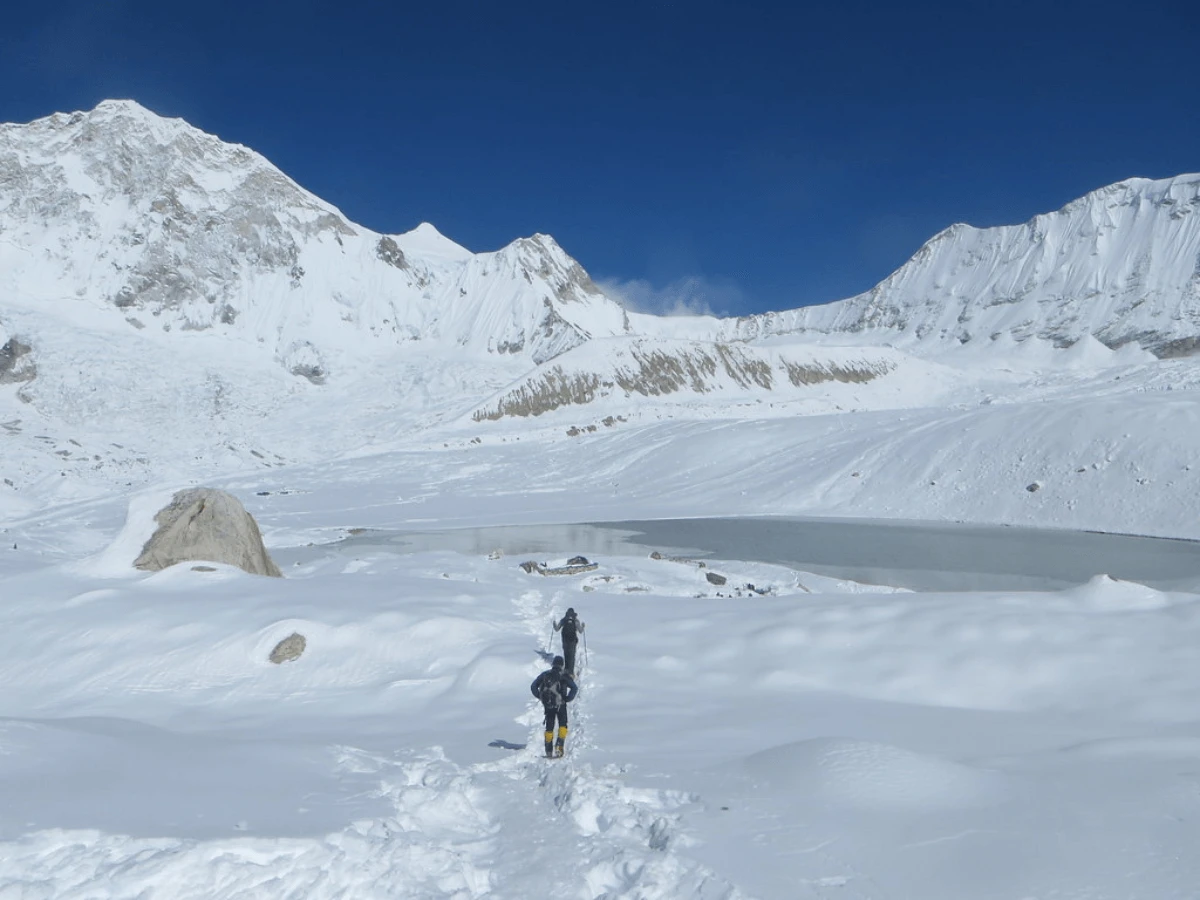
The itinerary for the Baruntse with Mera Peak Expedition – 32 Days has been carefully designed by Overland Trek Nepal to ensure proper acclimatization, safety, and a rewarding high-altitude climbing experience in the remote Hinku and Barun valleys. This expedition combines one of Nepal’s most popular trekking peaks, Mera Peak (6,476 m), with the challenging and technical Baruntse Peak (7,129 m), making it ideal for climbers seeking a true Himalayan adventure.

All trekking and climbing durations, distances, and elevation gains mentioned in the itinerary are approximate estimates and should be considered as general guidelines only. Actual daily walking and climbing hours may vary depending on factors such as weather conditions, trail conditions, group pace, individual fitness, altitude adaptation, and unforeseen circumstances in the mountains.

At Overland Trek Nepal, we strongly prioritize climber safety, flexibility, and comfort. Therefore, the itinerary may be adjusted on the ground by our experienced guides to suit the team’s condition, ensure better acclimatization, or respond to changing mountain conditions. Rest days, contingency days, or route adjustments may be added if required for safety and success.

We understand that every climber has different goals, experience levels, and time availability. If you wish to customize the itinerary, adjust rest days, upgrade services, or combine the expedition with additional trekking or peak-climbing options, we are always happy to tailor the program to meet your needs. Your satisfaction and summit success are our top priorities.

Overland Trek Nepal remains fully committed to delivering a professional, responsible, and memorable Himalayan expedition experience, guided by certified local experts with in-depth knowledge of the region.

Your adventure, your pace – we climb with flexibility and care.

Tour PlanExpand all

Highlights of the Day

  • Warm airport welcome and private hotel transfer
  • First experience of Nepal’s capital city
  • Meet expedition staff and fellow climbers
  • Rest and recovery after international travel

Upon arrival at Tribhuvan International Airport in Kathmandu, you are warmly welcomed by our expedition team from Overland Trek Nepal. Next, you will be transferred to your hotel. After hotel check-in, you can rest, refresh, and recover from jet lag. You can also take a short walk around the neighbourhood or relax at the hotel. Proper rest on the first day is essential for maintaining energy and health throughout the expedition.

Max Altitude: 1,400 m. Meals: N/AAccommodation: 3 - Star Hotel in KathmanduDistance: 20min/8km

Highlights of the Day

  • Full expedition briefing by the climbing leader
  • Gear check and final equipment preparation
  • Permit verification and documentation
  • Optional last-minute shopping

Today is dedicated to final preparation for the expedition. You attend a comprehensive briefing led by the expedition leader. The guide will explain about itinerary, climbing strategy, safety procedures, and emergency plans. Our guides conduct a detailed gear check to ensure all equipment meets high-altitude and technical climbing requirements. Any missing or unsuitable gear can be rented or purchased in Kathmandu. Necessary permits and official documentation are verified by the team. This rest day also gives your body extra time to recover before heading into the mountains.

Max Altitude: 1,400 m. Meals: BreakfastAccommodation: 3 - Star Hotel in KathmanduDistance: N/A

Highlights of the Day

  • Scenic mountain flight to Lukla
  • Entry into the remote Hinku Valley
  • First trekking day in alpine terrain
  • Quiet camping area at Chutanga

Our guide from Overland Trek Nepal will take you to the domestic airport for the flight to Lukla. The flight offers stunning views of snow-covered Himalayan peaks. After landing in Lukla, the trek begins toward Chutanga, following a less-crowded trail that leads into the remote Hinku Valley. The route passes through forests and gentle uphill terrain, making it a comfortable first trekking day. Chutanga is a quiet campsite surrounded by alpine vegetation. This short trek helps your body begin adapting to altitude while easing into the rhythm of the expedition.

Max Altitude: 3,060m. Meals: Breakfast, Lunch & DinnerAccommodation: TeahouseDistance: 4 - 5 hrs

Highlights of the Day

  • Crossing the high Zatrawa La Pass
  • Panoramic Himalayan views
  • Entering the Hinku Valley region
  • Steady altitude gain for acclimatisation

Today is one of the first challenging days of the trek as you cross the Zatrawa La Pass at 4,610 meters. The ascent is gradual but long, requiring steady pacing and controlled breathing. From the pass, you enjoy wide views of the surrounding Himalayan peaks and valleys. After reaching the top, the trail descends toward Tuli Kharka. Reaching Tuli Kharka marks your full entry into the remote Hinku Valley region.

Max Altitude: 4,610m. Meals: Breakfast, Lunch & DinnerAccommodation: TeahouseDistance: 6-7hrs

Highlights of the Day

  • Descend into dense forests
  • Walk along the Hinku River
  • Warmer temperatures at lower elevations

The trail descends steadily from Tuli Kharka toward Kothe. You walk through beautiful rhododendron and pine forests while following the Hinku River downstream. The change in scenery and slightly warmer temperatures make this a comfortable trekking day. Kothe is a small settlement with simple lodges and basic facilities. Staying at a lower elevation helps balance acclimatisation and improves recovery.

Max Altitude: 4,095m. Meals: Breakfast, Lunch & DinnerAccommodation: TeahouseDistance: 5-6 hrs

Highlights of the Day

  • Views of the Mera Glacier
  • Open alpine landscapes
  • Gradual altitude gain
  • Peaceful trekking route

After breakfast, from Kothe, the trail gradually climbs along the Hinku River valley. Forests slowly give way to open alpine terrain as the altitude increases. You pass yak pastures and glacial streams while enjoying clear views of the surrounding mountains. The walk is steady and manageable, making it ideal for continued acclimatisation. Thangnak sits below the Mera Glacier and serves as an important stop before reaching higher elevations. Overnight stay at Thagnak.

Max Altitude: 4,350m. Meals: Breakfast, Lunch & DinnerAccommodation: TeahouseDistance: 5-6hrs

Highlights of the Day

  • First clear views of Mera Peak
  • Entry into the high-altitude zone
  • Glacier and moraine crossings
  • Important acclimatisation day

Leave Thangnak after breakfast towards Khare. Today’s trek takes you higher into the alpine zone as you move toward Khare. The trail crosses glacial moraines and rocky terrain, offering your first clear views of Mera Peak. Khare is the main acclimatisation and training base for Mera Peak. Overnight stay at Khare.

Max Altitude: 5,054m. Meals: Breakfast, Lunch & DinnerAccommodation: TeahouseDistance: 3-4hrs

Highlights of the Day

  • Rest and altitude adaptation
  • Ice-axe and crampon training
  • Short acclimatisation hikes
  • Health and oxygen monitoring

This acclimatisation day is vital for safe progression. You remain in Khare to allow your body to adapt to the altitude. Short hikes to nearby viewpoints help stimulate acclimatisation. The climbing guides provide practical training on ice-axe use, crampon techniques, and rope travel on snow and ice. Health checks are conducted to monitor oxygen levels and overall condition. This day builds confidence and technical skills while reducing the risk of altitude sickness before moving to high camp.

Max Altitude: 5,054m. Meals: Breakfast, Lunch & DinnerAccommodation: TeahouseDistance: N/A

Highlights of the Day

  • Glacier travel experience
  • Fixed rope sections
  • High-altitude camping
  • Summit push preparation

Leaving Khare after breakfast, you step onto the Mera Glacier and begin the ascent to High Camp. The route involves snow, ice, and gentle slopes, with sections protected by fixed ropes. The climb is steady and requires focus and careful foot placement. High Camp sits on an exposed ridge and offers dramatic views of the surrounding peaks. After reaching camp, you rest early and prepare gear for the summit attempt. Proper hydration and rest are critical tonight due to the high altitude and early start planned for the next day.

Max Altitude: 5,790m. Meals: Breakfast, Lunch & DinnerAccommodation: TentDistance: 4-5 hrs

Highlights of the Day

  • Early-morning summit attempt
  • Views of Everest, Lhotse, Makalu
  • First 6,000-meter summit
  • Descent to a safer altitude

You have to wake up early, around 2-3 am, for the Mera Peak climbing. You begin the summit push well before sunrise, using headlamps to navigate the glacier. The climb is long but non-technical, requiring endurance rather than advanced climbing skills. From the summit, you enjoy panoramic views of Everest, Lhotse, Makalu, and surrounding Himalayan giants. After the photos and the celebration, you carefully descend back down the glacier. The route continues to Khongma Dingma, where you rest at a safer altitude. Successfully summiting Mera Peak provides crucial acclimatisation and confidence for Baruntse.

Max Altitude: 6,470m. Meals: Breakfast, Lunch & DinnerAccommodation: Tent CampDistance: 8-9hrs

Highlights of the Day

  • Remote high-altitude landscapes
  • Crossing rugged terrain
  • Glacial lakes scenery
  • Transition toward Baruntse

Leaving Kongma Dingma after breakfast, you will climb to Seto Pokhari. Today’s trek moves away from Mera Peak toward the Baruntse region. The terrain becomes more rugged and remote, with fewer signs of human settlement. You cross rocky paths, glaciers, and moraines while gradually gaining altitude. Seto Pokhari, meaning “White Lake,” is a stunning high-altitude campsite surrounded by ice and snow. This day marks a clear transition from trekking peak terrain to true expedition climbing territory. Overnight stay at Seto Pokhari.

Max Altitude: 5,035m. Meals: Breakfast, Lunch & DinnerAccommodation: Tent CampDistance: 5-6hrs

Highlights of the Day

  • Arrival at Baruntse Base Camp
  • Expedition camp setup
  • Close views of Baruntse Peak
  • Beginning of the technical phase

The trek to Baruntse Base Camp is challenging but rewarding. You traverse glacial terrain and rocky slopes while gradually gaining altitude. Upon arrival, the team establishes the base camp, which will serve as your home during the Baruntse climbing phase. Baruntse Peak towers above the camp, offering a clear view of the route ahead. The rest of the day is spent organising equipment, resting, and preparing for acclimatisation rotations. This marks the official start of the Baruntse expedition phase.

Max Altitude: 5,400m. Meals: Breakfast, Lunch & DinnerAccommodation: Tent CampDistance: 5-6hrs

Highlights of the Day

  • Progressive load carries to higher camps
  • Fixed rope installation on technical sections
  • Ice and snow climbing practice
  • Critical altitude adaptation and recovery

These days are dedicated to structured acclimatisation rotations on Baruntse Peak. The team moves gradually between Base Camp, Camp I, and Camp II to allow the body to adapt safely to extreme altitude. During rotations, climbers carry equipment, establish higher camps, and practice movement on steep snow and ice slopes. Fixed ropes are installed on technical sections to ensure safety during the summit push. After spending time at higher camps, the team returns to Base Camp for rest and recovery. This climb-high, sleep-low strategy is essential for reducing altitude-related risks. Proper acclimatisation during this phase significantly improves strength, confidence, and summit success while minimising exhaustion and health issues.

Max Altitude: 6000m. Meals: Breakfast, Lunch & DinnerAccommodation: Tent CampDistance: Few Days

Highlights of the Climbing

  • Final ascent to Baruntse summit
  • Steep snow and ice climbing
  • High-altitude endurance challenge
  • Safe descent back to Base Camp

The summit push begins when weather and conditions align. The team ascends from Base Camp to higher camps, following a carefully timed schedule to maximise safety. Summit day starts very early, often before midnight, to take advantage of stable morning conditions. Climbers navigate steep snow slopes, ice walls, and exposed ridges using fixed ropes and technical equipment. The final climb demands strong endurance, focus, and mental resilience. Upon reaching the summit of Baruntse Peak at 7,129 meters, climbers are rewarded with vast Himalayan views. After a short summit stay, the team descends carefully to lower camps and eventually back to Base Camp. A safe return is the highest priority.

Max Altitude: 7,129m. Meals: Breakfast, Lunch & DinnerAccommodation: Tent CampDistance: 10-12 hrs

Highlights of the Day

  • Departure from Baruntse Base Camp
  • Entering highly technical alpine terrain
  • Steep glacier and ice sections
  • Preparation for the Amphu Lapcha Pass crossing

Today marks the transition from the Baruntse expedition phase toward the Amphu Lapcha Pass. After dismantling Base Camp, the team moves slowly across glacial terrain toward Amphu Lapcha High Camp. The route involves navigating ice, snow, and rocky sections, requiring careful movement and rope support in places. This is a physically demanding day, but the pace remains controlled to conserve energy. High Camp is set below the pass in an exposed alpine environment. Once camp is established, climbers rest and prepare equipment for the following day’s pass crossing. Early dinner and proper hydration are essential, as the next day involves one of the most technical trekking passes in Nepal. Overnight stay at Amphu Laptcha Base Camp.

Max Altitude: 5,650m. Meals: Breakfast, Lunch & DinnerAccommodation: Tent CampDistance: 6-7hrs

Highlights of the Day

  • Crossing Amphu Lapcha Pass
  • Fixed ropes and abseiling sections
  • Dramatic views of the Everest region
  • Entry into the Khumbu Valley

This is one of the most challenging and rewarding days of the entire expedition. The crossing of the Amphu Lapcha Pass involves steep snow slopes, ice walls, and sections requiring fixed ropes and controlled abseiling. The climb begins early to ensure stable conditions. From the top of the pass, climbers enjoy stunning views of peaks in the Everest region. After the technical descent, the trail gradually eases as you approach Chhukung. Reaching Chhukung marks your full transition into the Khumbu Valley. Despite the long and demanding day, the sense of achievement is immense.

Max Altitude: 4,750m. Meals: Breakfast, Lunch & DinnerAccommodation: TeahouseDistance: 6-7hrs

Highlights of the Day

  • Views of Ama Dablam
  • Descend into the Khumbu Valley
  • Walk through Sherpa villages
  • Visit the Tengboche monastery area

From Chhukung, the trail descends steadily through the Khumbu Valley. The landscape changes quickly, with warmer air and more vegetation. You pass traditional Sherpa villages and enjoy close views of Ama Dablam and the surrounding peaks. The trek continues toward Tengboche, one of the most culturally significant locations in the Everest region. Upon arrival, you can visit the famous Tengboche Monastery. After weeks in remote high-altitude terrain, the comfort of a lodge feels refreshing. Overnight stay at Tengboche.

Max Altitude: 3,860m. Meals: Breakfast, Lunch & DinnerAccommodation: TeahouseDistance: 5-6hrs

Highlights of the Day

  • Scenic forest trails
  • Suspension bridge crossings
  • Entry into Namche Bazaar
  • Comfortable facilities and amenities

Leaving Tengboche after breakfast, the trek follows a well-established trail through rhododendron forests and across suspension bridges over deep valleys. The route offers occasional views of Everest and surrounding peaks. The descent is gradual and comfortable. As you approach Namche Bazaar, the largest town in the Khumbu region, you notice a lively atmosphere, bakeries, and shops. Namche provides excellent accommodation, hot showers, and a chance to enjoy fresh meals. This is a welcome contrast after extended days in expedition camps. The afternoon can be spent relaxing or exploring the town.

Max Altitude: 3,440m. Meals: Breakfast, Lunch & DinnerAccommodation: Guest HouseDistance: 6-7 hrs

Highlights of the Day

  • Final trekking day
  • Retracing the Dudh Koshi trail
  • Celebration dinner in Lukla
  • Completion of the expedition trek

The final trekking day begins with a descent from Namche Bazaar, crossing suspension bridges and following the Dudh Koshi River. The trail involves short ascents and descents but remains manageable. As you approach Lukla, there is a strong sense of accomplishment. In Lukla, the team gathers for a final celebration dinner to reflect on the journey and the successful completion of the expedition. Overnight in a lodge.

Max Altitude: 2,840m. Meals: Breakfast, Lunch & DinnerAccommodation: Guest HouseDistance: 6-7 hrs

Have your last breakfast in the mountains and be ready to fly back to Kathmandu. Your guide will help you get the flight. As you arrive in the Domestic Terminal of Kathmandu, a private vehicle will be waiting for you. Next, the vehicle will take you to your hotel for check-in. The rest of the day, you can relax and rest. Later in the evening, you will have dinner with the Overland Trek Nepal Team.

Max Altitude: 1,400m. Meals: Breakfast & DinnerAccommodation: 3 Star Hotel in KathmanduDistance: 35 min / 20min

This day is an extra day separated due to the weather delays or even flight cancellations from Kathmandu-Lukla-Kathmandu. In the Himalayas, we never know about the weather. Sudden weather change can fluctuate the itinerary, or even the climber can get sick along the trip. Hence, an extra day can be helpful for the travellers to manage their plan.

Max Altitude: 1,400m. Meals: BreakfastAccommodation: 3-Star Hotel in KathmanduDistance: N/A

At last, we are grateful that you chose Overland Trek Nepal for this adventurous journey to Mera Peak and Baruntse. With a lot of memories, we bid you farewell on this day. Our staff will drop you off at the Tribhuwan International Airport in a private car. Till the next time we bid farewell.

Max Altitude: 1,400M. Meals: BreakfastAccommodation: N/ADistance: 20min/8km
Cost Details
Required Permits & Documents
  • Your PP Size Photo 2 Copy
  • Your Passport & Nepal Visa Copy
  • Mera Peak Climbing permit
  • Makalu Barun National Park Permit.
  • Trekkers' Information Management Systems (TIMS) permit.
  • Icefall charges and summit rope cost as per the Expedition Operators Association. 
  • Mount Baruntse regular route climbing royalty and the Nepal Government climbing permit.
Meals & Snacks
  • Welcome Dinner in Kathmandu
  • Farewell dinner in Kathmandu to experience Nepali culture and tradition.
  • During Trekking, all the meals (Breakfast, Lunch & Dinner) including tea/coffee.
  • Provision of a heater at Base Camp for the dining room during cold temperatures.
  • All food and fuel at Base Camp and higher camps for members and the expedition crew.
  • Provision of clean, nutritious, high-altitude package food at Advanced Base Camp and Camp-02.
  • EPI cooking gas and stoves for cooking, boiling water, tea, coffee, and warming nutritious food at higher camps.
Accommodation
  • Four nights 3-Star category hotel accommodations in Kathmandu.
  • Tea house accommodation during trekking (except chain hotels)
  • Camping accommodation at  Mera Peak Base Camp, Advance Base Camp, and Camp-02 during the Baruntse ascent. 
Staffs & Crew Member
  • One professional leader/Sherpa for each expedition group.
  • Experienced and government-authorized high altitude trekking/climbing Sherpa guide (Expedition leader).
  • One experienced, trained, and licensed climbing guide per client for safe ascent (03 times Everest summiteer).
  • All wages, equipment, medical, and accidental insurances for staff, liaison officer, and the involved expedition crew. 
  • Chef cook, cook assistant, helper, and Base Camp manager at Advanced Base Camp for food, drinks, and services.
Transportation
  • Surface transportation during trekking and in major cities, as per the scheduled itinerary.
  • Pick-up and drop services from international and domestic airports on arrivals and departures.
  • Regular flight tickets from Kathmandu to Lukla and back for climbing members and Sherpa guides. 
  • Transportation of food, equipment, and cargo to Base Camp from Kathmandu and return (via Lukla and porter/yaks).
Others
  • First aid medical kits for the group and staff.
  • Maps of trekking and climbing routes for convenience.
  • Company T-shirt, Cap, Gift set as memory keepsakes.
  • Flight ticket reconfirmation and visa extension assistance.
  • Generator and solar panels for lighting, battery, and mobile charging.
  • Official service charges, government charges, and all taxes/VAT included. 
  • All essentials for trekking, climbing, and camping at Advanced Base Camp.
  • Regular weather forecast updates from the Kathmandu office during the expedition.
  • Emergency oxygen, masks, and regulators were provided to clients and staff as required.
  • Satellite phones and walkie-talkies for communication (US$3 per-minute call for members).
  • V25 North Face tents with mattresses at Advanced Base Camp (1:1) and above Base Camp (2:1).
  • Dynamic/static ropes, ice screws, snow bars, rock pitons, and carabiners for route opening and safe climbing.
Excludes
  • Nepal tourist visa.
  • International flight tickets.
  • Additional staff not mentioned in the package.
  • Personal climbing equipment and trekking gear.
  • Lunch and dinner in Kathmandu (except farewell dinner).
  • Personal expenses: laundry, tips, and other personal consumption. 
  • Any services not mentioned in the “Includes” section require extra charges.
  • Usage of landlines, mobiles, walkie-talkies, satellite phones, and internet expenses.
  • Summit bonus for climbing Sherpa Guides (minimum US$700 per climbing member).
  • Extra expenses arising from unforeseen situations: natural disasters, landslides, political disturbances,
  • Travel insurance, medical treatment, medical tests, hospitalization, emergency rescue, or helicopter evacuation. 
  • Tips and gifts for base camp staff (chef, cook, cook assistant, base camp manager) – normally US$150 per person. 
  • Packed food, snacks, aerated drinks, energy drinks, mineral water, alcohol, cigarettes, chocolates, and nutria-bars during trekking.
  • strikes, changes in government regulations, and other factors. 
Complimentary
  • Nepal SIM Card
  • Trekking Pole/ Stick
  • Overland Trek Nepal Company T-Shirt
  • 1 Hour full-body Trekker’s massage after the trek
Add-ons & Options

Upgrade Your Himalayan Journey with Comfort, Flexibility & Style By Overland Trek Nepal

The Baruntse with Mera Peak Expedition – 32 Days is already a world-class Himalayan adventure. But with the right add-ons, your journey can become more comfortable, smoother, safer, and truly joyful.Overland Trek Nepal offers carefully designed optional upgrades that trekkers and climbers can select one by one during the online booking process, depending on personal comfort, time, and budget.

Kathmandu Hotel Upgrade Options (Before & After the Expedition)

After long international flights and demanding high-altitude trekking, a comfortable hotel in Kathmandu makes a huge difference. Upgrade your stay and enjoy peaceful rest, hot showers, quality meals, and professional hospitality.

4-Star Hotel in Kathmandu (With Breakfast)

  • Single Room: USD 60 per night
  • Double Room: USD 70 per night

Highlights

  • Central location with easy airport access
  • Clean, spacious rooms with modern amenities
  • Ideal for climbers wanting comfort without luxury pricing
  • Perfect for pre-expedition preparation and post-climb recovery

5-Star Luxury Hotel in Kathmandu (With Breakfast)

  • Single Room: USD 170 per night
  • Double Room: USD 210 per night

Highlights

  • Premium luxury experience after high-altitude climbing
  • Spa, swimming pool, fine dining & world-class service
  • Ideal for honeymooners, senior climbers, and VIP travelers
  • Best choice to relax your body after Mera Peak & Baruntse summits

Kathmandu Sightseeing Tour – Culture Before the Climb

Explore Nepal’s spiritual heart before heading into the mountains. A guided Kathmandu sightseeing tour adds cultural depth to your expedition.

Full-Day Guided Sightseeing Covers:

  • Pashupatinath Temple (Hindu sacred site)
  • Boudhanath Stupa (the largest Buddhist stupa in Nepal)
  • Kathmandu Durbar Square (UNESCO World Heritage Site)
  • Swayambhunath – Monkey Temple (panoramic city views)

Note: Entrance fees are paid by guests directly.

Vehicle Options with Professional City Guide:

  • Car (1–2 pax): USD 80
  • Scorpio Jeep (up to 6 pax): USD 90
  • Hiace (up to 12 pax): USD 120

Why Add This?

  • Acclimatize gently while staying active
  • Understand Nepal’s culture, religion, and history
  • Perfect for photographers and first-time Nepal travelers

Helicopter Flight Options – Maximum Comfort & Time Saving

Helicopter upgrades are among the most popular Everest expedition add-ons. They save time, reduce physical strain, and add breathtaking aerial views of the Himalayas.

Kathmandu ⇄ Lukla Helicopter Options

  • Kathmandu to Lukla (Sharing): USD 600 (incl. tax)
  • Lukla to Kathmandu (Sharing): USD 500 (incl. tax)

Highlights

  • Avoid flight delays from fixed-wing aircraft
  • Ideal during peak trekking seasons
  • Stunning Himalayan aerial views

Private Helicopter (KTM ⇄ Lukla)

  • USD 2,500 each way
  • Capacity: 4–5 pax
  • Max weight: 500 kg

Best For

  • Families, private groups, VIP climbers
  • Travelers with limited time
  • Ultimate flexibility and privacy

Helicopter Charter from Baruntse Region

  • Baruntse Base Camp → Kathmandu: USD 5,200
  • Baruntse Base Camp → Lukla: USD 4,500

Why This Is a Game-Changer

  • Emergency-ready option for safety
  • Fast exit after summit success
  • Ideal for exhausted climbers after technical climbs
  • One of the most requested luxury expedition upgrades

Local SIM Card with Data – Stay Connected in the Himalayas

  • Price: USD 10
  • Includes local Nepali SIM + 5GB data

Benefits

  • Stay in touch with family and friends
  • Useful for weather updates & logistics
  • Works in many trekking regions (coverage varies by location)

Why Choose Overland Trek Nepal for Add-ons & Customization?

Overland Trek Nepal is not just an operator—we are your local Himalayan partner with deep field experience in the Everest, Hinku, and Barun regions.

What Makes Us Different?

  • 100% customizable itineraries
  • Transparent add-on pricing (no hidden costs)
  • Expert local guides & climbing Sherpa teams
  • Flexible logistics for weather, health & timing
  • One-stop booking: trek + climb + hotels + flights

We understand that every climber is different. Some want comfort, some want speed, and others want luxury. That’s why our system allows you to add or remove services easily during booking, making your expedition more personal, smoother, and happier.

Ready to Customize Your Trip?

Turn your Baruntse with Mera Peak Expedition – 32 Days into a once-in-a-lifetime Himalayan experience. Choose the add-ons that fit your style, comfort level, and schedule—and let Overland Trek Nepal handle the rest.

Climb higher. Travel smarter. Trek happier.
Customize today with Overland Trek Nepal.

Dates & Availability
Select the date
Mar 2026
Apr 2026
May 2026
Jun 2026
Sep 2026
Oct 2026
Nov 2026
Mar 2027
Apr 2027
May 2027
Jun 2027
Day & Departure Dates
Status
Price
Day & Departure Date
Sunday - Wednesday22 Mar, 2026 - 22 Apr, 2026
Trip Status
Guaranteed
Price
US$12000US$15000
Save US$3000
Day & Departure Date
Sunday - Wednesday29 Mar, 2026 - 29 Apr, 2026
Trip Status
Guaranteed
Price
US$12000US$15000
Save US$3000

The Baruntse with Mera Peak Expedition – 32 Days is operated with a fixed departure schedule in the morning, as early starts are essential for smooth logistics, favorable mountain weather, and safe trekking and climbing conditions. Morning departures also help ensure timely flights, better acclimatization progress, and a more relaxed daily plan in the high Himalayas.

However, at Overland Trek Nepal, we fully understand that every traveler has different needs, travel plans, and comfort levels. If our standard departure time does not suit you, we are happy to customize the departure schedule according to your preference whenever possible. Your comfort, safety, and overall satisfaction always come first.

We remain highly flexible and customer-focused, adjusting plans to create a stress-free and enjoyable expedition experience. Overland Trek Nepal is committed to working closely with you to ensure your Himalayan journey is smooth, personalized, and truly memorable.

Essential Information

Nepal Visa Procedure

Get your Nepal visa before embarking on this Baruntse with Mera Peak. You can get it through the online site of “The Nepal Immigration Department” or at the airport, “On Arrival Visa”. Ensure you have a passport with 6 months of validity and a copy of your photo. The Nepal Visa costs are:

  • 15 15-day visa costs $30
  • 30-Day Visa Costs $45
  • 90-Day Visa Costs $125

Travel Insurance Requirement for the Expedition in Nepal

Travel Insurance is one of the most important documents while doing the Baruntse Mera Peak Expedition in Nepal. Moreover, NMA will also ask for the insurance before issuing the climbing permits. The insurance must cover medical bills, injuries, helicopter evacuations, trip cancellations, and other losses. Climbing Baruntse and Mera Peak is an adventurous trip that involves risky activities. Hence, your insurance should know about the activity you are going to take part in. Travel Insurance is specifically important in remote and rugged terrain while engaging in trekking and climbing activities.

Best Season for Baruntse and Mera Peak Expedition

Choosing the best season for the Baruntse with Mera Peak expedition plays a major role in safety, comfort, and summit success. This combined expedition is best undertaken during spring (April–May) and autumn (September–October), when weather patterns in the eastern Himalayas are most reliable.

Spring (April–May) is the most popular climbing season. Weather conditions are generally stable. Snow coverage is consistent and supportive for crampon use. Temperatures are relatively warmer at high camps. These factors create safer climbing conditions and result in a higher summit success rate on both Mera Peak and Baruntse Peak.

Autumn (September–October) offers excellent visibility and clear mountain views. The weather is dry and predictable. However, temperatures are colder, especially above 6,000 meters. Reduced snowfall can expose ice sections, making some technical areas slightly more demanding.

With proper acclimatisation, planning, and timing, both seasons provide excellent climbing windows for the Baruntse with Mera Peak expedition.

Permit Cards for the Baruntse with Mera Peak

Every trekking and peak climbing in Nepal requires permit cards. No trekkers or climbers are allowed to enter the particular region without the permit cards. Overland Trek Nepal helps you get the permit cards. Climbers must provide us with the passport, passport-sized photo, and insurance copy to issue the permit cards.

Permit Requirements

  • Baruntse Peak climbing permit
  • Mera Peak climbing permit
  • Makalu Barun National Park permit
  • Khumbu Municipality Permit Card.
  • Sagarmatha National Park Permit Card.

Climbing Gear Required for Baruntse and Mera Peak Expedition

Preparing the right climbing gear for the Baruntse and Mera Peak Expedition is essential for comfort, safety, and summit performance. The route involves high-altitude glaciers, extreme cold, and technical ice sections—so every item you pack should support warmth, durability, and efficiency. Below is a complete gear checklist categorized for easy planning.

Clothing & Layering

  • Down jacket (800-fill or higher for extreme cold)
  • Waterproof Gore-Tex hardshell jacket & pants
  • Thermal base layers (top & bottom)
  • Insulated mittens, warm gloves, wool socks
  • Balaclava, buff, beanie for wind protection

Footwear

  • Double insulated boots (La Sportiva G2, Scarpa Phantom 6000 recommended)
  • Crampon-compatible mountaineering boots
  • Lightweight camp shoes/slippers for rest days

Technical Climbing Equipment

  • Climbing harness & helmet
  • Ice axe, locking & non-locking carabiners
  • Ascender/Jumar & belay device (ATC/Grigri)
  • Crampons (steel recommended for ice sections)
  • Ropes will be arranged by the expedition team

Camping & Sleeping Gear

  • Four-season sleeping bag (-20°C rating or below)
  • Inflatable sleeping mat for insulation
  • Headlamp with spare batteries for summit night

Personal Essentials

  • UV-glacier sunglasses
  • Sunscreen, lip balm, purification tablets
  • Hydration system (2-litre bladder or bottle)
  • Personal medication & basic first-aid kit

All group equipment, including tents, fixed ropes, and kitchen setup, is provided during the expedition. However, bringing properly fitted personal climbing gear for Baruntse and Mera Peak significantly increases safety, comfort, and summit success.

Teahouse and Tent Camping during the Baruntse Mera Peak Expedition

Accommodation during the Baruntse and Mera Peak Expedition is a mix of teahouse lodges and high-altitude tent camps. In lower regions like Lukla, Chutanga, Kothe, Thangnak, and Khare, trekkers stay in teahouses with basic rooms and warm dining areas.

As the route progresses toward Mera High Camp and Baruntse Base Camp, accommodation shifts to expedition tents. High camps are fully equipped with sleeping tents, dining tents, kitchen tents, and toilet tents. Tent camping provides flexibility, warmth, and safety in remote alpine zones. Our climbing sherpa and staff handle camp setup, meals, and support. This combination ensures comfort at a lower altitude and safety during technical climbing days.

Meals during the 32-Day Baruntse and Mera Peak Climbing

All meals are included during the Baruntse with Mera Peak expedition, ensuring balanced nutrition for strength and acclimatisation. While staying in teahouses, meals include Nepali, Tibetan, and international options such as Dal Bhat, soups, pasta, fried rice, and noodles.

At high camps, our expedition kitchen staff prepares hot meals, soups, and energy-rich foods to maintain performance at altitude. Breakfast often includes porridge, pancakes, eggs, or cereals, while dinners feature warm, carb-focused meals for recovery. Hot tea, coffee, and soup are available regularly. Hydration is prioritised with boiled water provided daily. Meals are carefully planned for energy, safety, and stamina in extreme conditions.

Sherpa Climbing Guide and Support Staff from Overland Trek Nepal

The expedition is supported by an experienced Sherpa climbing guide team from Overland Trek Nepal, ensuring safety and success on both Mera Peak and Baruntse Peak. Every climber is led by UIAA-trained, high-altitude certified Sherpa guides with experience in 6000m & 7000m Himalayan climbs.

Our support staff includes porters, kitchen crew, base camp managers, and assistant guides for technical sections. Climbing Sherpas handle fixed rope setup, navigation, safety decisions, and summit support. They monitor weather, oxygen levels, and climber health daily. Our support structure improves acclimatisation, reduces risk, and increases summit success rate for the Baruntse Mera Peak combined expedition.

Training & Fitness for Baruntse with Mera Peak

Proper training and fitness for the Baruntse with Mera Peak expedition is a critical factor. It determines the summit success and overall safety. Training should begin at least 4–6 months before the expedition, focusing on building endurance, strength, and technical confidence. Your preparation should be long enough to sustain mountain days under cold conditions. Strong fitness directly supports better acclimatisation efficiency, faster recovery, and reduced fatigue during summit pushes on both Mera Peak and Baruntse Peak.

Recommended training focus includes:

  • Cardiovascular endurance through long hikes, stair climbing, cycling, or uphill training to improve lung capacity and stamina
  • Strength training targeting legs, core, and shoulders with exercises such as squats, lunges, step-ups, planks, and deadlifts
  • Weighted backpack hiking to simulate expedition load carrying and improve balance and endurance
  • Technical practice using an ice axe and crampons on snow or ice terrain to build confidence for Baruntse’s steeper sections
  • Sherpa Guide from Overland Trek Nepal will provide you with enough training sessions before the Mera Peak and Baruntse Peak expedition.

Book Your Baruntse Mera Peak Expedition with Overland Trek Nepal

When you’re ready to turn the dream of climbing Baruntse and Mera Peak into a reality, Overland Trek Nepal is here to make it happen. We offer a combination of personalised service, experienced leadership, and local expertise that ensures your Baruntse Mera Peak expedition is exceptional from start to finish.

Embarking on the Baruntse Mera Peak expedition with Overland Trek Nepalmeans joining a supportive family of climbers and Sherpas who share your passion for the mountains. From the logistical preparations to the moment you stand on the summit and beyond, we will be there to guide, assist, and celebrate with you.

Don’t miss the chance to climb this Himalayan gem with a team that truly cares about your journey. Feel free to contact us via email or WhatsApp at +9779841920870 to book this trip. Moreover, once you are in contact with us, we provide you with the pre-trip information, booking process, and payment details.

FAQs

Yes. Mera Peak provides ideal acclimatisation and preparation for Baruntse.

Typically 35–38 days, depending on weather and acclimatisation needs.

Basic mountaineering skills are required. Training is provided during the expedition.

Temperatures can drop below –25°C during the summit push.

The cost for the combined Baruntse Mera Peak Expedition ranged between USD 10,000 to USD 14999 per person, depending on the service and group size factors.

Yes, you can climb Mera Peak at first, which is a great option for acclimatise and preparation, then move to Baruntse if your physical condition allows. However, mountaineering skills and high-altitude experience would be beneficial.

If you have previous climbing experience, then the 6000 and 7000-meter expeditions in Nepal are moderately challenging. However, with zero experience of climbing, this Mera and Baruntse Peak can be challenging.

For further information
Please feel free to speak with our travel expert.
Gautam Dhakal
Mr. Gautam Dhakal
info@overlandtreknepal.com
You May Also Like
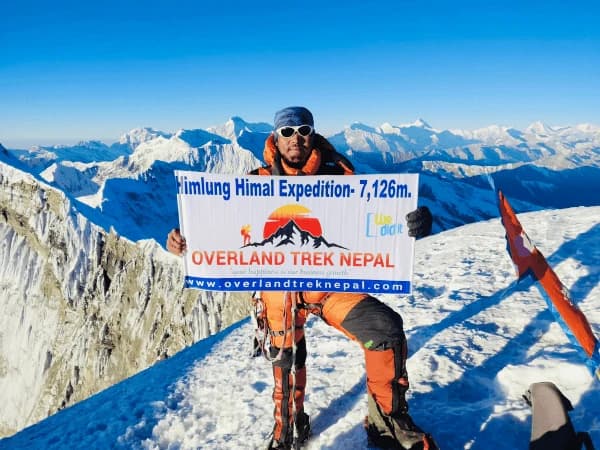
Team from Overland Trek Nepal on the top of Himlung Himal during Expedition
10% Discounted for new Climbers
Price From
US$7599US$8500
Explore
island-peak-climbing-with-everest-base-camp-19-days
Seasonal Offer Discount 10%
Price From
US$3239US$3599
Explore
Mera and Island Peak Climbing
Most Demanded Climbing Trip
Price From
US$3899US$4499
Explore
Need Help? Call Us.+977 9851138871