Discover the best winter treks in Nepal for November, December, January, and February. From the beginner-friendly Poon Hill Trek to Everest View, Pikey Peak, Ama Yangri, Langtang Valley, Mardi Himal, and Annapurna Base Camp, Nepal offers incredible Himalayan experiences during the colder months. This complete guide explains which trekking routes are suitable for winter, expected weather conditions, approximate costs, essential equipment, and important safety precautions. Whether you're planning a Christmas holiday, a New Year adventure, or a peaceful winter escape, find the right Himalayan trek for your experience and schedule.
Winter Treks in Nepal: 7 Routes That Make Winter Worth It

Winter Treks in Nepal: 7 Best Himalayan Adventures for 2027,2028
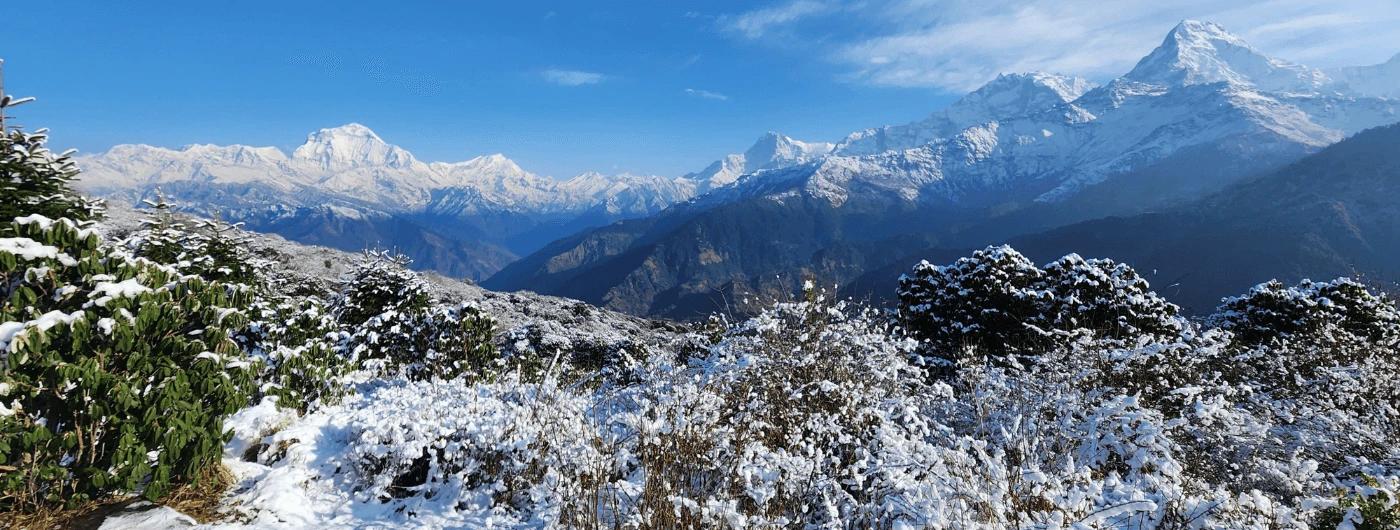
Winter treks in Nepal offer clear Himalayan views, peaceful trails, snow-covered landscapes, and fewer crowds from December to February. Some of the best winter treks in Nepal include Ghorepani Poon Hill, Everest View, Pikey Peak, Ama Yangri, Langtang Valley, Mardi Himal, and Annapurna Base Camp.
November is also an excellent month for trekking before the colder winter weather arrives. Beginners should choose lower-altitude trails, while experienced trekkers can explore higher routes with proper equipment and local guidance. January is usually the coldest month, but well-planned winter trekking in Nepal can still be rewarding.
Introduction: Why Winter Might Be the Perfect Time to Trek in Nepal
Imagine standing on a quiet Himalayan viewpoint, watching the morning sun turn snow-covered mountains golden. There are no busy trails, no long lines of trekkers, and no rush to reach the next teahouse.
This is what winter trekking in Nepal can feel like.
Many travelers from worldwide have holidays between November and February. However, they often hesitate to visit Nepal because they worry about extreme cold, heavy snowfall, or closed trekking routes.
The good news? You don't have to wait until spring or autumn to experience the Himalayas.
Several beautiful treks remain possible during winter, especially at lower elevations. The secret is choosing a route that matches your fitness, comfort with cold weather, and travel dates.
In this guide, Overland Trek Nepal explains where to trek, which months to choose, what to pack, and when to change your plans.
What Are the Best Winter Treks in Nepal?
The best winter trek in Nepal for most beginners is the Ghorepani Poon Hill Trek, thanks to its short duration, established teahouses, and panoramic mountain views. Everest View and Ama Yangri are excellent alternatives. Experienced hikers can consider Langtang Valley, Mardi Himal, and Annapurna Base Camp, although snow, ice, and avalanche conditions may restrict higher sections.
Here are seven winter trekking options worth considering:
- Poon Hill Trek: Best for beginners and first-time visitors.
- Everest View Trek: Best for seeing Mount Everest without reaching Everest Base Camp.
- Pikey Peak Trek: Best for quieter trails and wide Himalayan panoramas.
- Ama Yangri Trek: Best for a short mountain escape from Kathmandu.
- Langtang Valley Trek: Best for mountain culture and a longer Himalayan journey.
- Mardi Himal Trek: Best for experienced hikers seeking close mountain views.
- Annapurna Base Camp Trek: Best for experienced trekkers when winter conditions permit.
7 Best Winter Treks in Nepal: Duration, Altitude, and Difficulty
Choosing a winter trek is not simply about finding the highest mountain or shortest itinerary. Trail exposure, snow conditions, overnight altitude, and available lodging matter more.
|
Winter trek |
Typical trekking duration |
Highest usual destination |
Winter suitability |
|---|---|---|---|
|
Ghorepani Poon Hill |
4–5 days |
3,210 m |
Excellent beginner option in favorable conditions |
|
Everest View |
5–7 days |
3,880 m, Hotel Everest View area |
Good with proper acclimatization |
|
Pikey Peak |
5–7 days |
4,065 m |
Good for fit hikers; summit weather dependent |
|
Ama Yangri |
3–5 days |
Approx. 3,771 m |
Good short option; summit snow possible |
|
Langtang Valley |
7–10 days |
3,870 m, Kyanjin Gompa |
Moderate to demanding in winter |
|
Mardi Himal |
5–7 days |
Approx. 4,200–4,500 m |
Conditional; exposed upper ridge |
|
Annapurna Base Camp |
7–12 days |
4,130 m |
Conditional; significant snow and avalanche concerns |
Annapurna Base Camp Trek
The Annapurna Base Camp winter trek is one of Nepal's most beautiful but more demanding cold-season adventures. The route climbs through forests, mountain villages, and the Modi Khola valley before entering the Annapurna Sanctuary.
At base camp, you stand within a remarkable natural amphitheater surrounded by Annapurna I, Annapurna South, Machhapuchhre, and other peaks.
During winter, snow can cover the sanctuary and create an unforgettable landscape. But there is an important difference between reaching Annapurna Base Camp in autumn and attempting the same trek in January.
What makes Annapurna Base Camp challenging in winter?
- Heavy snowfall can block access to higher elevations.
- Sections around Deurali and toward Machhapuchhre Base Camp may be exposed to avalanche hazards.
- Overnight temperatures at base camp can become extremely cold.
- Winter storms can reduce visibility and make navigation difficult.
- High-altitude accommodation and services may be limited.
Winter trekking tip: Never continue through an avalanche-prone section without a suitable assessment of snow conditions, terrain exposure, and recent weather. Microspikes do not protect against avalanches.
An experienced guide may recommend turning around, delaying the journey, or choosing a lower Annapurna route instead.
Best for: Experienced trekkers with cold-weather preparation, appropriate insurance, and flexible schedules.
Explore the Annapurna Base Camp Trek
Ghorepani Poon Hill Winter Trek – Best for Beginners
The Ghorepani Poon Hill Trek is one of the most practical choices for travelers visiting Nepal during December, January, or February. Unlike longer high-altitude expeditions, this trek gives you spectacular mountain views without requiring you to spend several nights above 3,500 meters.
The journey usually begins near Pokhara and passes through traditional villages, stone stairways, and forests before reaching Ghorepani. From Poon Hill, enjoy sunrise views of Annapurna South, Dhaulagiri, Nilgiri, and surrounding Himalayan peaks.
Why choose the Poon Hill Winter Trek?
- Short itinerary suitable for limited holiday schedules.
- More manageable altitude than many major Himalayan treks.
- Beautiful winter sunrise photography.
- Established teahouses along the main route.
- Excellent combination with sightseeing in Pokhara.
Winter trekking tip: The early morning climb from Ghorepani to Poon Hill may involve icy stone steps. Carry trekking poles and suitable traction when conditions require it. A little snow can make the viewpoint beautiful, but fresh heavy snowfall can also make the trail unsafe.
Best for: Beginners, couples, families with suitable hiking experience, and travelers with short vacations.
Explore the Short Poon Hill Trek – 4 Days offered by Overland Trek Nepal.
Langtang Valley Winter Trek – Best for Culture and Mountain Scenery
The Langtang Valley Trek offers something that many winter visitors overlook: a beautiful Himalayan journey accessible by road from Kathmandu.
The trek begins around Syabrubesi and follows the Langtang Khola through forests, riverside settlements, and traditional Tamang villages.
As you travel farther into the valley, the landscape opens into alpine terrain surrounded by high mountains. Kyanjin Gompa, located around 3,870 meters, is a popular destination and a natural place to spend time exploring the upper valley.
What makes Langtang special in winter?
- Direct access from Kathmandu without domestic flights.
- Rich Tamang culture and mountain traditions.
- Close views of Langtang Lirung and surrounding peaks.
- Peaceful villages during the quieter trekking season.
- Opportunities to explore a beautiful Himalayan valley.
- The main concern is the upper valley's winter environment.
Deep snow can hide the trail, while icy slopes and avalanche-prone areas may become dangerous. Optional climbs to Kyanjin Ri or Tserko Ri should never be assumed possible in winter.
Winter trekking tip: Plan Kyanjin Gompa as a possible destination rather than promising a high summit. Your guide should assess conditions daily, including overnight snow and the next section of trail.
Best for: Experienced walkers who enjoy mountain landscapes, local culture, and a longer winter holiday.
Learn more about the Langtang Valley Trekking – 10 Days
Mardi Himal Trek
Few treks offer the same feeling of walking toward a giant Himalayan mountain as the Mardi Himal Trek.
Starting from the Pokhara region, the route passes through forests and climbs toward open ridges with close views of Machhapuchhre, Annapurna South, and Hiunchuli.
In winter, these landscapes can look spectacular under fresh snow. However, Mardi Himal is not automatically a beginner-friendly winter destination.
The exposed section above Low Camp and High Camp is vulnerable to wind, snowfall, and ice. Reaching the highest viewpoints may require changing the itinerary or turning around.
Why choose Mardi Himal during winter?
- Close mountain views without a very long itinerary.
- Quiet forest trails during the lower sections.
- Strong photography opportunities.
- Flexible route choices from the Pokhara region.
- A rewarding option for capable winter hikers.
Winter trekking tip: Treat High Camp and the upper viewpoint as separate decisions. A safe walk to High Camp does not guarantee that the next morning's exposed ridge will be safe.
Avoid pushing to higher viewpoints simply because the summit is close.
Best for: Experienced hikers who are comfortable with cold weather and flexible route changes.
Explore the Mardi Himal Trekking – 5 Days.
Everest View Winter Trek – Best for Seeing Mount Everest
Want to see Mount Everest during your Christmas or New Year vacation without hiking all the way to Everest Base Camp?
The Everest View Trek is a strong option.
After flying to Lukla, you follow the famous Everest trekking trail through Phakding and Namche Bazaar. Along the way, suspension bridges cross the Dudh Koshi River, and colorful Sherpa villages sit beneath enormous Himalayan peaks.
One of the major highlights is the Hotel Everest View area, where trekkers can enjoy views of Everest, Lhotse, Ama Dablam, and neighboring mountains when the sky is clear.
Why consider the Everest View Trek in winter?
- Opportunity to see Everest without reaching 5,364-meter Everest Base Camp.
- Cultural experiences in the Sherpa heartland.
- Fewer trekkers than during the main autumn season.
- Comfortable daytime hiking during settled weather.
- Shorter exposure to extreme altitude than a full Everest Base Camp itinerary.
However, winter flights to Lukla can experience delays, and Namche Bazaar can be very cold at night.
Winter trekking tip: Include an acclimatization day in Namche Bazaar, especially before ascending toward the Everest View area. A short itinerary should never mean rushing altitude gain.
Best for: Everest lovers, active couples, photographers, and travelers who want a shorter Himalayan adventure.
Pikey Peak Trek – Best for Peaceful Himalayan Panoramas
Not every memorable Everest-region experience begins with a flight to Lukla.
The Pikey Peak Trek explores the lower Solukhumbu region, where peaceful hill trails, monasteries, and traditional Sherpa settlements create a different experience from the busier Everest Base Camp route.
At 4,065 meters, Pikey Peak offers a sweeping Himalayan panorama. On clear days, you can see Everest and several other distant mountain ranges.
The summit is especially attractive at sunrise, when the surrounding ridgelines begin to glow.
What makes Pikey Peak special in winter?
- Quieter route than the main Everest trail.
- Access by road from Kathmandu.
- Sunrise views over a wide stretch of the Himalayas.
- Opportunities to explore local monasteries and Sherpa communities.
- Flexible itineraries for hikers with moderate experience.
Winter trekking tip: Do not underestimate the summit's altitude. The approach can involve snow, frozen ground, strong wind, and steep sections. Stay at a suitable overnight altitude and allow enough time to adjust.
In heavy snow, a lower viewpoint may be the better destination.
Best for: Fit hikers, photographers, and travelers who prefer less crowded trails.
Ama Yangri Trek – Best Short Winter Trek Near Kathmandu
Have only a few days in Kathmandu but still want to experience the Himalayas? The Ama Yangri Trek could be your answer.
Located in the Helambu region, north of Kathmandu, Ama Yangri is known for its sacred summit and panoramic views. The trek travels through local settlements and forests before climbing to a high ridge.
On a clear day, the viewpoint provides impressive views toward the Langtang, Ganesh Himal, and other Himalayan ranges. Unlike the Everest View Trek, this adventure does not require a flight to Lukla.
Why is Ama Yangri attractive in winter?
- Short trip from Kathmandu.
- Fewer nights away from the city.
- Combination of Buddhist culture and natural scenery.
- Beautiful views without a long expedition.
- Suitable for a flexible winter holiday.
Winter trekking tip: The summit approach can become slippery or inaccessible after snowfall. A short trek does not automatically mean an easy summit day.
Check road conditions and choose a lower stopping point if the upper trail is icy.
Best for: Travelers with limited time, active beginners with suitable guidance, and visitors looking for a quick Himalayan escape.
When Is the Best Time for Winter Treks in Nepal?
The best time depends on whether you prefer milder temperatures, quieter trails, or snowy landscapes.
Although December to February is Nepal's meteorological winter, November is an important month for travelers planning late-autumn and winter holidays.
November – Best Overall Conditions
November generally offers clear mountain views, relatively dry weather, and less extreme cold than midwinter. It suits beginners and travelers interested in longer hikes. Popular trails may still be busy, particularly early in the month.
December – Best for Christmas Holidays
December offers crisp mornings, fewer visitors, and attractive mountain scenery. Early December often provides a useful balance between winter atmosphere and manageable conditions. Snow and freezing nights become increasingly important considerations at higher elevations.
January – Best for Quiet, Lower-Altitude Treks
January is typically one of the coldest months. Choose established lower routes, allow flexibility for snowfall, and avoid itineraries that depend on reaching exposed high viewpoints. Poon Hill and lower Helambu routes can be practical choices.
February – Best for Late-Winter Adventures
February can bring longer days and more comfortable daytime conditions toward the end of the month. However, accumulated snow and fresh storms can still make high trails difficult. Check conditions rather than assuming spring has arrived.
Best Month for Winter Trekking
November and early December are usually the easiest choices for travelers seeking clear skies with less severe cold. January offers quieter trails but more challenging temperatures. February can be suitable for winter trekking, especially at lower elevations, although snow can remain on higher routes.
How Cold Does Nepal Get During Winter Trekking?
Winter temperatures depend heavily on altitude, location, weather, and exposure.
The following are broad planning estimates, not a forecast for a specific route or date.
|
Elevation |
Approx. daytime temperature |
Approx. nighttime temperature |
|---|---|---|
|
1,000–2,000 m |
5°C to 18°C |
-2°C to 7°C |
|
2,000–3,000 m |
0°C to 12°C |
-8°C to 2°C |
|
3,000–4,000 m |
-5°C to 8°C |
-15°C to -3°C |
|
Above 4,000 m |
Often below freezing |
Can fall below -20°C |
These ranges can vary considerably. Wind, storms, and shaded valleys can feel much colder than the air temperature suggests.
Remember that teahouse bedrooms are often unheated, even when the dining room has a stove. A comfortable winter trek depends on sleeping equipment as much as daytime clothing.
Is Winter Trekking in Nepal Safe?
Yes, winter trekking in Nepal can be safe when travelers select suitable routes, prepare for cold weather, and make decisions based on current conditions. However, snowfall, icy trails, altitude sickness, avalanches, and limited services make some winter itineraries significantly more demanding than they are in autumn.
The Nepal Tourism Board identifies autumn and spring as generally favorable trekking seasons. Winter requires additional consideration, especially in higher mountain areas.
Five Safety Rules for Winter Trekkers
- Check conditions before every major ascent. Yesterday's weather may not reflect conditions above the next village.
- Start early but avoid dangerous ice. Plan for shorter daylight hours without rushing across frozen ground.
- Acclimatize properly. Being cold does not reduce the risk of altitude sickness.
- Carry suitable equipment. Trekking poles, traction devices, layers, and sleeping bags should match expected conditions.
- Have a backup route. Turning around or spending an extra night can be the right decision.
Can Beginners Go Winter Trekking in Nepal?
Beginners can enjoy winter trekking when the route is manageable and the conditions are favorable.
Poon Hill is often a better starting point than Mardi Himal High Camp or Annapurna Base Camp. If you have never hiked in snow, avoid choosing a difficult trail simply because it is advertised as a short trek.
Essential Packing List for Winter Trekking in Nepal
Packing for December or January is different from packing for a warm autumn holiday. Your clothing needs to keep you warm while resting without causing excessive sweating during uphill walks.
|
Equipment |
Why you need it |
|---|---|
|
Thermal base layers |
Retain warmth next to your skin |
|
Fleece or insulated midlayer |
Add warmth during breaks |
|
Down or synthetic insulated jacket |
Protect against freezing temperatures |
|
Waterproof outer jacket and pants |
Block wind, snow, and moisture |
|
Waterproof trekking boots |
Protect feet on cold and wet trails |
|
Microspikes, when suitable |
Improve traction on certain icy trails |
|
Warm gloves, hat, and neck gaiter |
Protect exposed skin |
|
Four-season sleeping bag |
Improve comfort in unheated rooms |
|
Trekking poles |
Improve balance and stability |
|
Sunglasses and sunscreen |
Protect against strong UV and snow glare |
|
Headlamp and spare power |
Help during short winter days |
|
Insulated water bottle |
Reduce the chance of drinking water freezing |
For colder high-altitude trips, a sleeping bag rated around -15°C to -20°C may be appropriate, depending on its actual comfort rating and expected temperatures. Easier, lower-altitude trips may not require such extreme equipment.
Check our Trekking Gear list for the Nepal Trek for more details.
What to Wear for Winter Treks in Nepal?
Wear moisture-wicking thermal layers, a warm midlayer, an insulated jacket, and a windproof outer shell. Carry waterproof trekking boots, gloves, a warm hat, and a sleeping bag suitable for freezing conditions. For snow or ice, use the traction equipment appropriate to the terrain and your guide's assessment.
How Much Do Winter Treks in Nepal Cost?
Winter trekking costs depend on the route, itinerary length, transport, guide and porter arrangements, and accommodation standards.
For initial budgeting, these are illustrative estimates per person for a locally organized trek. They are not confirmed Overland Trek Nepal package prices.
|
Trek |
Approximate planning budget (USD) |
|---|---|
|
Poon Hill, 4–5 days |
$250–450 |
|
Ama Yangri, 3–5 days |
$200–450 |
|
Mardi Himal, 5–7 days |
$350–650 |
|
Pikey Peak, 5–7 days |
$400–750 |
|
Everest View, 5–7 days |
$600–1,100 |
|
Langtang Valley, 7–10 days |
$450–850 |
|
Annapurna Base Camp, 7–12 days |
$500–1,000 |
These planning ranges generally exclude international flights, personal equipment, travel insurance, and major itinerary changes. Package inclusions vary, so confirm permits, transport, meals, lodging, and staff costs before comparing quotations.
Weather and Temperature of the Trekking Regions of Nepal
Winter weather in Nepal’s trekking regions varies by altitude, but overall, the season is dry, stable, and cold. Days are often sunny and crisp, while nights are cold to extremely cold at high elevations. Here’s a breakdown for three popular regions (Annapurna, Everest, Langtang):
Weather and Temperature of Annapurna in Winter
In the Annapurna region, winter days are typically clear and sunny, while nights are very cold. At lower elevations (below 2,000 m), daytime temperatures can reach 10–15°C, with nights around freezing. Higher up on the trails (above 3,000 m towards Annapurna Base Camp), days often hover around 0–5°C, and nighttime lows can plummet to -10°C or -15°C at the highest points. Snowfall occurs occasionally, mainly at those higher elevations.
Weather and Temperature of Everest in Winter
The Everest (Khumbu) region experiences cold winters but also apparent weather. At mid elevations like Namche Bazaar (3,400 m), days might reach 0–5°C in winter, and nights can fall around -10°C. Higher up, if trekkers go toward Everest Base Camp (5,364 m), daytime temperatures often stay below freezing, and nights can be extremely cold (-15°C to -20°C in January). Snowfall in Khumbu is infrequent but does happen; trails up to Tengboche (3,860 m) usually remain passable year-round, although high passes (like Cho La) are impassable due to snow. Winds can pick up in the afternoon, making it feel colder. Despite the cold, winter skies in Everest are often cloud-free, offering jaw-dropping views of Everest, Lhotse, and Ama Dablam nearly every day. Trekkers must dress in layers and protect themselves from wind chill, but they’ll enjoy uncrowded paths and spectacular scenery.
Weather and Temperature of Langtang in Winter
Langtang region’s winter is cold but a bit milder compared to Everest. In the lower Langtang Valley (around 2,000 m), daytime temperatures can be 8–15°C and nights around freezing. At higher points like Kyanjin Gompa (3,800 m), days are chilly (often a few degrees above 0°C) and nights commonly drop to -10°C or lower. Snowfall occurs periodically; the upper valley will often have some snow in January and February, while lower villages might just get frost or a light snow that doesn’t last long. Despite the cold, the weather is generally stable and clear. The mountains (Langtang Lirung, Dorje Lakpa, etc.) stand out sharply in winter skies. Trekkers in Langtang should be ready for cold mornings and icy patches on the trail, but they’ll benefit from serene trails and bright sunshine most days.
Challenges of Trekking in Winter in Nepal
Trekking in winter comes with some extra challenges. Being aware of these difficulties helps you prepare and trek safely:
- Extreme cold and snow: Winter brings freezing temperatures (especially at night) and the possibility of snow or ice on the trails. You’ll need to cope with the bitter cold and be careful on slippery, snow-covered paths. The cold also means your body uses more energy to stay warm, so you might tire faster.
- Shorter daylight hours: Days are much shorter in winter. This means you have less time to trek each day. Trekkers need to start early and plan conservatively so they can reach their next stop before dark, as traveling after sunset in the cold can be risky.
- Limited services: Because winter is off-season, some teahouses might be closed. Those that are open may have limited menu options or fewer amenities (for example, solar batteries may not charge well in short days, so less light or no hot showers). Be prepared for more basic accommodations and carry some extra snacks just in case.
- Isolation and fewer trekkers: With fewer people on the trail, if you have an emergency or get lost, help might not be immediately available. The trails feel wilder and more isolated. It’s strongly recommended to hire a guide or porter in winter for safety – they know the route and can assist if any problem arises.
- Transportation or route challenges: Bad weather can cause flight delays (for example, getting to and from Lukla for Everest treks). Some high passes or certain routes are closed entirely in winter due to heavy snow. Trekkers need to be flexible with itineraries. It’s wise to build in a buffer day or two for travel in case of weather delays, and always follow local advice on trail conditions. Sometimes the safe decision is to turn back or wait out a storm.
Benefits of Trekking in Nepal During the Winter
Winter trekking also brings some fantastic benefits that you won’t get in the busier seasons:
- Crystal-clear mountain views: Winter’s dry air and lack of haze mean the Himalayas are often at their most stunning. You’re likely to enjoy brilliant blue skies and sharp, panoramic views of snow-covered peaks nearly every day.
- Quieter trails, more solitude: Fewer trekkers visit in winter, so you get to experience the trails without crowds. This means no rush for rooms at teahouses – you’ll almost always find a bed available. The peaceful environment lets you connect more deeply with nature.
- Rich cultural experiences: With not many other travellers around, you often get more personal interactions with locals. Teahouse owners and guides have more time to chat, share stories, and even involve you in daily activities.
- Unique winter landscapes: Familiar trails look completely new when draped in snow. Forests sparkle with frost, and meadows turn into white wonderlands. You might see frozen waterfalls and clear, starlit nights since winter skies are so clear. The scenery is fantastic for photography and simply soaking in a different kind of beauty that most trekkers don’t see.
- Sense of adventure and accomplishment: Successfully completing a trek in winter can feel more adventurous and rewarding. You’ll face and overcome challenges like cold mornings or a bit of snow on the trail, which can boost your confidence.
Planning a Winter Trek to Nepal
Travelers flying internationally should plan beyond the trekking days themselves.
Allow one or two flexible days. A delayed domestic flight or winter road disruption could affect your return journey. This matters especially when you have a fixed international departure.
Choose the right gateway. Pokhara is a practical base for Poon Hill, Mardi Himal, and Annapurna Base Camp. Kathmandu is the usual starting point for Langtang, Ama Yangri, Pikey Peak, and Everest-region trips.
Check your travel insurance. Confirm that it covers trekking at your planned maximum altitude, medical evacuation, and applicable winter activities. Insurance policies do not all treat mountain rescue the same way.
Book with flexibility. A trip that can be shortened or adapted to a lower viewpoint is usually a better winter plan than a rigid schedule focused on reaching one summit.
Which Winter Trek Should You Choose?
Choose Poon Hill for your first Nepal winter trek, Everest View for Mount Everest scenery, Ama Yangri for a short escape from Kathmandu, and Pikey Peak for quieter trails. Langtang offers a longer cultural adventure. Mardi Himal and Annapurna Base Camp are better reserved for suitable weather and experienced trekkers
Conclusion
Finally, when you plan your trip, consider reaching out to experienced trekking operators like Overland Trek Nepal for guidance. Our team expertise and can arrange everything you need – from permits to reliable guides – ensuring your journey is safe and unforgettable. Enjoy Nepal’s winter wonderland. Feel free to contact us via email or WhatsApp us at +9779841920870.
FAQs
The Ghorepani Poon Hill Trek is one of the best winter treks in Nepal for beginners. It normally takes four to five days, offers spectacular Annapurna views, and has established teahouses.
Yes, trekking in December in Nepal can be a good choice, especially on lower-altitude routes. Early December often provides clear skies and fewer crowds than November. However, colder nights and snowfall become more likely at higher elevations, making appropriate clothing and flexible planning important.
Yes, January trekking is possible in Nepal, although it is typically one of the coldest months. Poon Hill, Ama Yangri, and selected lower Himalayan routes are worth considering. Higher treks require additional preparation, and snow conditions may prevent access to certain viewpoints or base camps.
February can be a good trekking month, particularly toward the end when daylight increases. Many lower-altitude trails remain accessible in favorable weather. However, snow may still cover higher routes, and winter storms are possible. Choose your trek according to actual conditions rather than the calendar alone.
Yes, you can do Annapurna Base Camp Trek in winter, but the journey carries additional risks from deep snow, severe cold, and avalanche exposure. Sections above Deurali require particular caution. Travel with experienced local support and be prepared to change your destination or turn around.
Many teahouses remain open along established trekking routes during winter, especially in permanently inhabited villages. However, higher or seasonal lodges may close because of snow, low demand, or water shortages.
Poon Hill is generally the better winter choice for beginners because it reaches a lower altitude and has less exposed terrain. Mardi Himal offers dramatic close-up mountain views but involves higher, more exposed ridges. The upper Mardi Himal route is particularly sensitive to snow, ice, and wind.
Annapurna Base Camp TrekBest Trekking Company of NepalEverest Base Camp TrekKhumbu EverestLangtang TrekManaslu Circuit TrekNepal Travel BlogTrek with Overland Trek NepalHelambu Trek
Need Help? Call Us+977 9851138871orChat with us on WhatsApp
Latest Travel Blogs
Nov 16, 2026
By Anil
How to Get to Everest Base Camp: Fly to Lukla or Take the Road?
Explore more
Nov 09, 2026
By Anil
Hiring a Guide from Lukla: Real Costs, Local Tips & What to Know
Explore moreNeed Help? Call Us.+977 9851138871