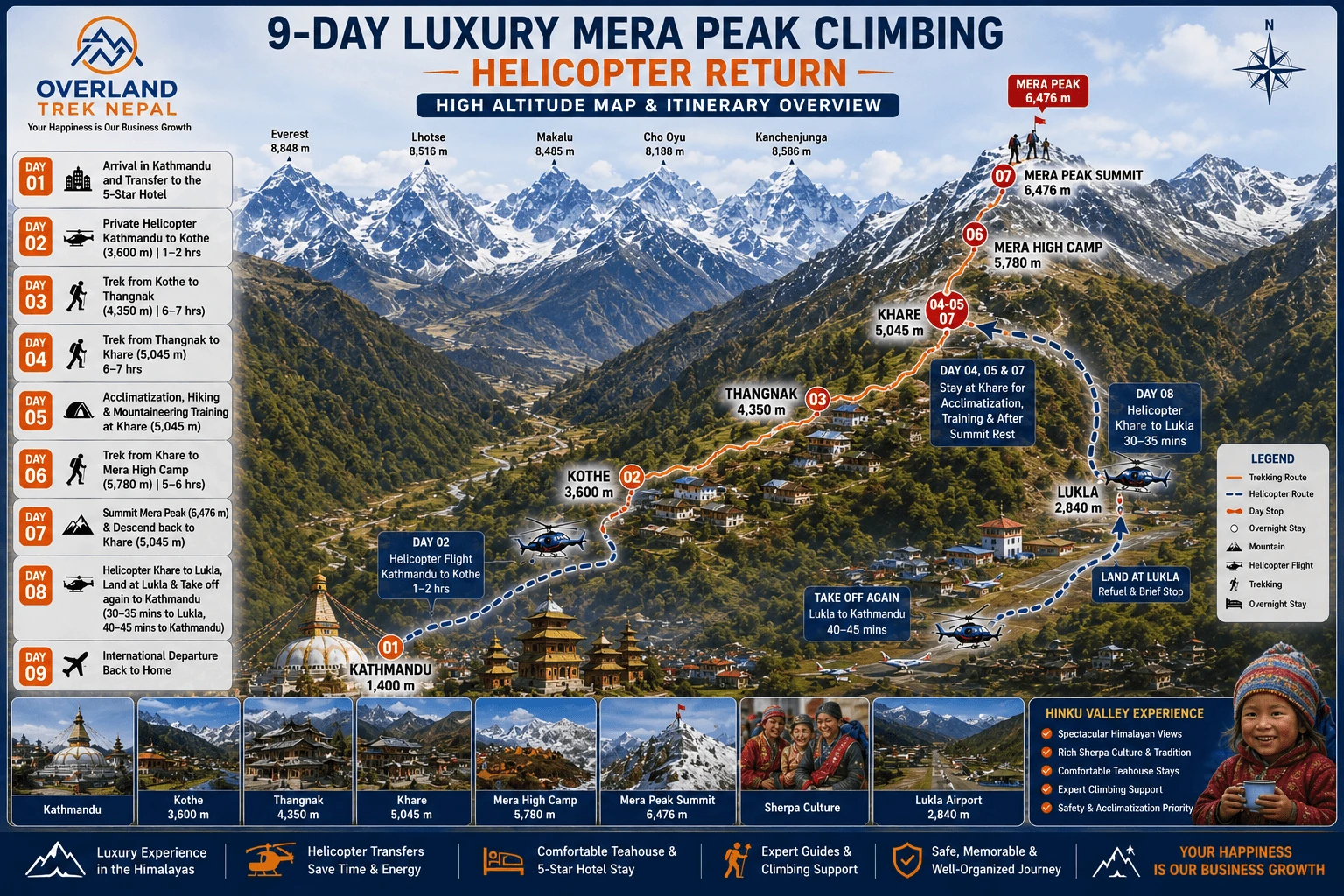
Mera Peak Climbing with Private Helicopter: How Does It Work?
The private helicopter service is one of the defining features of this expedition.
Your journey uses helicopters at both ends of the mountain section.
Outbound: Kathmandu to Kothe
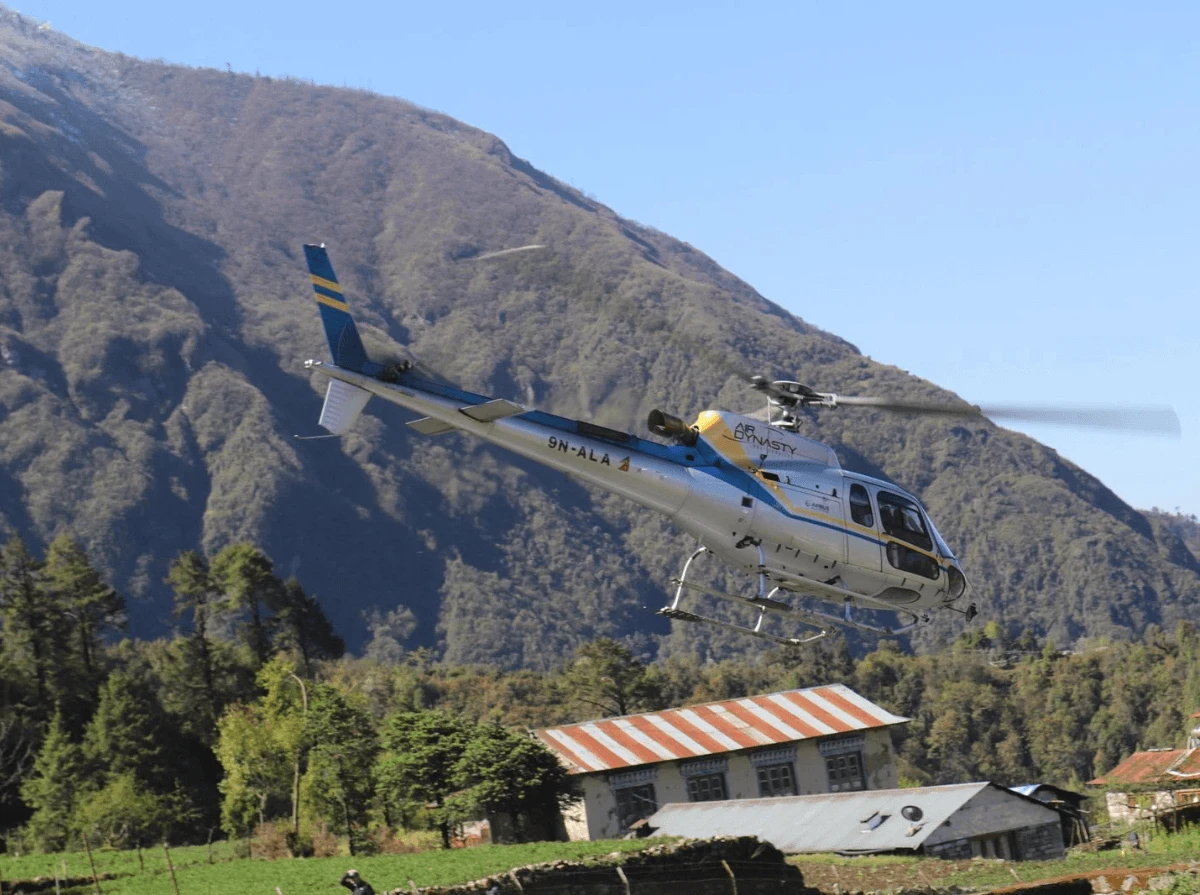
On Day 2, you take a private helicopter from Kathmandu to Kothe instead of following the longer conventional approach.
This places you directly in the Hinku Valley and removes several trekking days.
You do not immediately continue high into the valley. After reaching Kothe, the itinerary includes an acclimatisation hike so your body can begin adjusting to the rapid altitude gain.
Return: Khare to Kathmandu
After the summit and descent to Khare, Day 8 is planned for a private Mera Peak helicopter return from Khare to Kathmandu.
This removes the multi-day walk back toward Lukla.
You return to Kathmandu, check into a 5-star hotel, rest, shower, and celebrate the expedition.
Why use a private helicopter?
- Reduces total expedition duration
- Avoids several days of approach trekking
- Avoids the long post-summit walk back
- Gives your group private flight logistics
- Makes the itinerary practical for travellers with limited time
- Provides a more comfortable transition after summit day
- Lets you finish the mountain section at Khare rather than retracing the trail
Private flights remain subject to aviation regulations, aircraft performance, weather, visibility, payload, pilot judgment, and landing conditions.
Mera Peak Helicopter Return
The Mera Peak helicopter return takes place from Khare after your summit attempt. Instead of trekking several days back toward Lukla, your private helicopter is planned to fly from Khare toward Kathmandu on Day 8. Actual flight routing and timing depend on mountain weather, visibility, aircraft payload, and operational safety requirements.
This means:
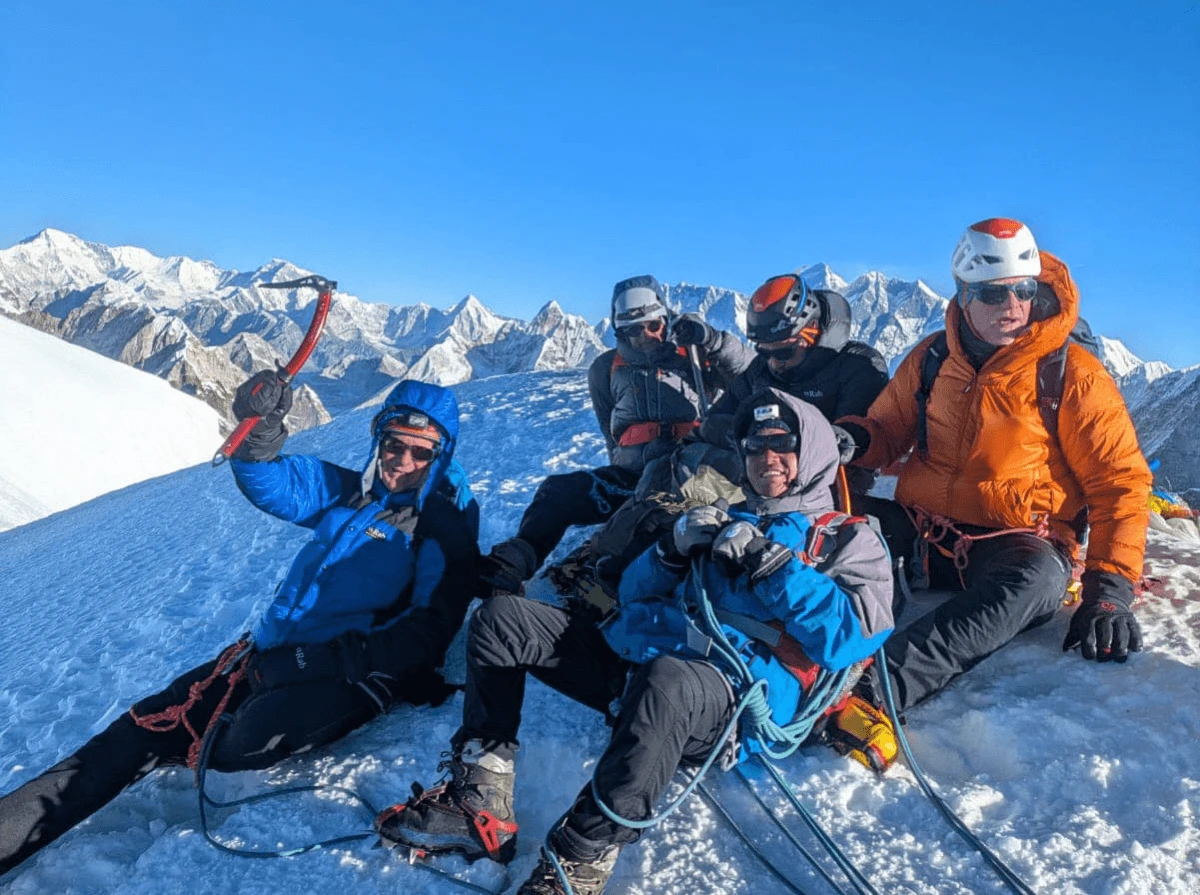
- Summit Mera Peak on Day 7
- Descend back to Khare
- Rest overnight
- Fly from Khare on Day 8
- Return to your 5-star Kathmandu hotel
- Celebrate the expedition in Kathmandu
A helicopter saves days of trekking, but departures cannot be guaranteed at a fixed minute in Himalayan weather.
Why Return by Helicopter After Climbing Mera Peak?
Summit day is the hardest day of the expedition.
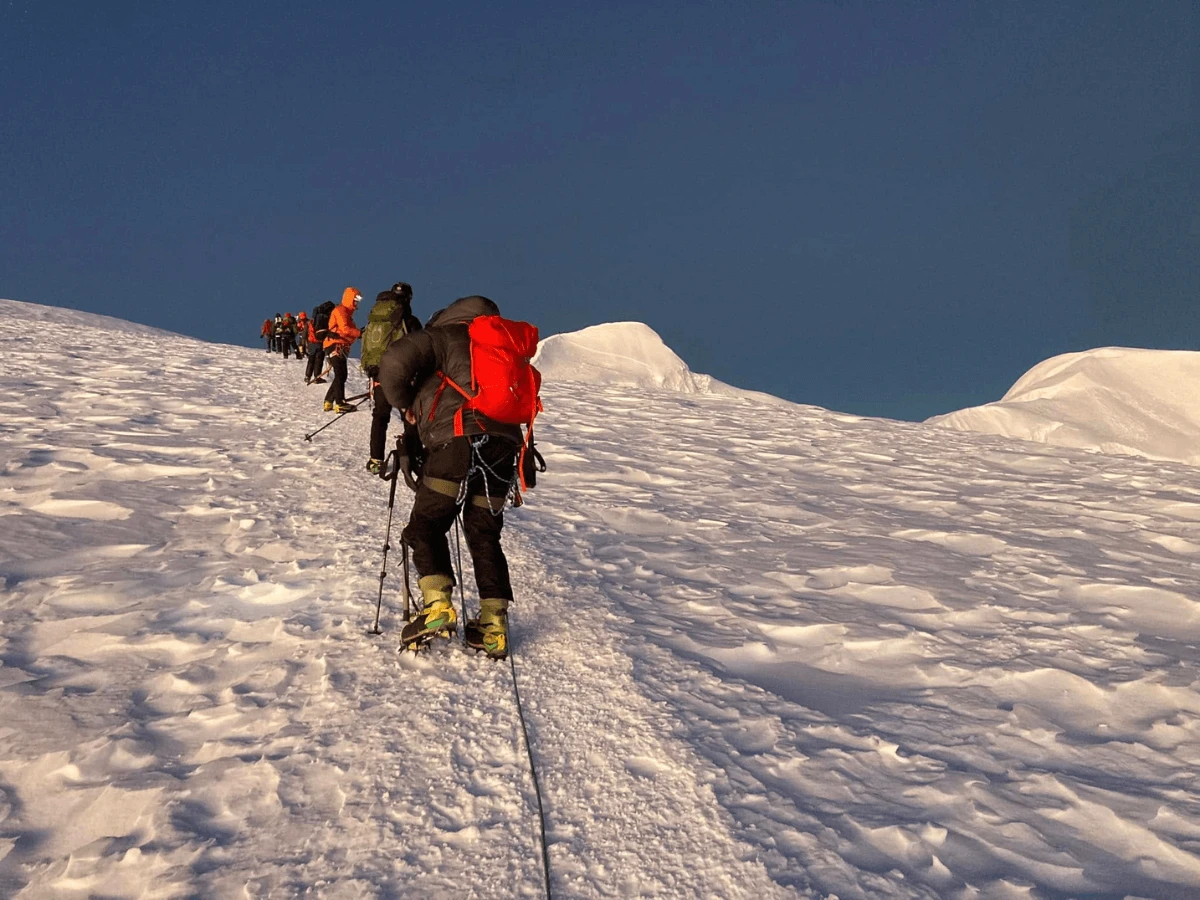
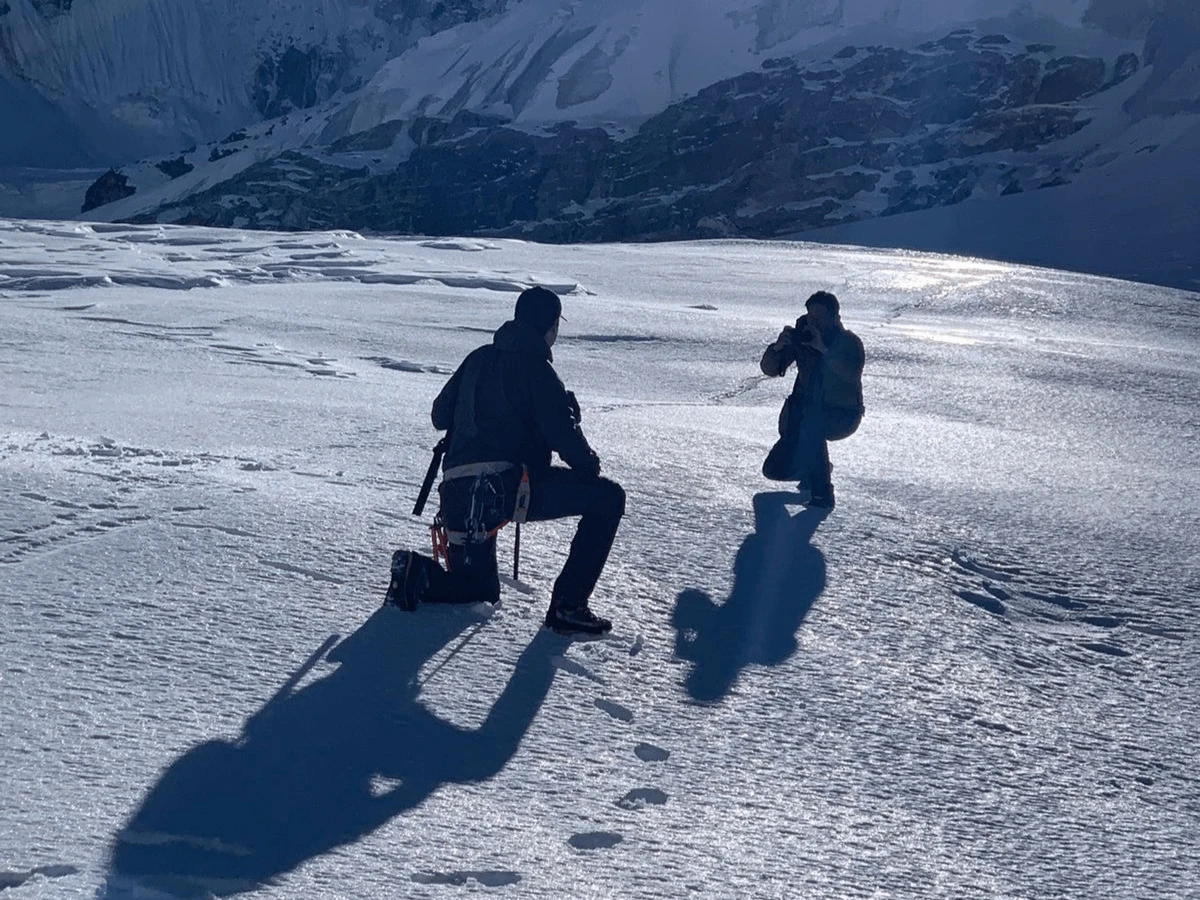
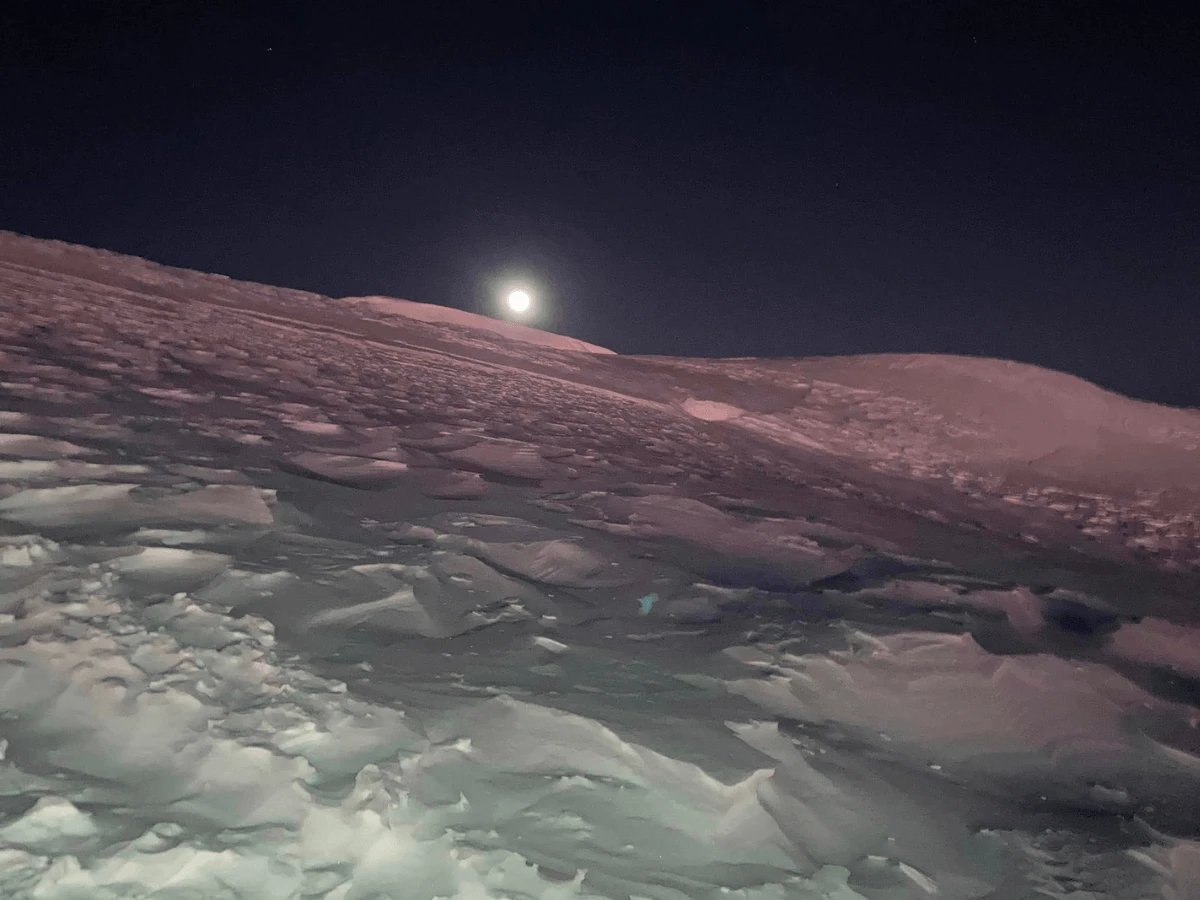
You leave High Camp early, travel over snow and glacier terrain, climb toward the summit at 6,476 m, descend to High Camp, and continue down to Khare.
On a traditional itinerary, the expedition is not finished there. Climbers normally still have several days of walking before reaching an airport or road connection.
A Mera Peak helicopter return changes that.
After reaching Khare, you can complete the mountain journey with a private flight instead of retracing the approach.
Main benefits of a helicopter return
- Time-saving: It cuts several trekking days from the schedule.
- Post-summit comfort: Your legs have already completed a demanding summit day. Flying out eliminates a long walk back through the valley.
- Private logistics: You are not purchasing a helicopter seat as an optional extra after arriving in the mountains. The helicopter is part of the planned package.
- Faster recovery: Returning directly to Kathmandu gives you quicker access to your hotel, shower, comfortable bed, restaurants, and rest.
- Better use of limited vacation: International travellers can complete a serious Himalayan climbing objective within a much shorter Nepal trip.
Important Acclimatisation Note for This 9-Day Private Mera Peak Expedition
A luxury helicopter makes transportation faster. It does not make acclimatisation faster.
The traditional Mera Peak route spends more days gradually gaining altitude. This 9-day itinerary skips much of that approach by flying directly from Kathmandu to Kothe.
That makes the trip attractive for time-sensitive climbers, but it also creates a more aggressive altitude profile.
Who should consider this itinerary?
It is most appropriate for people who:
- Have recent high-altitude experience
- Know how their body normally reacts above 4,000 meters
- Arrive in Nepal physically prepared
- Have previous trekking or climbing experience
- Understand that the schedule may need to change
- Are willing to follow guide decisions
- Accept that an extra acclimatisation day may be safer than continuing on schedule
Dedicated Mera Peak Private Climbing Guide and Support
A private expedition should provide more than private transportation. Your climbing support should also feel personal.
For this package, climbers will receive personal climbing support rather than relying on the structure of a large public group.
Your guide helps manage:
- Daily pacing
- Acclimatisation observations
- Route decisions
- Equipment checks
- Mountaineering training
- Rope procedures
- Glacier travel
- Summit timing
- Weather assessment
- Turnaround decisions
- Descent management
- Coordination with the Kathmandu team
The exact guide-to-climber arrangement should be confirmed before booking because the appropriate staffing depends on your group size and expedition requirements.
Ask Overland Trek Nepal for the planned climbing-team structure when requesting your private quote.
Luxury Accommodation During Mera Peak Climbing
You stay in a 5-star hotel at the beginning and end of the expedition.
This gives you a comfortable environment for preparation before the climb and proper recovery after returning from the mountains.
Kothe, Thangnak, and Khare are remote Himalayan settlements. Accommodation is based on the best practical lodge options available, not international 5-star standards.
The teahouse facilities can be simple. Rooms, bathrooms, hot showers, charging, heating, internet, and food choices may be more limited than in Kathmandu.
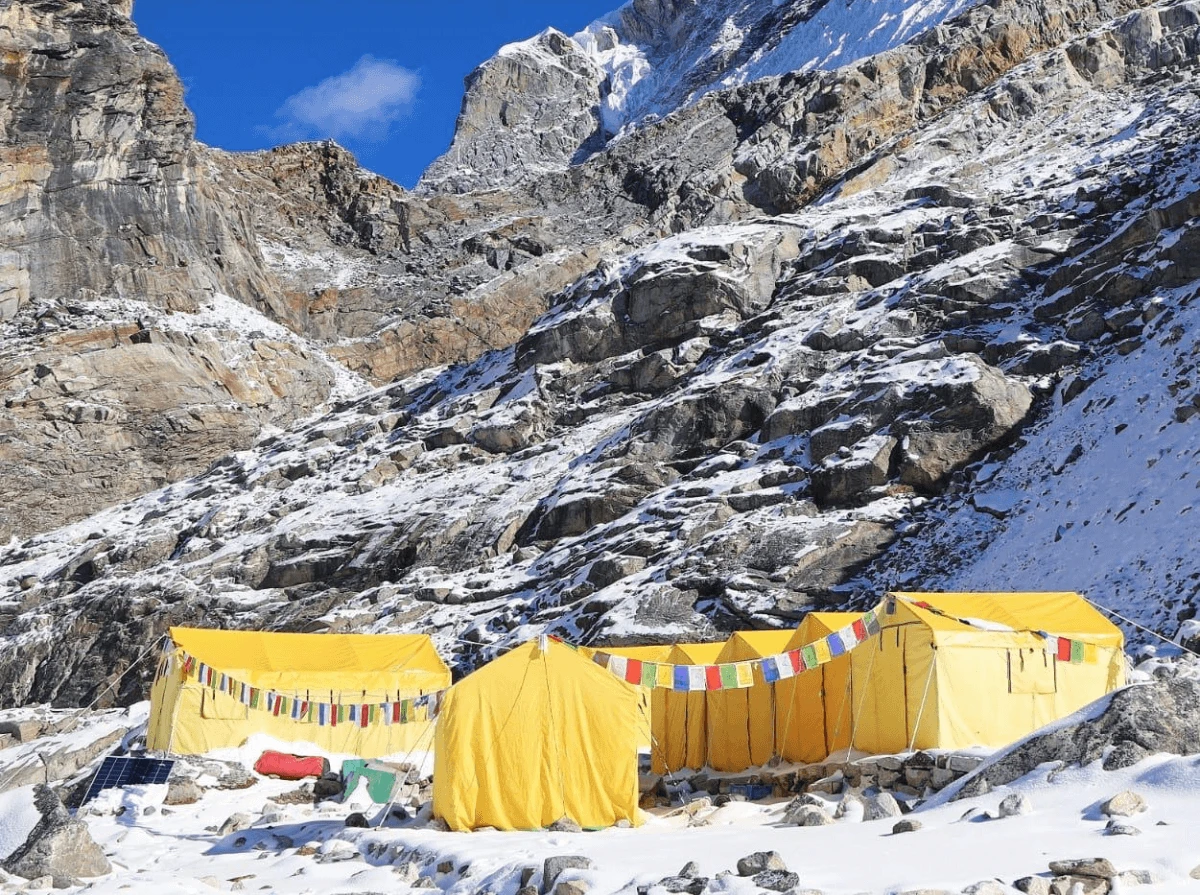
You sleep in a tent. There is no luxury hotel at Mera High Camp. Being transparent about this is important.
The premium value of the trip comes from private transportation, organization, hotel quality in Kathmandu, dedicated support, reduced trekking time, and personalized logistics—not from pretending remote mountain infrastructure is something it is not.
Luxury Mera Peak Climbing vs Standard Mera Peak Climbing
|
Feature
|
Luxury Private Helicopter Package
|
Standard Mera Peak Package
|
|
Trip Duration
|
9 days
|
Usually considerably longer
|
|
Departure Style
|
Private
|
Private or group
|
|
Approach
|
Private helicopter to Kothe
|
Traditional trekking approach
|
|
Return
|
Private helicopter from Khare
|
Trek back toward Lukla
|
|
Kathmandu Hotel
|
5-star
|
Usually standard tourist hotel
|
|
Climbing Support
|
Dedicated private support
|
Group-based or private depending on package
|
|
Schedule
|
Fast-track
|
Gradual
|
|
Acclimatization
|
Aggressive; best for experienced/pre-acclimatized climbers
|
More gradual
|
|
Mountain Lodges
|
Best available
|
Standard teahouses/lodges
|
|
High Camp
|
Tent
|
Tent
|
|
Time Efficiency
|
Very high
|
Lower
|
|
Flexibility
|
Higher with private logistics
|
Depends on group schedule
|
|
Ideal Traveler
|
Time-sensitive premium climber
|
Climbers wanting a traditional approach
|
Which one should you choose?
Choose the luxury helicopter version if private service and time efficiency are priorities and your altitude background supports a faster approach.
Choose a17 Day Mera Peak Climbingor Mera Peak Climbing 14 Days if you want gradual acclimatisation and the complete trekking journey.
How Difficult Is Luxury Mera Peak Climbing?
Mera Peak is often chosen as an introduction to Himalayan mountaineering, but that does not make it easy.
The biggest challenge is altitude.
At 6,476 meters, you are operating in a low-oxygen environment after several demanding days of trekking and climbing.
You should expect:
- Long walking days
- Cold temperatures
- Snow and glacier terrain
- Crampon use
- Early summit departure
- High-altitude fatigue
- Basic mountain accommodation
- Carrying a personal daypack
- Rapid weather changes
- A long summit and descent day
Basic mountaineering techniques can be practised at Khare, but good physical conditioning should be built before arriving in Nepal.
Recommended preparation
Train for several months if needed, focusing on:
- Long uphill hikes
- Stair climbing
- Cardiovascular endurance
- Leg strength
- Core strength
- Balance
- Hiking with a loaded backpack
- Back-to-back training days
- Recovery and mobility
If possible, gain real altitude experience before choosing the 9-day itinerary.
Is the 9-Day Luxury Mera Peak Climb Suitable for Beginners?
The 9-day Luxury Mera Peak Climbing Helicopter Return itinerary is not the best default choice for a complete high-altitude beginner because the helicopter approach creates rapid altitude gain. Fit climbers with previous altitude experience or recent acclimatisation are better candidates. First-time high-altitude climbers should consider adding acclimatisation days or choosing a longer Mera Peak itinerary.
Before booking, discuss:
- Highest previous altitude
- Recent altitude exposure
- Climbing background
- Fitness
- Medical history relevant to altitude travel
- Available extra days
- Personal risk tolerance
Best Time for Luxury Mera Peak Climbing with Helicopter Return
The main climbing seasons for Mera Peak are generally spring and autumn.
Spring is popular for Himalayan climbing because temperatures gradually become more favorable and the season offers established climbing activity across Nepal.
Conditions still change quickly at altitude. Snow, wind, cloud, and visibility can affect both summit plans and helicopter flights.
- Autumn: September to November
Autumn is another major season. After the summer monsoon, the mountains often experience clearer periods, although conditions can never be guaranteed. Later autumn can become significantly colder.
There is no single best date for every climber.
Consider:
- Your travel schedule
- Cold tolerance
- Previous altitude experience
- Preferred temperatures
- Mountain conditions
- Helicopter availability
- International flight flexibility
Contact Overland Trek Nepal for advice based on your intended departure date.
What Happens If the Helicopter Cannot Fly?
Private helicopters provide flexibility, but they are still aircraft operating in Himalayan terrain.
Weather and safety determine whether a flight can operate.
Clouds, wind, visibility, temperature, landing conditions, payload, and aircraft performance can change plans.
If the helicopter cannot safely fly at the planned time, departure may need to be delayed or adjusted.
That is why international travelers should avoid building an inflexible connection immediately after a mountain helicopter flight.
Practical advice
- Keep schedule flexibility after the climb
- Use changeable international tickets where possible
- Carry suitable travel insurance
- Understand what weather delays your policy covers
- Do not pressure pilots or guides to fly in unsafe conditions
- Allow Overland Trek Nepal and the aviation operator to manage operational decisions
A private charter improves convenience.
It does not override Himalayan weather.
Safety on a Private Mera Peak Expedition
Premium service should never mean pushing higher because a client paid more.
The mountain makes no distinction between a luxury package and a standard package.
Safety decisions must remain based on conditions.
Key safety principles include:
- Honest altitude-symptom reporting
- Controlled trekking pace
- Hydration and nutrition
- Acclimatization assessment
- Weather monitoring
- Correct climbing equipment
- Mountaineering training
- Guide-led rope procedures
- Sensible summit turnaround times
- Safe descent
- Adequate insurance
- Emergency communication and evacuation planning
Most importantly, listen to your climbing guide.
Turning around below the summit can be the correct mountaineering decision.
Why Book Your Private Mera Peak Expedition with Overland Trek Nepal?
Overland Trek Nepal organises peak-climbing trips in Nepal and already operates standard Mera Peak programs.
This luxury itinerary takes that mountain experience and changes the logistics for travellers who want a private, shorter, and more personalised expedition.
What you can expect from the planning process
Your team reviews the route, equipment, altitude considerations, insurance requirements, and helicopter logistics before departure.
This is designed as a private trip rather than a public group itinerary.
- Dedicated climbing support
Your climbing staff is assigned around your private expedition requirements.
Mountain lodges, climbing logistics, permits, guides, porters, camping equipment, transportation, and helicopter operations require coordination inside Nepal.
If nine days is too aggressive for your altitude background, ask about adding acclimatization or contingency days.
That is often a smarter form of luxury than simply trying to move faster.
Plan Your Luxury Mera Peak Climbing Helicopter Return
You do not need another standard Mera Peak package with a helicopter listed at the bottom as an optional upgrade.
If you value privacy, time, personal climbing support, 5-star comfort in Kathmandu, and private helicopter logistics at both ends of the mountain journey, this expedition is built for that purpose.
The next step is to determine whether the 9-day itinerary is suitable for you. Let us know your climbing experience, high-altitude record, recent trekking exposure, fitness level, and number of climbers.
Our team can then discuss the appropriate itinerary and provide a private quotation. For more information:
WhatsApp Overland Trek Nepal: +977 9841920870
Email:[email protected]
.webp)