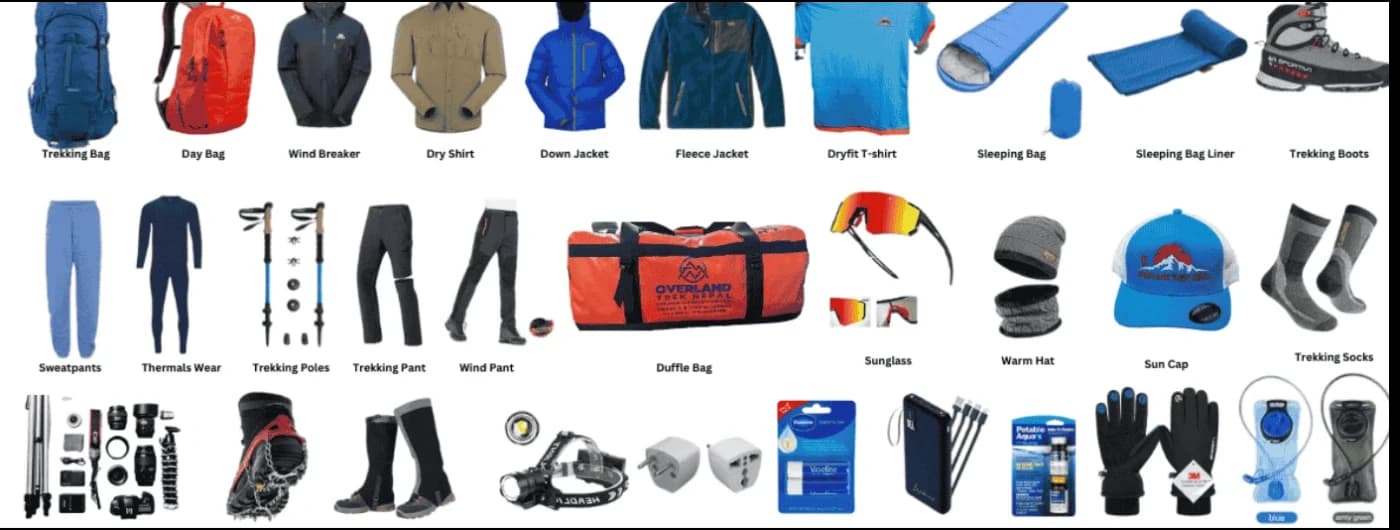

What gear do I need for Annapurna Base Camp Trek in spring? For the Annapurna Base Camp Trek in spring (March to May), you need moisture-wicking base layers, a down jacket rated to -10°C, waterproof shell jacket, sturdy ankle-support hiking boots, a 20–30L daypack, a sleeping bag rated to at least -10°C, trekking poles, a headlamp, sunscreen SPF 50+, and water purification tablets. Spring conditions range from warm and humid at lower altitudes to cold and snowy above 3,500m, so layering is the key strategy.
When you book the Annapurna Base Camp Trek with Overland Trek Nepal, your package includes a complimentary duffel bag, T-shirt, cap, and a porter who carries up to 10 kg of your main luggage, so what you carry in your daypack on the trail is all that matters.
Why Spring Gear Needs Are Different from Other Seasons
Spring is the most popular season for the ABC trek and also the most gear-demanding one. In March and April, the trail below Chhomrong (2,170m) can be hot and humid, temperatures reaching 20–25°C during the day. But by the time you reach Machhapuchhre Base Camp (3,700m) and Annapurna Base Camp (4,130m), nights drop below freezing and snow is common on the upper trail.
This means you need gear that works in two completely different climates on the same trip. The solution is a smart layering system, not more gear, just the right gear.
The Spring Layering System for ABC Trek
The entire clothing strategy for the ABC trek in spring is built around three layers:
Base layer: Sits directly against your skin. It should be moisture-wicking and quick-drying. Merino wool or synthetic fabrics like polyester work best. Avoid cotton entirely, it holds moisture, stays wet, and causes chills at altitude. Pack at least 3 to 4 base layer tops and 2 bottoms.
Mid layer: Provides insulation and warmth. A fleece jacket or a lightweight down jacket (600 fill power or above) works well. This is the layer you add when you stop for rest or when you gain altitude above 3,000m.
Outer shell layer: Protects against wind, rain, and snow. A waterproof and windproof jacket is non-negotiable on the ABC trek. Spring brings unpredictable afternoon showers especially between Bamboo and Deurali. A GoreTex or similar waterproof shell that packs small is ideal.
Complete Gear List for Annapurna Base Camp Trek in Spring
Clothing
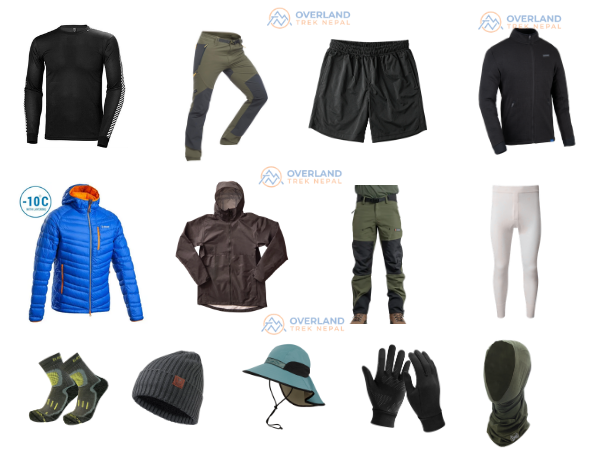
| Item | Quantity | Spring-specific note |
|---|---|---|
| Moisture-wicking base layer tops | 3–4 | Merino wool or polyester — no cotton |
| Trekking trousers | 2 | Lightweight, quick-dry |
| Shorts | 1 | For hot lower sections (Nayapul to Ghandruk) |
| Fleece jacket or mid layer | 1 | 200-weight fleece minimum |
| Down jacket (-10°C rated) | 1 | Essential above 3,000m at night |
| Waterproof shell jacket | 1 | Must be fully waterproof, not just water-resistant |
| Waterproof trousers | 1 | Lightweight and packable |
| Thermal underwear | 1 set | For sleeping at higher teahouses |
| Trekking socks | 5–6 pairs | Merino wool preferred |
| Warm hat/beanie | 1 | For evenings and mornings above 2,500m |
| Sun hat or cap | 1 | Critical in spring — UV is intense at altitude |
| Lightweight gloves | 1 pair | Thin liner gloves are enough for spring |
| Neck gaiter or buff | 1 | Dual use — sun and cold protection |
Footwear
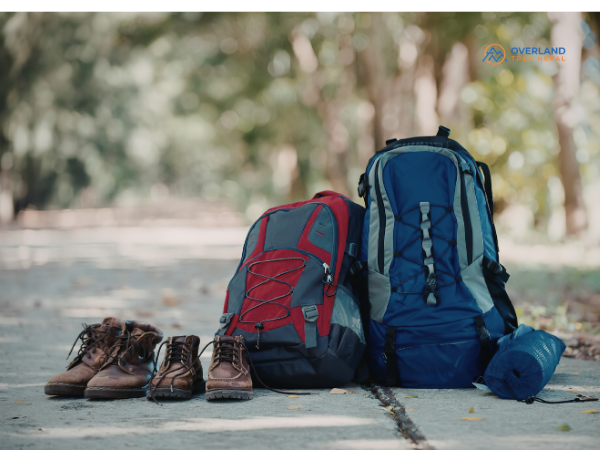
Your boots are the single most important piece of gear for the ABC trek. The stone-paved staircases between Chhomrong and Sinuwa and the rocky approach to base camp require proper ankle support and grip. Never rent trekking boots, they must be broken in before you arrive.
| Item | Note |
|---|---|
| Waterproof hiking boots with ankle support | Worn in at least 3–4 weeks before the trek |
| Camp sandals or flip flops | For evenings at teahouses and Jhinu Danda hot springs |
| Trekking gaiters (optional) | Useful if trekking in late March when snow is still on the upper trail |
Backpacks and Luggage
When you book with Overland Trek Nepal, your porter carries your main duffel bag (up to 10 kg) and a complimentary duffel is provided. Your job is to pack a light daypack with only what you need on the trail each day.
| Item | Spec |
|---|---|
| Daypack | 20–30L, with rain cover |
| Duffel bag | Provided by Overland Trek Nepal (60–70L) |
| Dry bags or packing cubes | For organising and waterproofing gear inside the duffel |
Sleeping and Warmth
All accommodation on the ABC trek is in locally-run teahouses. Blankets are provided but are often thin above 3,500m. A sleeping bag is essential, do not skip this.
| Item | Spec |
|---|---|
| Sleeping bag | Rated to -10°C minimum. Down fill is lighter; synthetic is better if wet conditions expected |
| Sleeping bag liner | Adds 3–5°C warmth and keeps the bag hygienic over 10 nights |
Trekking Equipment
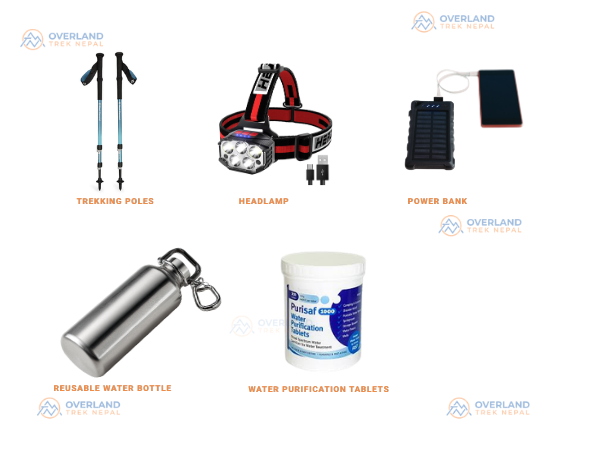
| Item | Note |
|---|---|
| Trekking poles | Adjustable aluminium or carbon. Essential for steep descents from MBC to Bamboo |
| Headlamp | With extra batteries. Teahouse electricity is limited, especially above Chhomrong |
| Power bank | 10,000–20,000 mAh. Teahouses charge a fee to charge devices |
| Reusable water bottle | 1 litre minimum. Carry two if you dislike stopping to refill |
| Water purification tablets | For filtering stream water on the upper trail |
| Trekking map or offline GPS | Download Maps.me or Gaia GPS with the Annapurna region before leaving Pokhara |
Sun and Health Protection
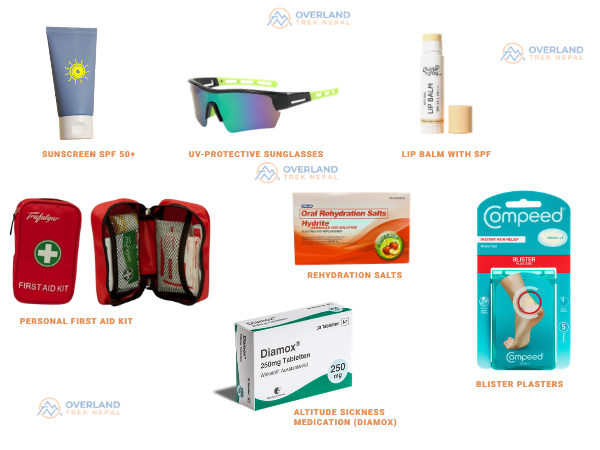
Spring at high altitude means intense UV exposure, the sun is strong even when the air feels cool. This is one of the most overlooked aspects of spring trekking.
| Item | Note |
|---|---|
| Sunscreen SPF 50+ | Apply every 2 hours above 3,000m — UV increases 4% per 300m of altitude |
| UV-protective sunglasses | Wraparound style — essential at ABC and MBC where snow reflection intensifies UV |
| Lip balm with SPF | Lips crack quickly at altitude |
| Personal first aid kit | Overland Trek Nepal guides carry a group kit, but bring your own basic supplies |
| Altitude sickness medication (Diamox) | Consult your doctor before the trek — not mandatory but recommended for first-timers |
| Rehydration salts | Pack 5–10 sachets. Dehydration is the most common issue above 3,000m |
| Blister plasters | The stone staircases on day 3 and 4 create hotspots — address them before they blister |
Documents and Essentials
| Item | Note |
|---|---|
| Passport (original) | Required at permit checkpoints |
| Two passport-sized photos | Needed for ACAP and TIMS permit processing, your Overland Trek Nepal guide handles the paperwork |
| Travel insurance documents | Must cover emergency helicopter evacuation above 4,000m |
| Nepali cash (small notes) | Teahouses above Chhomrong are cash only, ATMs are only in Pokhara |
| Nepal SIM card | Provided in your Overland Trek Nepal package |
What You Do NOT Need for the Spring ABC Trek
Many first-time trekkers overpack. Here is what you can safely leave at home or store at the hotel in Kathmandu or Pokhara:
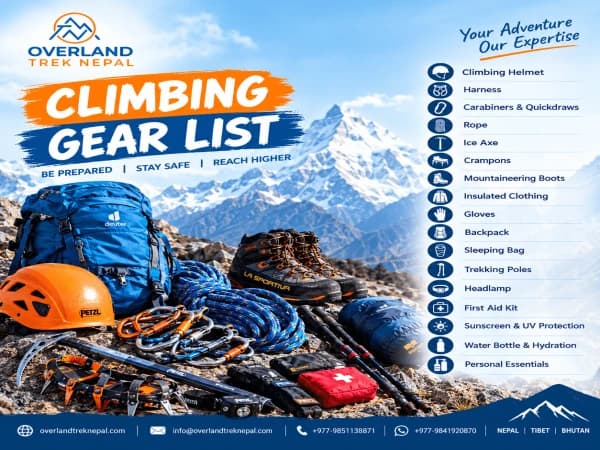
You do not need crampons or ice axes for a standard spring ABC trek; the upper trail may have snow patches, but it is not a technical climbing route. You do not need a full-size 60L backpack on the trail; your porter carries the heavy bag. You do not need multiple guidebooks, a laptop, or heavy camera tripods. A compact camera or your phone is more than enough. And you do not need brand-new, untested boots if you have not broken them in; rent a pair in Pokhara instead.
Where to Buy or Rent Gear in Nepal
Kathmandu's Thamel neighbourhood and Pokhara's Lakeside area both have hundreds of trekking gear shops selling both original brands and good quality local copies at a fraction of western prices. You can rent sleeping bags, trekking poles, and down jackets in Pokhara for NPR 100–300 per day per item (approximately USD 1–3).
The only item you should never rent is trekking boots, blisters from ill-fitting rented boots are the number one reason trekkers struggle or quit the ABC trail early.
Quick Spring Gear Checklist — ABC Trek
Before you leave for Pokhara, run through this checklist:
- Waterproof hiking boots (broken in)
- Down jacket rated -10°C
- Waterproof shell jacket
- 3–4 moisture-wicking base layer tops
- Sleeping bag rated -10°C
- 20–30L daypack with rain cover
- Trekking poles
- Headlamp with spare batteries
- Power bank 10,000+ mAh
- Sunscreen SPF 50+ and UV sunglasses
- Water bottle and purification tablets
- Rehydration salts
- Passport photos x2
- Travel insurance with evacuation cover
- Nepal cash (small denominations)
Frequently Asked Questions
What gear is essential for Annapurna Base Camp Trek in spring?
The most essential gear for the ABC trek in spring is a down jacket rated to -10°C, waterproof hiking boots with ankle support, a sleeping bag rated to -10°C, a waterproof shell jacket, and a 20–30L daypack. Spring conditions vary dramatically between the lower trail (warm and humid) and the upper sanctuary (cold and snowy), so layering is more important than any single item.
Do I need a sleeping bag for the Annapurna Base Camp Trek in spring?
Yes. Even in spring, temperatures at Annapurna Base Camp (4,130m) and Machhapuchhre Base Camp (3,700m) regularly drop below freezing at night. Teahouse blankets are provided but are often too thin above 3,500m. A sleeping bag rated to at least -10°C is essential.
Can I rent trekking gear in Pokhara for the ABC trek?
Yes, sleeping bags, trekking poles, down jackets, and daypacks can all be rented in Pokhara's Lakeside area for approximately USD 1–3 per item per day. The only item you should buy rather than rent is trekking boots, as ill-fitting rented boots cause blisters on the long stone-staircase sections of the trail.
How heavy should my daypack be for the ABC trek?
Your daypack should not exceed 5–7 kg on the trail. Your porter carries your main duffel bag (up to 10 kg) when you book a guided package with Overland Trek Nepal. Keep the daypack to water, snacks, a rain jacket, your camera, documents, and a warm layer.
Do I need trekking poles for the Annapurna Base Camp Trek in spring?
Trekking poles are strongly recommended, especially for the steep descents between Machhapuchhre Base Camp and Bamboo, and the long stone staircase sections near Chhomrong. They significantly reduce knee strain on multi-day descents and improve balance on snow-patched sections of the upper spring trail.
Last Updated: April 2026 | Written by the Overland Trek Nepal team, licensed trekking specialists in the Annapurna region.
Ready to book? View our fully guided Annapurna Base Camp Trek package from $799 ,includes licensed guide, porter, permits, all meals, and complimentary gear.

.webp&w=1200&q=75&dpl=dpl_EUd5Wwb28cTzwN6qQNwTKfhuRohE)