What happened
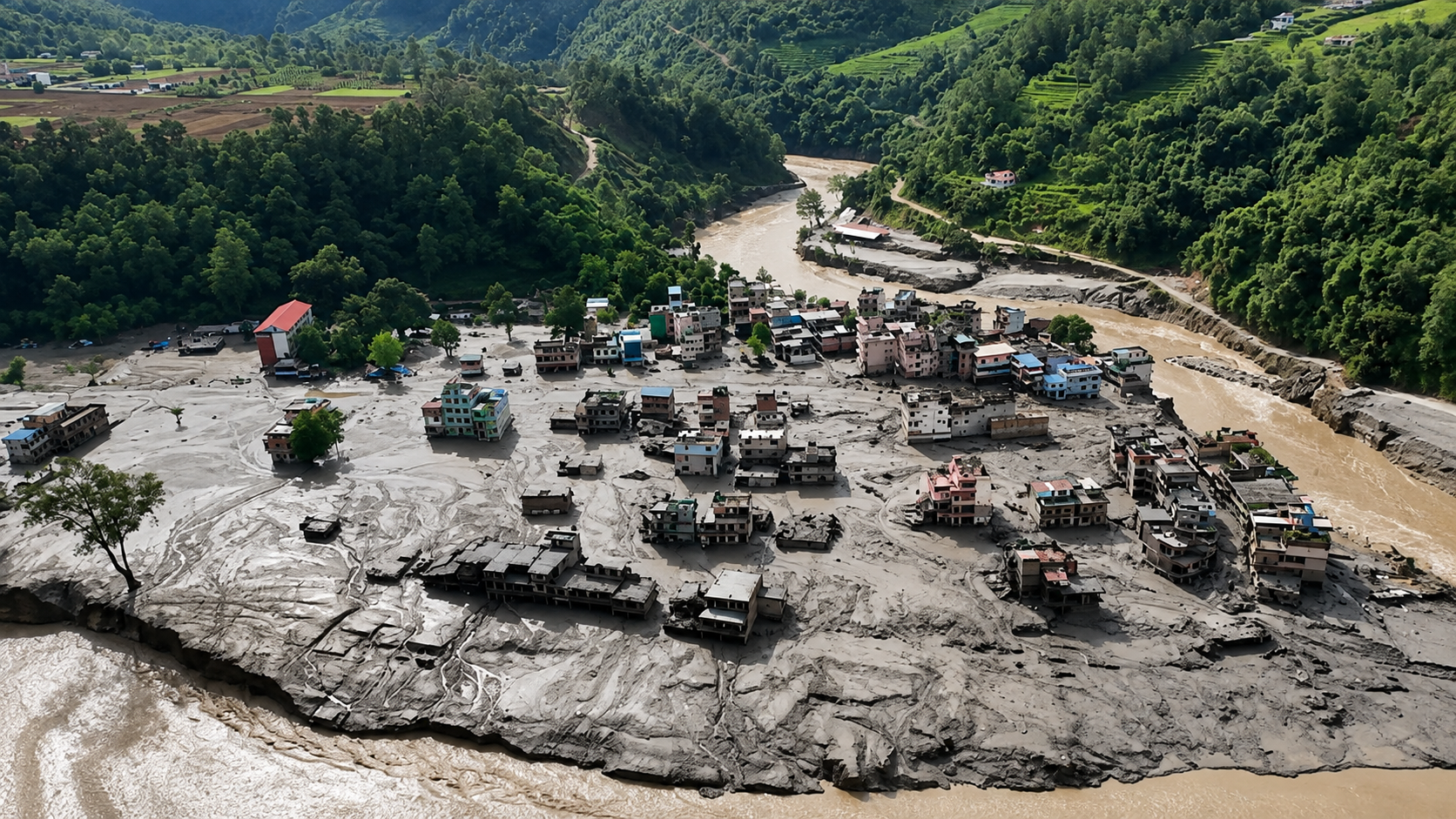
On the morning of August 26, 2026, a glacial lake outburst flood swept down the Bhotekoshi River near the Nepal–China border, entering Nepal through Rasuwa district and continuing downstream along the Trishuli River system into Nuwakot, Dhading and Gorkha. The trigger is understood to have been a glacier or ice-and-rock collapse on the Tibetan side of the border, close to the Gyirong area.
This has become one of the deadliest natural disasters Nepal has faced in recent years. As of the latest figures (September 2, 2026), the confirmed death toll has reached at least 1,050 in Nepal, with roughly 3,916 people still listed as missing, plus a further 16 deaths and 546 missing across the border in Tibet. Officials note the missing-persons count moves in both directions as communications are restored to cut-off areas and names are traced to safety or moved onto the confirmed list. Search, rescue and road-repair work is ongoing in Rasuwa and the affected downstream districts. We want to be upfront that this is a genuine human tragedy for the communities in that corridor, and our focus in the rest of this post is narrower and more practical: what it means for someone planning or currently on a trek in Nepal.
Nepal's government is actively urging tourists not to cancel
On September 2, 2026, Nepal's Tourism Minister, Khadak Raj Paudel, released a public video message under the hashtag #NepalCalling, formally declaring the country open for tourism and asking international travelers not to abandon their Himalaya trips over the flood. He described Nepal's mountain trails and trekking routes as still open and waiting for visitors, and framed continued travel to unaffected regions as meaningful support for a country managing a major disaster response elsewhere. Video link
This matters for two reasons. First, it's an official, on-the-record confirmation from the government body that oversees Nepali tourism, not just operator reassurance, that trekking in the country's major regions continues. Second, it reflects something real about Nepal's tourism economy: a large share of rural income in regions like Khumbu (Everest), Annapurna and Manaslu depends directly on trekking visits, and a wave of cancellations driven by headlines about a geographically distant flood would hurt communities that had nothing to do with the disaster and nothing to gain from it being ignored either. The honest, useful response for travelers is neither blanket reassurance nor blanket avoidance; it's the region-specific picture below.
Latest developments
- Nepal's Cabinet has declared the flood-hit districts disaster zones for three months, unlocking emergency funding and coordination powers for the recovery effort.
- The Rasuwagadhi–Kerung border crossing to Tibet - previously Nepal's main "all-weather" overland route to China - has been destroyed and is not expected to reopen on its prior timeline; this affects overland Tibet travel and trade far more than it affects domestic trekking routes.
- Infrastructure damage across the corridor includes an estimated 32 bridges and roughly 25 miles (40 km) of road, along with 14 hydropower and solar projects representing about 748 megawatts of capacity.
- The government has ordered free emergency medical treatment for flood victims, and the Nepal Red Cross, CARE and UN agencies are running relief operations focused on shelter, water, sanitation and medical supplies in the hardest-hit areas.
- These figures are moving quickly, and this section will be updated as new bulletins are issued; none of the developments above change the region-by-region trekking status below.
Why this happened: glacial lake outburst floods explained
Events like this are sometimes called GLOFs, glacial lake outburst floods, and they're a recognized hazard across the Himalaya, not a one-off freak occurrence. As glaciers retreat, they leave behind lakes dammed by loose rock and ice debris. When a chunk of glacier or an ice-and-rock mass collapses into or near one of these lakes, it can send a sudden surge of water, mud and debris down the valley below with very little warning. The August 26 event is understood to have started this way, near the Gyirong area on the Tibetan side of the border, before the surge moved down the Bhotekoshi and into the Trishuli river system in Rasuwa.
This matters for trekkers mainly because it explains why the damage is so tightly concentrated along specific river valleys rather than spread across the country. A GLOF follows the drainage of one river system; it doesn't jump watersheds. That's the same reason Everest's Dudh Koshi valley, Annapurna's Marsyangdi and Kali Gandaki valleys, and Manaslu's Budhi Gandaki approach are unaffected: they're entirely separate river systems from the one that flooded. It's also why, even within the affected corridor, Nepal Tourism Board and TAAN have been able to give route-specific rather than region-wide guidance; the risk is genuinely localized to the valleys downstream of the collapse.
Which trekking regions are affected
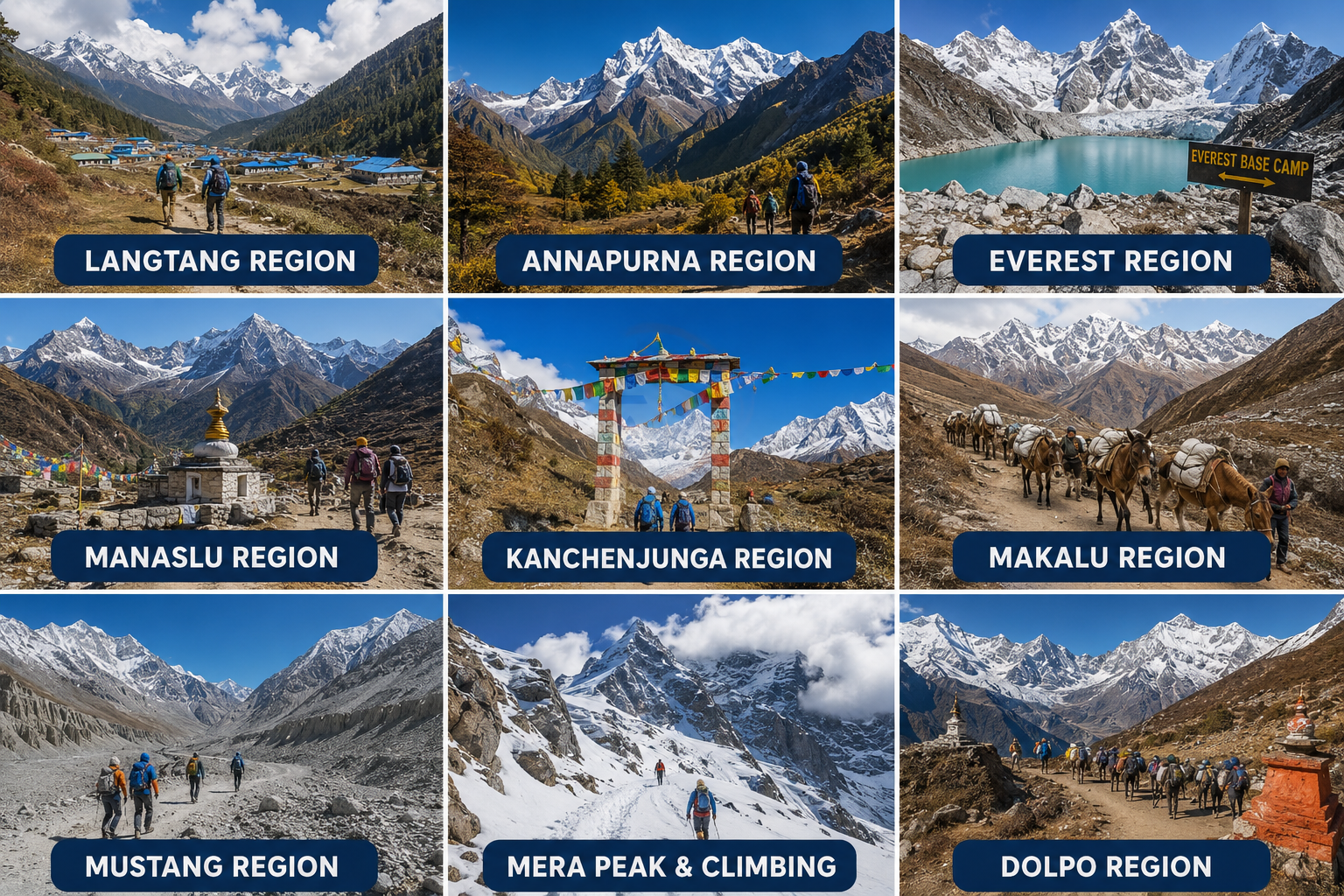
The Nepal Trekking Agencies' Association (TAAN), working with the Nepal Tourism Board, issued a region-by-region safety assessment in response to the volume of questions coming in from international travelers, agencies and journalists. Their assessment draws a clear line: the flood damaged infrastructure in a specific river corridor, not trekking trails themselves. We've cross-checked this against our own internal route advisory, updated in September 2026 for the Sep–Nov season, and give the full region-by-region breakdown below.
Langtang Region.
The main Langtang Valley Trek route via Syabrubesi is affected by road damage, but the trek itself remains recommended via an alternative route: Kathmandu → Chisapani → Kutumsang → Thadepati → Gosaikunda → Thulo Syabru → Lama Hotel → Langtang Valley → Kyanjin Gompa, returning the same way. It's a longer itinerary and demands more acclimatization planning, but it's a safe and genuinely scenic alternative. The Langtang Circuit Trek follows the same alternative access via the Gosaikunda side. Gosaikunda Lake Trek and Helambu Trek trails are both open and running on their normal routes, with autumn (Sep–Nov) the best window for Gosaikunda. Yala Peak Climbing is also open, best attempted Sep–Nov.
Annapurna Region. Fully open. The Annapurna Circuit's Besisahar-to-Chame road section is accessible, though monsoon months (Jun–Aug) are best avoided regardless of this flood. Annapurna Base Camp, Ghorepani Poon Hill, Mardi Himal and Tilicho Lake trails are all clear and highly recommended, with Mar–May and Sep–Nov the best windows. Tilicho Lake's high-pass conditions are currently good, though acclimatization is still advised. Thorong La Pass crossing is open — check weather conditions before attempting it, as with any high pass.
Everest Region.
Fully open and unaffected. Everest Base Camp Trek, Gokyo Lake Trek, Three High Passes Trek, Ama Dablam Base Camp and both Island Peak and Lobuche Peak climbing routes are all clear, with Mar–May and Sep–Nov the recommended seasons. The Everest Base Camp Trek in particular is highly recommended right now.
Manaslu Region.
Fully open. The Manaslu Circuit Trek is running with the Larke La Pass accessible, and it's highly recommended for the current season. Tsum Valley and Manaslu Base Camp treks are open and recommended, though good acclimatization planning is advised given the altitude profile.
Kanchenjunga and Makalu Regions.
Both fully open, with no reported impact from the flood. Kanchenjunga Base Camp, North Kanchenjunga Circuit and Yalung Base Camp trails are open and recommended for experienced trekkers given their remoteness. Makalu Base Camp, Barun Valley and the Sherpa Cultural Trek are likewise open and recommended.
Dolpo Region.
Partially open. Some high passes on the main Dolpo Trek may be challenging to cross depending on current conditions, and Upper Dolpo Trek requires checking both permit status and trail conditions before departure. Shey Phoksundo Lake Trek is fully open and recommended, best attempted Sep–Nov.
Mustang Region.
Fully open. Upper Mustang Trek, Lower Mustang Trek and the Lo-Manthang Cultural Trek are all clear and recommended for their cultural experience.
Mera Peak and other climbing routes.
Mera Peak, Island Peak, Lobuche Peak and Yala Peak climbing are all open, with Sep–Nov the recommended climbing window across the board.
The one throughline worth repeating: nothing on this list is affected because of the August 26 flood except the Langtang-region access road, and even that has a working, recommended alternative. Conditions in the mountains can still change with weather regardless of this event, so we keep this advisory updated and recommend confirming current status with us close to your departure date.
If your trip runs through Everest, Annapurna or Manaslu, which covers the large majority of our own departures, this event doesn't change your plans. Our 14-day Everest Base Camp Trek and Annapurna Base Camp Trek are both running on their normal itineraries and access routes. If you're booked on Langtang or Langtang Circuit, we can route you via the Gosaikunda-side alternative, talk to us before you travel so we can confirm current conditions.
Is Kathmandu safe right now?
Yes. Kathmandu is not among the districts directly hit by the August 26 flood, and hotels, restaurants, domestic flights and city tourism are operating normally. Pokhara is also unaffected and sits well outside the disaster corridor, though a stretch of the Prithvi Highway between the two cities saw temporary closures from flood debris in the days immediately after the event, worth a quick check with your operator if you're driving that route rather than flying.
Should you cancel your Nepal trekking trip?
Not automatically. The right question isn't "is Nepal safe," it's "is my specific route affected." A flood in one river valley doesn't change conditions three or four mountain ranges away. That said, a few things are worth being clear-eyed about regardless of which region you're headed to:
- This is still monsoon season tapering into autumn, and landslides, swollen rivers, and flight delays around Lukla and other mountain airstrips are a normal seasonal risk independent of this flood.
- Government advisories and TAAN updates can change route status with short notice, so confirm conditions close to your departure date rather than relying on information from several weeks out.
- Book and travel with a government-registered agency. The Nepal Tourism Board has specifically recommended this in its post-flood guidance, partly because registered operators have direct access to official route and safety updates that individual travelers don't.
What this means if you're trekking with us
Overland Trek Nepal is a government-authorized operator, and the large majority of our departures run through the Everest, Annapurna and Manaslu regions, all confirmed unaffected by both TAAN's assessment and our own internal route advisory. If you're booked on the Langtang or Langtang Circuit trek, we're routing current departures via the Gosaikunda-side alternative rather than through Syabrubesi. If you have a trip booked with us and you're unsure where it falls, call us at +977-9851138871 or WhatsApp +977-9841920870 for a direct, personal update rather than guessing from headlines; we'd rather answer a "probably unnecessary" question than have you worry unnecessarily.
We've also built our itinerary planning around 25+ years of operating in Nepal's mountains, which includes plenty of past monsoon seasons, landslide detours, and last-minute route changes. A single disrupted road corridor is the kind of thing an established, government-registered operator plans around as a matter of course; it's part of why booking through a registered agency rather than arranging logistics independently matters more in a season like this one, not less.
Practical safety advice if you're trekking in Nepal this season
- Avoid riverbank areas in Rasuwa, Nuwakot, Dhading and Gorkha districts specifically. This is where downstream flooding risk remains highest, independent of trekking trail status.
- Confirm your route with your operator within days of departure, not weeks. Road and trail status in the affected corridor is changing as repair work continues.
- Check your travel insurance policy specifically for high-altitude coverage, helicopter evacuation, and trip interruption. Many standard policies cap or exclude mountain rescue coverage, worth confirming before you fly, not after you need it.
- Save the official emergency contacts before you travel: Nepal Tourism Board toll-free 1234, tourism hotline 1144, and Tourist Police at +977 9851289445.
- Trek in groups and follow designated routes; standard Nepal Tourism Board guidance that matters more than usual while some areas are in active recovery.
Sources: Nepal Tourism Board advisories; Nepal Trekking Agencies' Association (TAAN) regional flood safety assessment; Nepal's National Disaster Risk Reduction and Management Authority and Ministry of Home Affairs bulletins; Nepal Tourism Minister's September 2, 2026 #NepalCalling public statement. This page reflects the situation as of the last-updated date above and will be revised as conditions change. For real-time official updates, consult the Nepal Tourism Board directly.
Related reading from Overland Trek Nepal:Everest Base Camp Trek — 14-Day Guide, Cost & Itinerary · Annapurna Base Camp Trek Cost Guide · Manaslu Circuit Trek Difficulty



.webp&w=1200&q=75&dpl=dpl_EUd5Wwb28cTzwN6qQNwTKfhuRohE)