What is Mani Rimdu?
Mani Rimdu is an annual Buddhist festival celebrated by Sherpa communities in the Khumbu region of Nepal that honors Guru Rinpoche (Padmasambhava), the founder of Tibetan Buddhism. The name "Mani Rimdu" translates to "blessing from the recitation of the mantra," with "mani" referring to prayers and "rimdu" meaning blessing or initiation.
Where is it celebrated?
The primary celebration occurs at Tengboche Monastery, located at 3,860 meters in the heart of the Everest Region. Secondary celebrations happen at Chiwong and Thame monasteries, though Tengboche remains the most significant location for the festival.
Why is it important?
Mani Rimdu represents the convergence of Tibetan Buddhist spirituality and Sherpa cultural identity. The festival serves multiple purposes: it provides spiritual purification, blesses the community for the coming year, preserves ancient Buddhist teachings, and celebrates the cultural heritage that defines Sherpa life in the Himalayan Khumbu.
When is Mani Rimdu Festival 2026?
The 2026 Mani Rimdu Festival will be celebrated from October 24-26, 2026, at Tengboche Monastery. This October timing follows the traditional lunar calendar, occurring during autumn when the weather in the Everest Region is optimal for trekking and mountain visibility is exceptional.
What is the Mani Rimdu Festival?
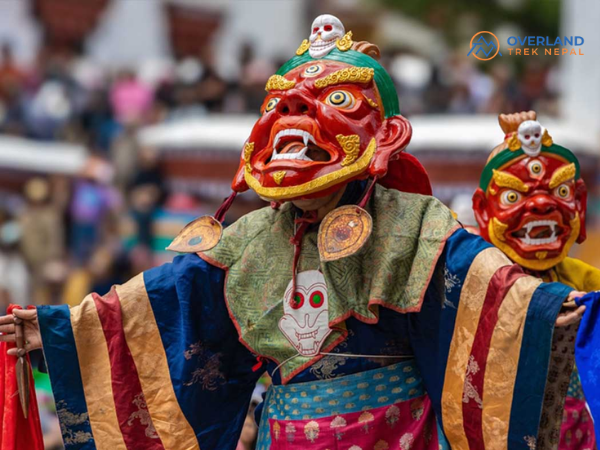
Mani Rimdu is the most important annual Buddhist festival celebrated by Sherpa communities across the Khumbu Region and represents a unique expression of Himalayan Buddhism blended with Sherpa cultural traditions. Unlike many religious observances that occur quietly in monasteries, Mani Rimdu is a public celebration that welcomes the entire community, both monastics and laypeople, to participate in three days of sacred rituals, masked dances, and spiritual ceremonies.
The festival embodies several dimensions simultaneously. Spiritually, it serves as a period of collective purification and blessing, where Buddhist teachings are transmitted and reinforced. Culturally, it celebrates Sherpa identity and the ancestral traditions passed down through generations. Socially, it functions as a major community gathering that strengthens the bonds between villages across the Khumbu.
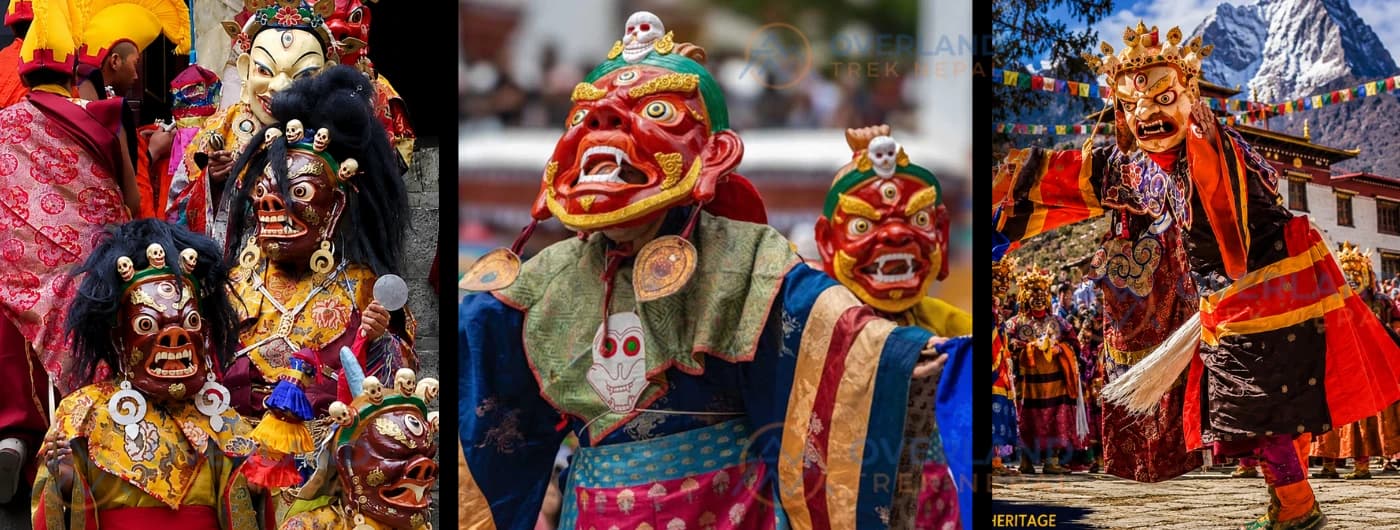
The festival's defining characteristic is the intricate Cham dances, ceremonial masked performances where monks and experienced practitioners assume the personas of Buddhist deities, protectors, and mythological figures. These performances are not entertainment in the secular sense; rather, they are sacred enactments of Buddhist philosophy meant to dispel negative energies, invoke divine blessings, and transmit spiritual teachings through visual and kinesthetic means.
History and Origins of Mani Rimdu Festival
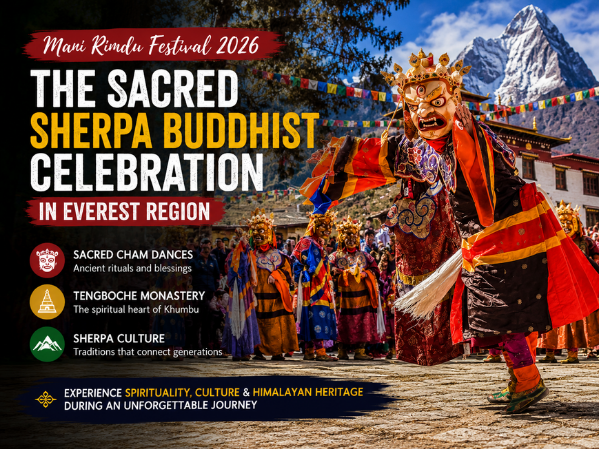
The roots of Mani Rimdu trace back to Tibet and the foundational teachings of Guru Rinpoche (Padmasambhava), the 8th-century Buddhist master who introduced Vajrayana Buddhism to the Tibetan plateau. Guru Rinpoche is credited with spreading Buddhism throughout the Himalayan region and subduing the local deities, integrating them into the Buddhist cosmology, a process reflected in Mani Rimdu ceremonies today.
Guru Rinpoche and Tibetan Buddhism
Guru Rinpoche, born in the 8th century in what is now Pakistan, became the primary figure in establishing Buddhism in Tibet during the reign of King Trisong Detsen. Rather than merely suppressing indigenous Tibetan practices, Guru Rinpoche developed an innovative form of Buddhism that incorporated local spiritual traditions and deities, making the religion authentically Tibetan. This inclusive approach is why Tibetan Buddhism differs from other Buddhist schools and contains distinctive rituals, protective deities, and practices.
The Mani Rimdu festival specifically commemorates Guru Rinpoche's spiritual accomplishments and his role in establishing Buddhism as the dominant spiritual force in the region. For Sherpa people, who migrated from Tibet to the Khumbu region between the 15th and 16th centuries, maintaining this festival became a way to preserve their connection to Tibetan Buddhist roots while adapting to their new Himalayan environment.
Development of Mani Rimdu in the Khumbu
When Sherpa communities established themselves in the Khumbu Valley, they brought with them the Tibetan Buddhist traditions of their homeland. The establishment of Tengboche Monastery in 1923 became a pivotal moment in formalizing the Mani Rimdu celebration in Nepal. The monastery's founder, Lama Gulu, instituted the festival as a way to unite the scattered Sherpa communities across the Khumbu region and strengthen their Buddhist practice. Today, Tengboche remains the primary cultural institution for preserving Sherpa traditions. For more information on the monastery's role in cultural preservation, visit Sagarmatha National Park.
Mani Rimdu Festival 2026 Dates and Schedule
|
Aspect
|
Details
|
|
Festival Dates
|
October 24-26, 2026
|
|
Location
|
Tengboche Monastery, Khumbu Region, Nepal
|
|
Elevation
|
3,860 meters (12,660 feet)
|
|
Best Days for Visitors
|
October 25-26 (peak festival days with major Cham dances)
|
|
Weather Expected
|
Clear skies, cool mornings (-5°C to 5°C), pleasant afternoons (5°C to 15°C)
|
Typical Festival Schedule
October 24, 2026 (Day 1 - Opening Ceremonies)
- Morning: Preparations and preliminary pujas at Tengboche Monastery
- Afternoon: Monks begin sacred rituals and preparations for the main ceremonies
- Evening: Community gathers; informal gathering in monastery courtyard
October 25, 2026 (Day 2 - Main Cham Dances)
- Early morning: Traditional monastic chanting and prayers
- Mid-morning: First major Cham dance performances begin
- Afternoon: Continuation of masked dances; various deity performances
- Evening: Community reflection and informal gatherings
October 26, 2026 (Day 3 - Concluding Ceremonies)
- Morning: Final Cham dance performances
- Midday: Wong blessing ceremony (collective blessing transmission)
- Afternoon: Fire puja (Jinsak ceremony)
- Evening: Festival concludes; community departure begins
Where is Mani Rimdu Celebrated?
Tengboche Monastery: The Primary Festival Site
Tengboche Monastery serves as the epicenter of the Mani Rimdu celebration and is considered the most important Sherpa monastery in Nepal. Located at 3,860 meters on a ridge in the Khumbu Valley, Tengboche offers commanding views of the Himalayan peaks, including Ama Dablam (6,812m) and Everest (8,849m). For detailed information about the monastery and its role in Sagarmatha National Park, visit the Sagarmatha National Park official site.
The monastery was established in 1923 by Lama Gulu and currently houses approximately 60 Buddhist monks who follow the Tibetan Buddhist tradition. The central courtyard, where Mani Rimdu celebrations occur, is surrounded by traditional Tibetan architecture with intricate wood carvings, colorful prayer flags, and religious iconography.
The Khumbu Region Context
The Khumbu region, sometimes called the Everest Region or Sagarmatha Zone, encompasses an area of approximately 1,148 square kilometers at altitudes ranging from 2,600 to 8,849 meters. This is the primary territory of the Sherpa people in Nepal and contains multiple significant monasteries. To learn more about the region and national park protections, consult the Department of National Parks and Wildlife Conservation.
While Mani Rimdu occurs at multiple locations, Tengboche's celebration is the most significant and draws the largest international and Sherpa attendance.
Main Rituals and Ceremonies of Mani Rimdu
Cham Mask Dances
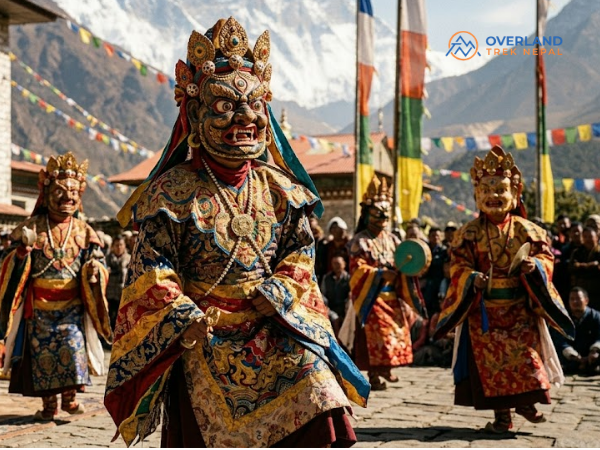
The Cham dances represent the visual centerpiece of Mani Rimdu and are among the most recognizable elements of Tibetan Buddhist culture. These are not entertainment performances; they are sacred enactments of Buddhist philosophy expressed through movement, costume, and music.
Physical Structure and Performers
Cham dances are performed by specially trained monks and experienced practitioners who have undergone years of preparation. Performers wear elaborate costumes featuring colorful masks (often 2-3 feet tall), silk robes in bright colors with gold embroidery, ritual objects held in hands (dorjes, skull cups, ritual daggers), and crowns indicating the deity's rank and function.
Symbolic Meanings
Each Cham performance tells a story or conveys Buddhist teaching. Common dance categories include:
- Protective Deity Dances - Performers embody fierce Buddhist protectors who defend the dharma (Buddhist teachings) from negative forces
- Compassion Dances - Gentler performances depicting bodhisattvas (enlightened beings who have vowed to help all sentient beings)
- Cosmological Dances - Enactments of Buddhist cosmology and the cycle of existence
- Transformation Dances - Performances depicting how ignorance and negative emotions can be transformed into wisdom and compassion
Wong Blessing Ceremony
The Wong ceremony (also spelled "Dab-wang") represents a formal Buddhist initiation where senior lamas transmit spiritual blessings and authorizations to the assembled community. This ceremony is particularly significant because it provides all attendees, monks and laypeople alike, with spiritual empowerment and protection.
The Process
The Wong ceremony typically occurs on the final morning of the festival and involves community members gathering in the monastery courtyard, seated in a specific arrangement that reflects Buddhist hierarchies. Lamas lead extended chanting of sacred texts while monks invoke spiritual blessings through gesture, visualization, and ritual objects.
Jinsak Fire Puja
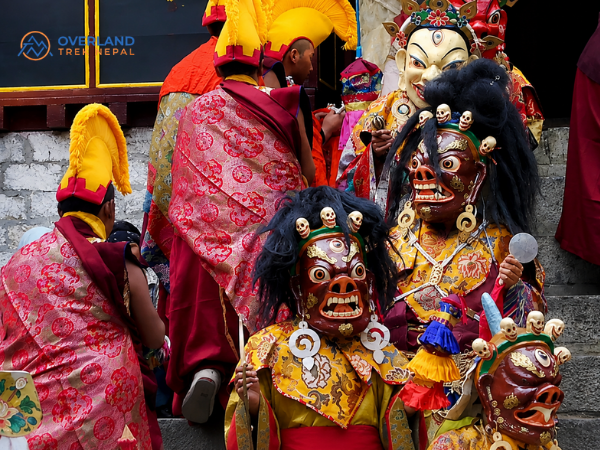
The Jinsak ceremony is a sacred fire ritual that typically concludes the Mani Rimdu festival. The ceremony uses fire, one of the five elements in Buddhist cosmology, as a transformative and purifying force. Community members make offerings into the fire, typically including butter and oil (representing compassion), grains and seeds (representing abundance), and medicinal substances (representing healing).
In Buddhist thought, fire represents purification (the burning away of negative karma), transformation (the conversion of base substances into refined elements), impermanence (the constant flux and change that characterizes reality), and compassionate action (the warmth and life-giving potential of enlightened activity).
How Trekkers Can Experience Mani Rimdu During an Everest Trek
Everest Base Camp Trek
The Everest Base Camp Trek is the most popular trekking route in the Khumbu region, reaching the staging area at the base of Mount Everest. This trek naturally passes through Tengboche Monastery on the fifth day, making it ideal for timing to coincide with Mani Rimdu. For detailed trek planning, visit Overland Trek Nepal's Everest Base Camp Trek Guide.
Route Overview for Mani Rimdu:
- Days 1-4: Trek from Lukla to Tengboche (with acclimatization)
- Day 5: Arrive at Tengboche Monastery and begin experiencing Mani Rimdu
- Days 6-8: Witness main festival ceremonies while acclimatizing
- Days 9-10: Continue trekking to Everest Base Camp
- Days 11-14: Return trek from Base Camp to Lukla
Advantage: This route combines the world's most famous trekking destination with the sacred festival experience, offering trekkers both natural grandeur and cultural richness.
Best Time to Visit the Everest Region for Mani Rimdu
October represents one of the two ideal trekking seasons in the Everest Region. The atmosphere is clear with minimal precipitation, reduced cloud cover, and exceptional mountain views. Daytime temperatures range from 10-20°C in lower elevations, dropping to -5-5°C at higher elevations.
October light and weather create exceptional photography conditions with sharp, clear mountain panoramas, golden hour light that is particularly dramatic, and colorful Cham dance performers against clear Himalayan backgrounds. For photography tips specific to the region, consult the Everest Region Travel Guide.
Mani Rimdu Festival vs. Other Nepalese Festivals
|
Festival
|
Mani Rimdu
|
Dashain
|
Tihar
|
|
Religious Tradition
|
Tibetan Buddhism (Sherpa)
|
Hindu
|
Hindu/Buddhist
|
|
Festival Dates 2026
|
Oct 24-26
|
Sept-Oct
|
Oct-Nov
|
|
Duration
|
3 days
|
15 days
|
5 days
|
|
Primary Location
|
Khumbu Region
|
Nationwide
|
Nationwide
|
Travel Tips for Attending Mani Rimdu Festival
Trek Permits and Documentation
International visitors to the Everest Region during Mani Rimdu require specific permits and documentation:
Required Documents:
- Passport (valid for at least 6 months)
- Visa (Nepal tourist visa: 15-day, 30-day, or 90-day options available)
- Travel insurance covering high altitude and emergency evacuation
- Proof of travel vaccination (check current requirements with the
Trek-Specific Permits:
- TIMS (Trekkers' Information Management System) card
- Sagarmatha National Park permit (required for entering the protected area. For official requirements, visit Sagarmatha National Park)
Respectful Behavior During Sacred Ceremonies
As guests at a sacred Buddhist celebration, visitors should understand and follow cultural protocols:
Behavioral Guidelines:
- Maintain silence during formal ceremonies and prayers
- Never photograph without permission (ask lamas directly; many ceremonies permit respectful photography)
- Never touch religious objects, masks, or ceremonial items
- Remove hats and sunglasses during ceremonies as a sign of respect
- Dress modestly in neutral colors (avoid bright, attention-drawing clothing)
Packing Recommendations
Essential Items for Mani Rimdu Attendance:
Clothing:
- Down jacket or heavy winter coat (essential for -5°C nighttime temperatures)
- Thermal underlayers (merino wool or synthetic, avoid cotton)
- Warm hat, gloves, and wool socks
- Comfortable trekking boots (broken in before arrival)
- Lightweight layers for variable daytime temperatures
- Waterproof shell jacket despite low October precipitation
Altitude and Health:
- High SPF sunscreen (intense UV at high altitude)
- Sunglasses with UV protection
- Altitude sickness medication (Diamox) is recommended by the doctor
- Basic first aid supplies
- Any personal medications (prescription and over-the-counter)
- Thermometer (fever is the key altitude sickness indicator)
Frequently Asked Questions About Mani Rimdu Festival
What exactly are the Cham dances, and why are monks masked?
Cham dances are sacred masked performances where monks enact Buddhist teachings and cosmological concepts. The masks transform performers into deities, protectors, and mythological beings. Rather than hiding identity, masks facilitate spiritual transformation; the performer attempts to embody the deity's wisdom and protective qualities. For observers, the masks and dances convey complex Buddhist philosophy through visual, kinesthetic, and sensory means.
Can non-Buddhists attend Mani Rimdu? Do I need to be Buddhist to participate?
Yes, non-Buddhists are welcome at Mani Rimdu. The festival's public ceremonies are open to trekkers, cultural travelers, and spiritual seekers of all backgrounds. Approaching with respect and genuine interest rather than mere curiosity is important. The monastery's lamas generally welcome respectful observers and are often happy to explain the ceremony's meanings.
What is the significance of the fire puja (Jinsak ceremony)?
The Jinsak fire puja is a purification and blessing ritual that concludes Mani Rimdu. In Buddhist cosmology, fire represents transformation, purification, and the burning away of negative karma. During the ceremony, community members make offerings into the fire (representing their negative patterns and obstacles) while monks chant mantras invoking divine blessing. The ritual embodies the Buddhist principle that negative karma can be fundamentally transformed through sincere intention and proper spiritual action.
How do I acclimatize properly before reaching Tengboche at 3,860 meters?
Most trekking routes naturally build in acclimatization: Lukla (2,860m), Namche Bazaar (3,440m) with an acclimatization day built in, and then Tengboche (3,860m). Arriving 2-3 days early for acclimatization before the festival's main days is strongly recommended. Stay hydrated, avoid alcohol, move slowly, and monitor for altitude sickness symptoms (headache, nausea, fatigue).
Can I trek to Everest Base Camp and make it to Mani Rimdu at Tengboche?
Yes, the classic Everest Base Camp Trek is perfectly timed for Mani Rimdu attendance. The route's standard timeline places trekkers at Tengboche around Day 5, perfectly aligned with the festival dates. For a detailed itinerary, visit Overland Trek Nepal's Everest Base Camp Trek.
What is Guru Rinpoche's role in Mani Rimdu Festival?
Guru Rinpoche (Padmasambhava) is the historical 8th-century Buddhist master who brought Buddhism to Tibet and the Himalayan region. Mani Rimdu specifically commemorates his spiritual accomplishments and his integration of local spiritual traditions into Buddhism. For Sherpa people, Guru Rinpoche represents the transmission of Buddhist wisdom that shapes their culture, spirituality, and identity.
What should I wear to attend ceremonies without offending anyone?
Dress modestly in neutral, conservative clothing: long pants or long skirts (avoid shorts), covered shoulders, neutral colors, and comfortable, respectful footwear. Avoid bright colors and patterns that draw attention. Women should consider a light scarf as a sign of respect in Buddhist communities.
How much should I donate to the monastery?
Donations are voluntary and deeply appreciated, but never required. Suggested amounts depend on your means, but typical donations range from $10-20 USD for individuals. Any amount is received with gratitude. If financially constrained, genuine participation and respectful attendance are valued equally.
What if I have acute mountain sickness (AMS)? Should I still attend ceremonies?
If you develop significant AMS symptoms (persistent headache, nausea, extreme fatigue, confusion), your health is paramount. Descending 500-1,000 meters usually resolves symptoms within hours. You can potentially return to Tengboche after recovery. The monks understand that altitude affects people differently and will respect health-based limitations.
Can I visit Tengboche Monastery outside of festival time?
Yes, Tengboche Monastery welcomes respectful visitors year-round. Outside of Mani Rimdu, you'll experience a quieter monastery with regular monastic rhythms. The Everest Base Camp Trek passes Tengboche regardless of season, so visitors can stop for brief visits.
Conclusion
The Mani Rimdu Festival represents far more than a cultural event or tourist attraction. It stands as the embodiment of Sherpa identity, the expression of Himalayan Buddhist spirituality, and a living link to centuries of Tibetan Buddhist tradition. For trekkers undertaking the sacred journey to Everest Base Camp or exploring the Khumbu Region's diverse landscapes, timing their arrival to coincide with Mani Rimdu transforms a trekking expedition into a profoundly meaningful spiritual and cultural experience.
The October 24-26, 2026, celebration at Tengboche Monastery invites international visitors to witness and respectfully participate in one of the world's most sacred Buddhist celebrations. Whether observing the hypnotic movements of Cham mask dancers, receiving blessings at the Wong ceremony, or standing around the purifying fires of the Jinsak ritual, visitors encounter the beating heart of Sherpa culture and Himalayan Buddhism.
For those seeking authentic cultural experiences, spiritual growth, and genuine connection with mountain communities, Mani Rimdu offers an unparalleled opportunity. Plan your trek carefully, approach with respect and genuine interest, and prepare for an experience that will profoundly enrich your understanding of both the Himalayan region and yourself.
The mountains and the monastery await your respectful presence at this sacred celebration.