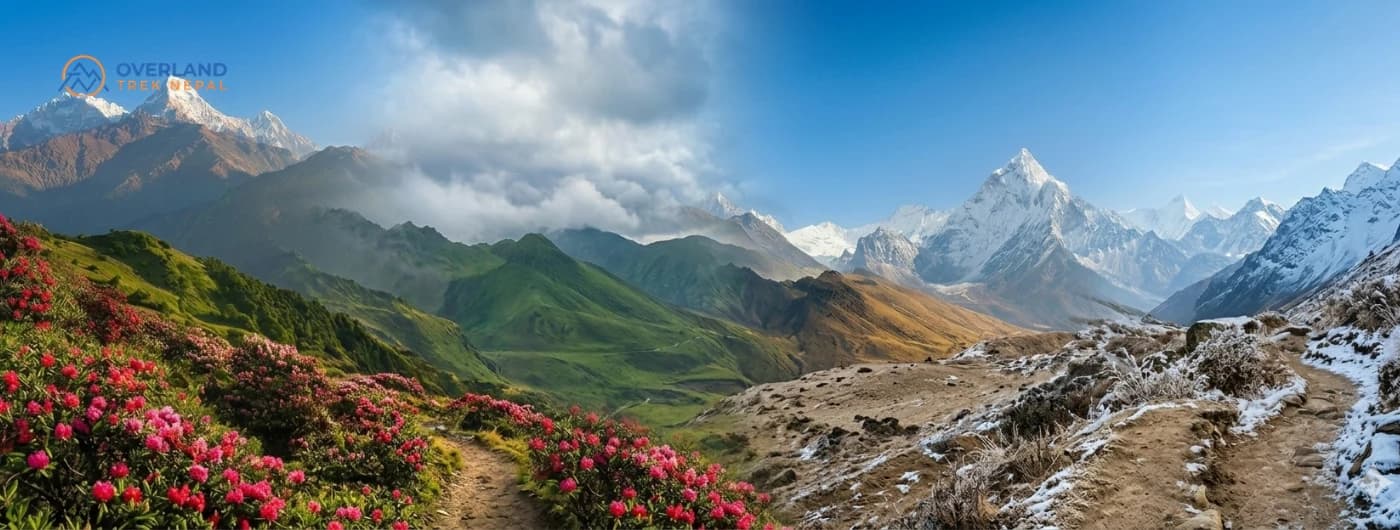

Nepal Trekking Season at a Glance
Here is a quick look at all four seasons:
|
Season |
Months |
Weather |
Visibility |
Crowds |
Cost |
Best For |
|---|---|---|---|---|---|---|
|
🌸 Spring |
Mar–May |
Mild, warm |
Great |
High |
High |
Flowers, passes |
|
🍂 Autumn |
Sep–Nov |
Clear, dry |
Best |
Very high |
High |
All treks, EBC |
|
❄️ Winter |
Dec–Feb |
Cold, dry |
Good |
Low |
Low |
Budget, quiet |
|
🌧️ Monsoon |
Jun–Aug |
Hot, rainy |
Poor |
Very low |
Lowest |
Mustang, Dolpo |
Trekking Seasons in Nepal
Nepal has four main trekking seasons. Each one is very different. Here is what to expect from each.
Spring (March to May)
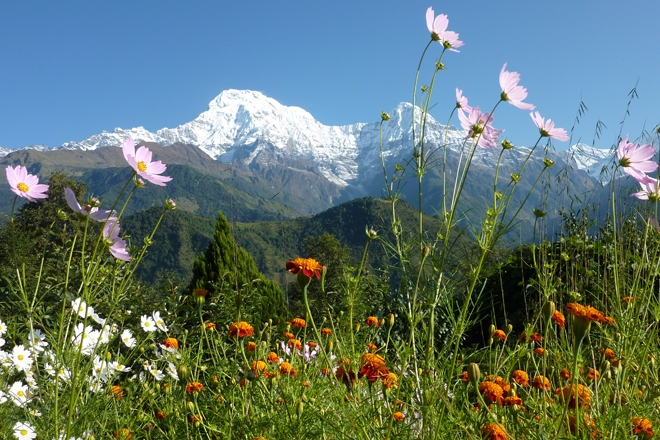
Spring is ideal for first-timers. Rhododendron forests between 2,000–3,500m are in full bloom through March and April — red and pink hillsides all the way up to Annapurna Base Camp and Tengboche. Skies are clear in March and early April. By mid-May, afternoon haze builds and views flatten out after noon.
Temp: 5°C to 18°C at mid-altitude. Nights drop to -10°C at high camps.
Views: Clear in March and April. Some haze can build by late May.
Crowds: High in April — book teahouses 2–3 months ahead.
Sweet spot: March 25 to April 10. Flowers are blooming, skies are clear, and the main April rush hasn't arrived yet.
Why go in spring:
- Red rhododendron forests bloom along most trails
- All high passes are open and safe
- Good light for photos in the morning
- Long days give more time to hike
Watch out for:
- Trails are busy, especially in April
- Beds fill fast at busy stops
- Late May can get hazy in the afternoon
Best trails: Everest Base Camp, Annapurna Circuit, Annapurna Base Camp, Langtang Valley, Gokyo Lakes.
Safety tip: UV rays are strong at high altitudes. Wear sun cream and good glasses.
Autumn (September to November)
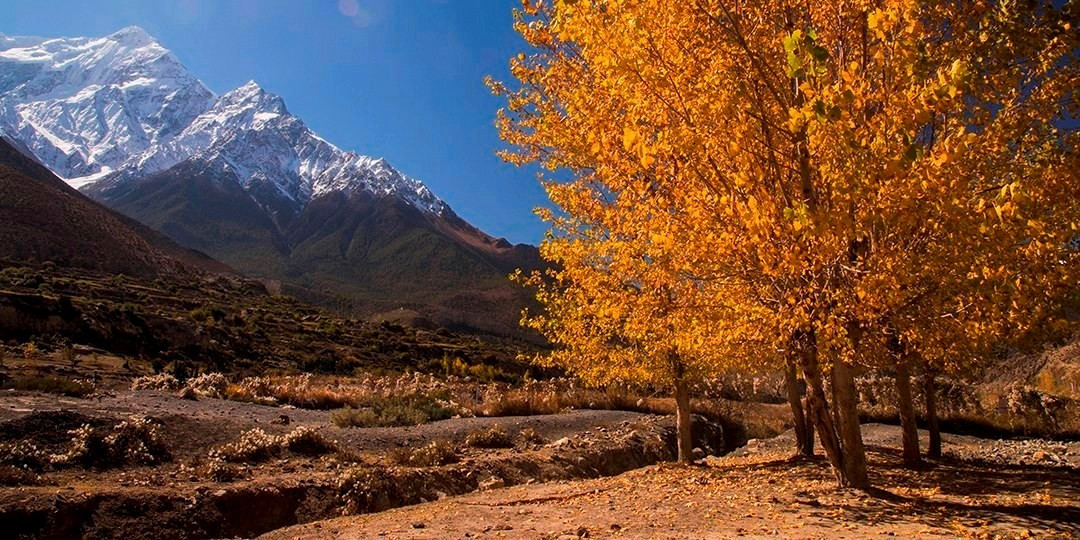
Autumn is the best overall season, and October is the peak of it. The monsoon scrubs the air clean and when it clears in late September, visibility is exceptional — on a clear October morning at Kala Patthar you can see Everest, Lhotse, Nuptse, and Ama Dablam all at once. All passes are open. Teahouses are fully staffed.
Temp: 5°C to 20°C at mid-altitude. Nights at EBC drop to -15°C in late October.
Views: The best of the whole year. October skies are almost always clear.
Crowds: Very high in October. Book Lukla flights in August; they sell out completely. Sweet spot: September 20 to October 5. Near-identical conditions to peak October, noticeably fewer people, slightly lower prices.
Why go in autumn:
- October has the clearest skies of the year
- Green hills from the monsoon rain look great in photos
- All high passes and far routes are open
- Good for all skill levels
Watch out for:
- Very high-demand books are in high demand months in advance
- Prices are at their peak
- Late November gets cold. Days get short.
Best trails: All main routes. Everest Base Camp, Annapurna Base Camp, Annapurna Circuit, Langtang, Gokyo, Mardi Himal.
Safety tip: Cold nights need a good sleeping bag. Snow can fall on high passes in November.
Winter (December to February)
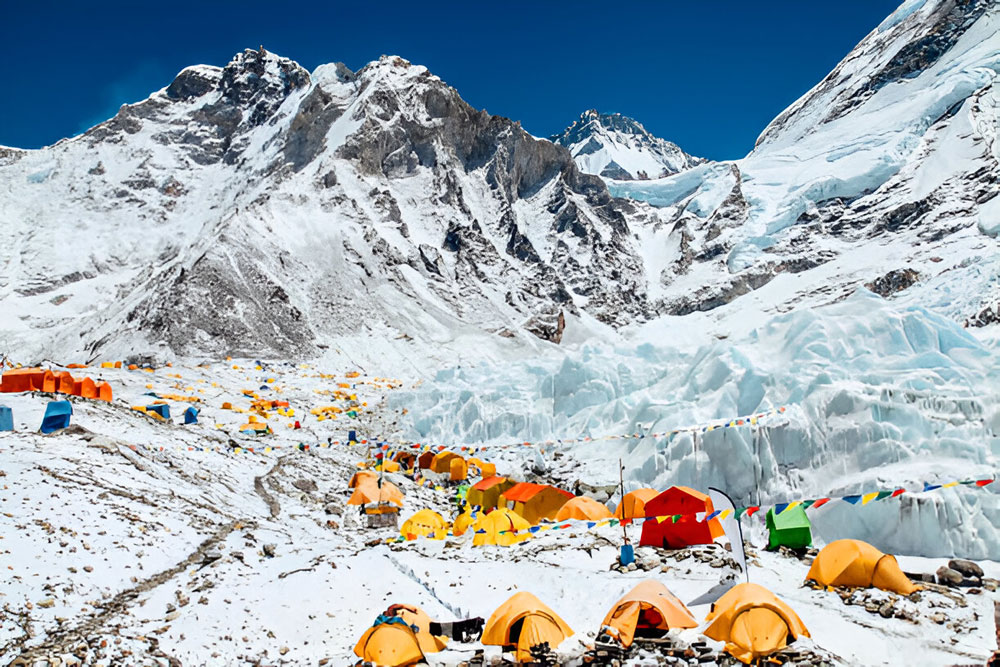
Winter is the most underrated trekking season in Nepal, and honestly one of my favourites for the right kind of trekker. Trails are quiet. Teahouses are empty. The skies are sharp and blue for days at a time. And costs drop noticeably, expect to pay 20 to 40 percent less on accommodation, guides, and porters compared to peak season.
The honest limitation is altitude. High passes become genuinely dangerous in winter. Thorong La on the Annapurna Circuit, the Three Passes on the Everest route, and Larke Pass on Manaslu can all be blocked or hazardous from December through February. I would not recommend attempting these without a very experienced guide and proper cold-weather equipment during this period.
For low to mid-altitude routes, winter is excellent. The Poon Hill and Ghorepani loop (maximum 3,210m) is perfectly manageable with warm layers and good boots. Lower Langtang valley works well. The Everest trek to Namche Bazaar and back is fine for fit trekkers, the challenge begins above Namche where temperatures become extreme at night.
Temp: -10°C to 10°C at mid-altitude. Very cold at high camps.
Views: Clear and bright on most days.
Crowds: Very low. You may have trails all to yourself.
Why go in winter:
- Prices drop 20 to 40 percent
- Trails and tea houses are quiet
- Great for Poon Hill, Ghorepani, and lower Langtang
- Clear skies give good mountain views
Watch out for:
- High passes can be blocked by snow
- Some tea houses at high altitudes close
- Cold at night. Pack warm gear.
Best trails: Poon Hill, Ghorepani, lower Langtang, Upper Mustang.
Safety tip: Cold at high altitude is a real risk. Go with good gear. Be ready for delays.
Monsoon (June to August)
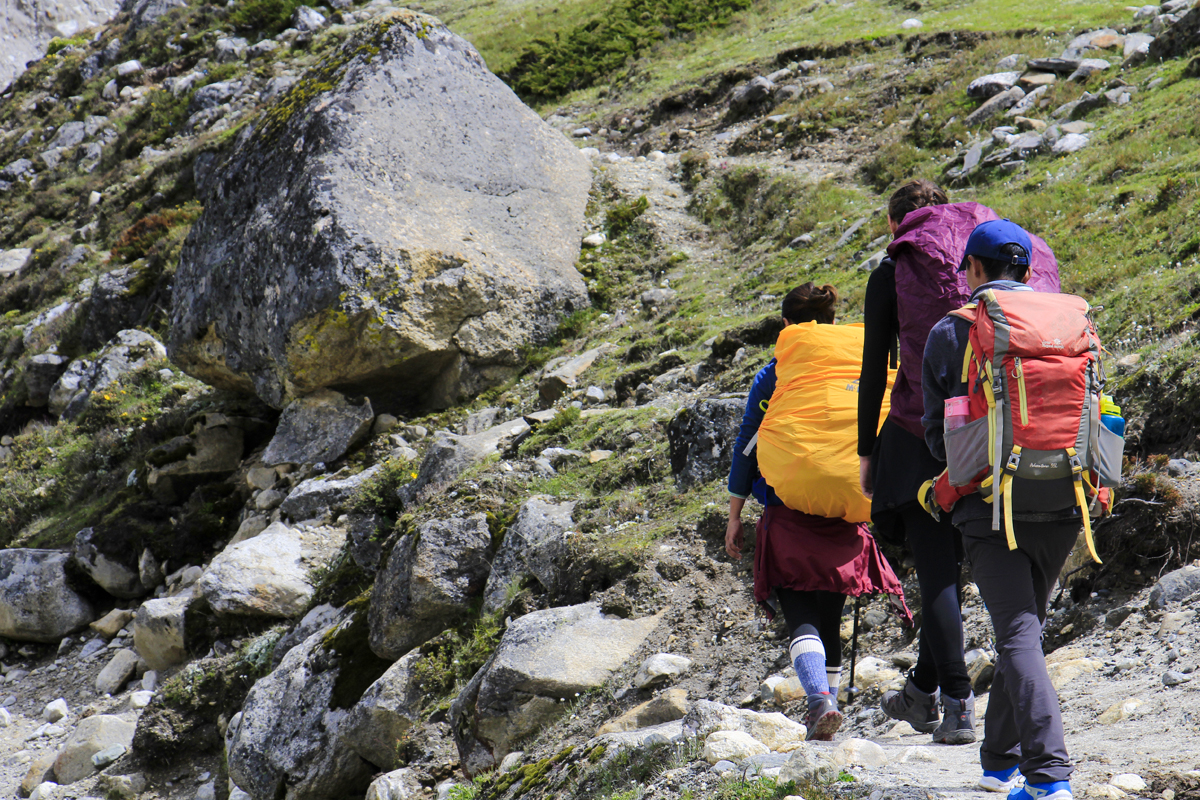
Most trails are not recommended in monsoon. Heavy rain makes low-altitude paths muddy and leech-ridden, landslide risk is real on the Annapurna and Langtang routes, and mountain views stay hidden behind cloud for days at a time.
The exception is Upper Mustang and Dolpo, rain-shadow regions behind the Annapurna and Dhaulagiri ranges that stay bone dry in July and August. Lo Manthang in July is one of the most rewarding treks in Nepal, with ancient monasteries, ochre cliffs, and almost no other trekkers. Note: Upper Mustang requires a restricted area permit (USD 500 for 10 days) and a licensed guide.
Temp: 15°C to 25°C at mid-altitude. Hot and humid on low trails.
Views: Poor on most routes. Clouds hide the peaks.
Crowds: Very few trekkers. Rain-shadow zones are quiet but not empty.
Where to go: Upper Mustang, Dolpo, Nar Phu, Tsum Valley. These areas sit behind high ridges. The monsoon rain barely reaches them.
Safety tip: Floods and landslides are real risks. Get travel insurance with rescue cover.
Best Time to Trek by Region
Everest Region (Khumbu)
Trek Everest Base Camp in October or April. These are the safest months. October has the clearest skies. Spring is best for climbers on the big peaks. Winter trekking to EBC is possible. But it is cold and needs skill. Avoid the monsoon, trails are risky, and views are blocked.
→ See our Everest Base Camp Trek page for permits, routes, and costs.
Annapurna Region
The best months are October and April. The Thorong La Pass (5,416m) is safest in these months. Snow can block the pass in late November or late May. The Poon Hill route is fine in winter for fit trekkers.
→ See our Annapurna Base Camp Trek page for the full route guide.
Langtang Region
Langtang works well in spring and autumn. Winter is fine on the lower trail. The valley gets less monsoon rain than Annapurna. Late August can work for those who have done it before. Gosaikunda Lake is best in autumn.
Upper Mustang and Dolpo
These two areas are special. They stay dry even in the monsoon. They sit on the Tibetan plateau. Rain barely falls here. You can trek from May to October. The monsoon months are great here when other trails are wet. You need a special permit and a guide.
Month-by-Month Nepal Trekking Guide
January
Cold, clear, and very quiet. Low-altitude treks like Poon Hill and Ghorepani are perfectly doable with proper winter gear, fleece, down jacket, warm gloves, and a good sleeping bag. EBC and all high passes are tough and require serious experience. Teahouse rates are at their annual low. A smart choice for budget travellers who don't mind cold mornings.
February
Temperatures begin recovering from January's lows. Rhododendrons start blooming at lower elevations (1,500–2,000m) in the last week of February, giving a preview of what spring will deliver. Trails are still quiet. EBC is possible for fit, experienced trekkers with the right kit. One of the best months to do Langtang Valley on a budget.
March
Spring officially begins. Rhododendron forests at 2,000–3,500m come alive with red, pink, and white blooms. The weather is stable and warming. Crowds are building but not yet at April levels. An excellent month for Annapurna Base Camp and Langtang, you get spring conditions without the April rush. Skies are clear and reliable.
April
The most popular single month for trekking in Nepal, and deservedly so. Flowers are at peak bloom, skies are clear, temperatures are comfortable at altitude, and all high passes are open and safe. EBC is at its absolute busiest, Namche teahouses are full, and the trail from Lukla to Base Camp feels like a highway on busy days. Book everything months in advance. Despite the crowds, April delivers the full Nepal trekking experience
May
Early May (1st–15th) is still excellent, with good weather, thinning crowds, and open passes. After the 15th, afternoon haze starts building and humidity rises at lower elevations. The last good window for high-altitude passes is before the monsoon. Upper Mustang opens in May with its special permit, making it a great alternative if the main routes feel too crowded. Avoid late May for EBC if clear views are your priority.
June
Monsoon arrives, typically in the first week. Most main trails are not recommended. Rain is heavy, leeches are active below 2,500m, and mountain views disappear behind cloud for days at a time. Upper Mustang, Dolpo, Nar Phu, and Tsum Valley remain open and dry. If you are set on trekking in June, these are your only good options.
July
The heart of the monsoon. Heaviest rainfall of the year on most routes. Trails are wet, slippery, and in some areas genuinely dangerous due to landslide risk. Upper Mustang is the standout exception, dry, uncrowded, and at its most scenic with the high plateau in full summer colour. Dolpo is also good for experienced trekkers with a licensed guide.
August
Rain begins easing in the second half of August. Trails remain wet but are improving. The hills are intensely green; some trekkers specifically come in late August for the lush landscape photography, accepting that mountain views will be limited. Skilled trekkers begin the Langtang valley in the last week of August. Upper Mustang remains excellent.
September
One of the most underrated months in Nepal. The monsoon retreats fast, by mid-September skies are clearing noticeably, and by the last week of September conditions are close to October quality. Crucially, crowds have not yet built up. Teahouses are available without advance booking. Prices are slightly below peak. September 20 to October 5 is arguably the best-value window of the entire trekking year.
October
The most popular month and the clearest skies of the year. All routes are open, the weather is stable, and mountain views are at their sharpest after months of monsoon-cleansed air. EBC, Annapurna, Langtang, Gokyo, all are at their best. Expect full teahouses, busy trails, and peak prices. Despite the crowds, October earns its reputation. Book accommodation and Lukla flights months ahead.
November
Excellent in the first two weeks, transitioning to cold in the second half. Crowds thin considerably after October, trails feel noticeably quieter by mid-November. Skies remain clear and views are still excellent. High passes see early snow by late November; Thorong La and the Three Passes on EBC require caution and early starts. A great month for trekkers who want autumn quality with fewer people.
December
Winter sets in. High routes become challenging to dangerous. Low and mid-altitude treks, Poon Hill, lower Langtang, Helambu, are fine with warm gear. Teahouses above 4,000m start closing. Prices and crowds are at their lowest of the year. The week between Christmas and New Year is busy on Poon Hill due to European holiday travel; the rest of December is very quiet.
Best Time Based on Your Trekking Goals
Best for Clear Mountain Views
October wins. The air is clean and dry after the monsoon. Skies stay clear for days at a time. You get sharp views of Everest, Annapurna, and the full Himalayan range. November and April are close behind.
Best for Photography
Spring has flowers and green hills with snow peaks behind them. It is hard to beat in March and April. Autumn has the clearest light. October mornings at Kala Patthar (5,545m) give some of the best mountain shots in the world.
Best for Budget Trekking
Winter has the lowest prices. Tea house rates drop. Guide and porter costs fall. Permits cost less, too. Expect savings of 20 to 40 percent on most things. See our Nepal trekking cost guide for exact numbers.
Best for Fewer Crowds
Winter is the quietest time on all main routes. Early September also has autumn-quality weather, but far fewer people. Upper Mustang in the monsoon is very quiet and offers a rare, remote feel.
Best for Beginners
October is the safest pick for first-timers. The weather is stable. Trails are well-marked. Tea houses are full and staffed. Start with Poon Hill, Langtang, or Annapurna Base Camp.
Best for High-Altitude Passes
October and April are the safest months for high passes. These include Thorong La, Cho La, Renjo La, and Kongma La. The weather is stable. Temps are cold but not extreme. Late November and late May carry snow risk.
Frequently Asked Questions
Is October the best time to trek in Nepal?
For most trekkers, yes. Clearest skies, stable weather, all routes open. The catch: it's the most expensive and most crowded month. If you want nearly identical conditions with fewer people, target the last 10 days of September.
Can you trek in Nepal during the monsoon?
Not on most routes, heavy rain, landslide risk, and cloud cover make them unpleasant and sometimes unsafe June to August. The exception is Upper Mustang and Dolpo, which sit in rain-shadow zones and stay dry all summer. These need a special permit and a licensed guide.
What is the cheapest season to trek in Nepal?
Winter (December–February). Teahouse rates, guide fees, and flights all drop 20–40% from peak prices. Best value option: the Poon Hill loop in January, stunning views, low cost, empty trails.
When is the weather best for Everest Base Camp?
October 5–25 for views. April 1–20 for overall trail experience. Both have stable weather and open passes. October is sharper and colder; April has warmer days and blooming rhododendrons on the lower trail.
Is winter trekking in Nepal safe?
Yes, on the right routes. Poon Hill, lower Langtang, and Helambu are safe with proper cold-weather gear. What is not safe in winter without mountaineering experience: Thorong La, the Three Passes, and Larke Pass.
What is the best month for Annapurna Base Camp?
October for clearest views. April for rhododendron forests in full bloom on the trail through Chhomrong. March is underrated, similar to April with noticeably smaller crowds.
.webp&w=1200&q=75&dpl=dpl_EUd5Wwb28cTzwN6qQNwTKfhuRohE)
.webp&w=1200&q=75&dpl=dpl_EUd5Wwb28cTzwN6qQNwTKfhuRohE)