The Ultimate Guide to the Best 6000-Meter Peaks in Nepal
The Himalayas are a place of myth, majesty, and monumental challenge. For many, the dream of standing on the world's highest mountains feels like a fantasy. But what if that dream was within your reach? Welcome to the best 6000-meter peaks in Nepal.
These summits are the perfect bridge between high-altitude trekking and mountaineering. Often called "Trekking Peaks in Nepal," they offer a genuine expedition experience. It offers experiences with ice axes, crampons, and breathtaking summit views—moreover, 6000-meter peaks without the extreme technical difficulty or commitment of an 8000-meter giant.
This guide will lead you to the best 6000-meter peaks in Nepal. Whether you are a seasoned trekker looking for your first climb or an intermediate alpinist seeking a new challenge, you will find your next adventure here. We will cover everything from the most accessible peaks for beginners to the costs, permits, and physical preparation required for climbing 6000-meter peaks in Nepal.
List of 6000m peaks in Nepal
The Nepal Mountaineering Association (NMA) officially designates numerous summits as "trekking peaks." While the list is extensive, some have earned a world-class reputation for their beauty, accessibility, and the quality of the climb. These are the mountains that consistently deliver unforgettable experiences.
Here are some of the most popular and best 6000-meter peaks in Nepal:
- Island Peak (Imja Tse) - 6,189m
- Mera Peak - 6,476m
- Lobuche East - 6,119m
- Pokalde Peak - 5,806m (Slightly under, but a great trainer peak)
- Kyajo Ri - 6,186m
- Chulu West - 6,419m
- Chulu Far East - 6,059m
- Pisang Peak - 6,091m
- Yala Peak - 5,732m (Another excellent trainer peak)
- Tharpu Chuli (Tent Peak) - 5,663m
Best 6000-meter peaks in Nepal for beginners
For those with solid trekking experience but little to no technical climbing background, these peaks are the perfect introduction. They require stamina and acclimatisation but are not heavily technical. A skilled Sherpa guide for 6000-meter peak climbing in Nepal will teach you all the necessary skills on the mountain.
1. Island Peak (Imja Tse) - 6,189m
- Location: Khumbu (Everest) Region
- Difficulty: PD (Peu Difficile - "a little difficult")
- Duration: 18-22 days (including trek)
- Best Season: Spring (March-May) & Autumn (September-November)
Island Peak Climbing is arguably the most popular and one of the best 6000-meter peaks in Nepal. Its name comes from its appearance as an "island" in a sea of ice when viewed from Dingboche. The journey to its base camp is part of the classic Everest Base Camp trek, meaning you get two incredible adventures in one.
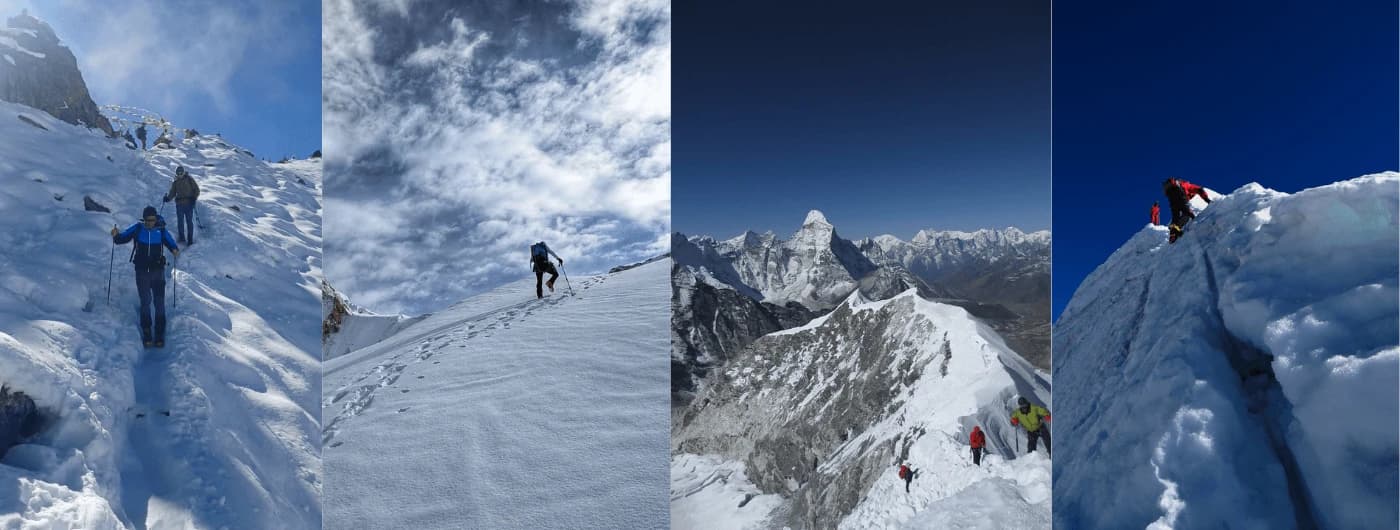
The climb itself involves glacier travel, a steep headwall that requires fixed ropes, and a magnificent summit ridge. The reward? Awe-inspiring, in-your-face views of Lhotse, Nuptse, Makalu, and Ama Dablam. It's the quintessential Himalayan climbing experience for aspiring mountaineers.
2. Mera Peak - 6,476m
- Location: Khumbu (Everest) Region, Hinku Valley
- Difficulty: F (Facile - "easy," non-technical)
- Duration: 18-20 days
- Best Season: Spring (March-May) & Autumn (September-November)
As Nepal's highest trekking peak, Mera Peak climbing is a doable peak for beginners. It is considered one of the easiest 6,000-meter peaks in Nepal from a technical standpoint, as the route is a straightforward snow-slog on a low-angled glacier.
The real challenge here is the altitude. At nearly 6,500 meters, proper acclimatisation is the key to success. The journey takes you through the remote and pristine Hinku Valley, a less-travelled path than the main Everest trail. From the Mera Peak Climbing, you are rewarded with one of the most spectacular panoramas in the Himalayas, including five 8000-meter peaks: Everest, Lhotse, Cho Oyu, Makalu, and Kanchenjunga.
3. Lobuche East - 6,119m
- Location: Khumbu (Everest) Region
- Difficulty: PD+ (Slightly more technical than Island Peak)
- Duration: 18-22 days (including trek)
- Best Season: Spring (March-May) & Autumn (September-November)
Just a stone's throw from Everest Base Camp, Lobuche Peak Climbing offers a more challenging and varied climb than Island or Mera Peak. While still considered a 6000-meter trekking peak in Nepal, it presents more rock scrambling and a steeper, more exposed summit ridge.
This peak is an excellent next step after Island Peak or for trekkers with some prior rock climbing experience. The climb provides a true sense of accomplishment and offers stunning, close-up views of the Khumbu Glacier, Everest, and other Himalayan giants. It's a fantastic choice for those wanting to push their limits just a little further.
Best 6000-meter Peaks in Nepal for intermediate climbers
If you have already summited a beginner peak or have previous experience with mountaineering basics, these peaks offer a greater technical challenge and a more profound sense of adventure.
1. Kyajo Ri - 6,186m
- Location: Khumbu (Everest) Region, Renjo La Pass area
- Difficulty: AD (Assez Difficile - "fairly difficult")
- Duration: 20-24 days
- Best Season: Spring (April-May) & Autumn (October-November)
Kyajo Ri is a stunning, pyramid-shaped peak that demands more technical skill. The climb involves navigating through rock slabs, steep snow, and ice slopes (up to 55 degrees) and requires knowledge of multi-pitch climbing techniques.
This is a true climber's mountain. It's far less crowded than the popular trekking peaks, offering a sense of isolation and raw adventure. The reward for tackling its technical sections is an unparalleled view from a perfectly pointed summit in the heart of the Khumbu. This is one of the best 6,000-meter peaks in Nepal for building serious high-altitude mountaineering skills.
2. Chulu West - 6,419m
- Location: Annapurna Region
- Difficulty: PD+
- Duration: 20-25 days (including trek)
- Best Season: Spring (April-May) & Autumn (October-November)
Located along the famous Annapurna Circuit, Chulu West is a fantastic objective for those looking to combine a classic trek with a challenging climb. The ascent is more complex than a simple walk-up, involving high camps, glacier travel through seracs, and a long, demanding summit day.
The peak requires a high level of fitness and comfort with exposure. Climbers must be proficient with crampons and ice axes on steep, icy terrain. The summit offers a breathtaking panorama of the Annapurna and Dhaulagiri massifs, making the strenuous effort entirely worthwhile. It's a premier choice for climbing 6000-meter peaks in Nepal within the Annapurna sanctuary.
3. Pisang Peak Climbing – 6019 m
- Location: Annapurna Region
- Difficulty: PD+
- Duration: 18-20 Days
- Best Season: Spring and Autumn
Pisang Peak is the best 6000-meter peak for intermediates in Nepal, which takes you to 6019 meters. Following the route of the Annapurna Circuit Trek, the climb involves a technical part ideal for both beginners and intermediates. Climbers must have experience with fixed ropes and the technical gear. The summit of the Pisang Peak climbing offers magnificent views of the entire Annapurna Range, Tilicho Peak, Lamjung Himal, Gangapurna, Macchapuchre, Dhaulagiri, and several others.
How to prepare for the 6000-meter peaks in Nepal?
Reaching the summit of a 6000-meter peak is as much about preparation as it is about the climb itself. Success depends on three pillars: physical fitness, technical skills, and mental fortitude.
Physical Fitness and Training for 6000-meter peak climbing
You must be in excellent cardiovascular shape. Your training should focus on endurance, strength, and stamina.
- Cardio: Aim for 3-5 sessions per week. Activities like running, cycling, and swimming are excellent. Most importantly, hike! Find local hills or mountains and hike for long durations (4-8 hours) with a weighted pack (10-15 kg / 20-30 lbs).
- Strength: Focus on building a strong core and powerful legs. Squats, lunges, deadlifts, and planks are essential exercises.
- Endurance: Your training should simulate the long, slow grind of a multi-week expedition. Back-to-back long hiking days are the best way to prepare your body for the demands of the trek and climb.
Technical Skills required for 6000-meter peaks in Nepal
While guides will provide training at base camp, having prior knowledge is a significant advantage.
- Basic Skills: Familiarise yourself with using an ice axe, walking in crampons, and basic rope work.
- Courses: Consider taking a basic mountaineering course in your home country. This will build confidence and allow you to focus more on the altitude and environment in Nepal.
Acclimatisation and Mental Preparation for 6000-meter peaks
Acclimatisation is the single most important factor for success and safety. Your body needs time to adapt to the lower oxygen levels. A good itinerary will have built-in rest days and follow the "climb high, sleep low" principle.
Mentally, prepare for long days, basic living conditions, and the potential for extreme weather. A positive attitude, patience, and the ability to stay resilient when you are tired and uncomfortable are just as crucial as physical strength.
Permit cards are needed for the 6,000-meter peaks in Nepal
Navigating the permit system is a key part of planning. Your chosen guiding company will handle all the paperwork, but it's good to know what's required.
1. Peak Climbing Permit: This is the main permit, issued by the Nepal Mountaineering Association (NMA). The fee varies depending on the peak and the season.
2. National Park/Conservation Area Permit: You will need an entry permit for the region you are climbing in. For example, the Sagarmatha National Park permit for peaks in the Everest region or the Annapurna Conservation Area Project (ACAP) permit for the Chulus.
3. TIMS Card (Trekkers' Information Management System): This card is mandatory for all trekkers in Nepal and helps ensure your safety and security.
How much does it cost to climb a 6000m peak in Nepal?
The 6000-meter peak climbing cost in Nepal can vary significantly based on the peak and the level of service. For an all-inclusive package, you can expect to pay anywhere from $2,500 to $5,000 USD per person. Overland Trek Nepal offers the 6000-meter peak climbing package ranges from USD 2399 to USD 12000 per person.
A 6000-meter peak climbing package typically includes:
- All required permits and government taxes.
- An experienced and licensed climbing guide and support staff (porters).
- Domestic flights (e.g., Kathmandu to Lukla).
- All accommodation during the trek and climb (teahouses and tents).
- All meals on the trail.
- Group climbing equipment (ropes, snow bars, ice screws).
- Airport transfers.
What is usually not included:
- International airfare to Nepal.
- Nepal entry visa.
- Personal climbing gear (boots, crampons, harness, ice axe, helmet).
- Travel and rescue insurance (mandatory).
- Tips for your guides and porters.
- Personal expenses (drinks, souvenirs, etc.).
Best company in Nepal for 6000-meter peak climbing
Choosing the right company is the most critical decision you will make. Overland Trek Nepal specialises in arranging 6,000-meter peak climbing in Nepal. We ensure your safety, maximise your chance of success, and provide a memorable experience. Here are the reasons why Overland Trek Nepal is the best company in Nepal for 6000-meter peak climbing:
- Safety First: An impeccable safety record and robust emergency protocols are non-negotiable.
- Experienced Guides: The quality of our Sherpa guides for 6000-meter peak climbing in Nepal is paramount. They are licensed, experienced on your chosen peak, and have first-aid training.
- Quality Equipment: Our company provides well-maintained, high-quality group climbing gear.
- Sustainable & Ethical Practices: Our company pays its staff fair wages and follows responsible tourism principles.
With a team of highly experienced Sherpa guides, a commitment to safety, and personalised service, we have established ourselves as a leading choice for peak climbing in Nepal. Feel free to contact us via email or WhatsApp us at +9779841920870.
FAQs (Frequently Asked Questions)
What is the easiest 6000m peak in Nepal?
Mera Peak is generally considered the least technical 6000m peak, making it an excellent choice for those new to mountaineering. However, Island Peak is more popular and combines the climb with the iconic Everest Base Camp trek.
Do I need prior climbing experience for a 6000m peak?
For beginner peaks like Island Peak or Mera Peak, you do not need prior technical climbing experience. However, you must be a strong and experienced high-altitude trekker. Your guides will teach you the necessary skills. For intermediate peaks, some prior experience is highly recommended.
What is the best season for climbing 6000m peaks in Nepal?
The two main climbing seasons are Spring (March to May) and Autumn (September to November). These periods offer the most stable weather, clearest skies, and optimal snow conditions.
How long does a 6000m peak expedition take?
Most expeditions, including the trek to and from the mountain, last between 18 and 25 days. This duration allows for proper and safe acclimatisation, which is crucial for success.
Can I climb a 6000m peak without a guide?
No. Foreign climbers must hire a licensed Nepali guide to obtain a climbing permit for any NMA-designated peak. This is a crucial safety regulation that ensures you are supported by a local expert.
Your 6000-meter peak Summit Awaits
Climbing 6000-meter peaks in Nepal is more than just a physical challenge; it's a journey into the heart of the world's most magnificent mountain range and a deep dive into the resilient Sherpa culture. It's an adventure that will test your limits, expand your horizons, and leave you with memories that last a lifetime. The feeling of standing on that summit, with a sea of peaks stretching before you, is indescribable.
Ready to conquer your first Himalayan summit? The best 6000-meter peaks in Nepal are waiting for you.
Take the first step towards your dream adventure. Contact the expert team at Overland Trek Nepal today to plan your once-in-a-lifetime expedition. Let our experienced Sherpa guides lead you safely to the top! Do not hesitate to contact usvia email or WhatsApp us at +9779841920870.

.webp&w=1200&q=75&dpl=dpl_EUd5Wwb28cTzwN6qQNwTKfhuRohE)
.webp&w=1200&q=75&dpl=dpl_EUd5Wwb28cTzwN6qQNwTKfhuRohE)