
The Annapurna Base Camp trek difficulty level is moderate. The trek reaches a maximum altitude of 4,130 metres (13,550 ft) and takes between 7 and 12 days to complete. On average, you will walk 5 to 7 hours each day. You do not need prior trekking experience, but you do need a reasonable level of physical fitness. Most healthy adults who prepare adequately can complete this trek. It involves no technical climbing, just long, sustained walking on mountain trails with significant elevation gain.
Quick Answer: Annapurna Base Camp Trek Difficulty Level
The Annapurna Base Camp trek is rated moderate in difficulty. It reaches 4,130 m, takes 7 to 12 days, and involves 5 to 7 hours of walking per day. Beginners with good fitness can complete it. No technical climbing is required, but altitude awareness and proper preparation are essential for a safe and enjoyable experience.
How Difficult Is the Annapurna Base Camp Trek?
The ABC trek is not an extreme or technical trek. There are no glaciers to cross, no ropes, and no crampon sections. The difficulty comes from the cumulative effort of multi-day walking at altitude.
Here is what makes this trek genuinely challenging:
- Sustained daily walking of 5 to 7 hours on uneven mountain terrain
- Significant total elevation gain from around 1,000 m to 4,130 m
- Long stone staircase sections that put strain on your knees and quads
- Altitude sickness risk above 3,000 m, regardless of fitness level
- Variable weather including cold nights and possible snowfall above 3,500 m
Despite these challenges, the trail is well-marked, and teahouses are available every few hours. You do not need to carry a tent, cooking gear, or sleeping bag if you plan your stops correctly. This infrastructure makes the Annapurna Base Camp hiking difficulty much more manageable than more remote treks.
Factors That Affect Annapurna Base Camp Trek Difficulty Level
Altitude and Acclimatization
The Annapurna Base Camp altitude is 4,130 m above sea level. At this elevation, the air contains significantly less oxygen than at sea level. Altitude sickness, medically called Acute Mountain Sickness (AMS) can affect anyone, regardless of fitness or prior experience.
Common AMS symptoms include headache, nausea, fatigue, and loss of appetite. The most effective prevention is a gradual ascent. Standard ABC itineraries include acclimatisation stops that help your body adjust over time. Always follow the rule: never ascend more than 500 m per sleeping altitude per day above 3,000 m.
Daily Walking Distance and Duration
Most trekking days on the ABC route cover 10 to 16 kilometres. The total Annapurna Base Camp distance (round trip from Nayapul) is approximately 110 to 115 km depending on your route.
Each day involves both climbing and descending, which can fatigue your legs quickly. Trekking poles are highly recommended to reduce knee strain on the descents.
Trail Conditions
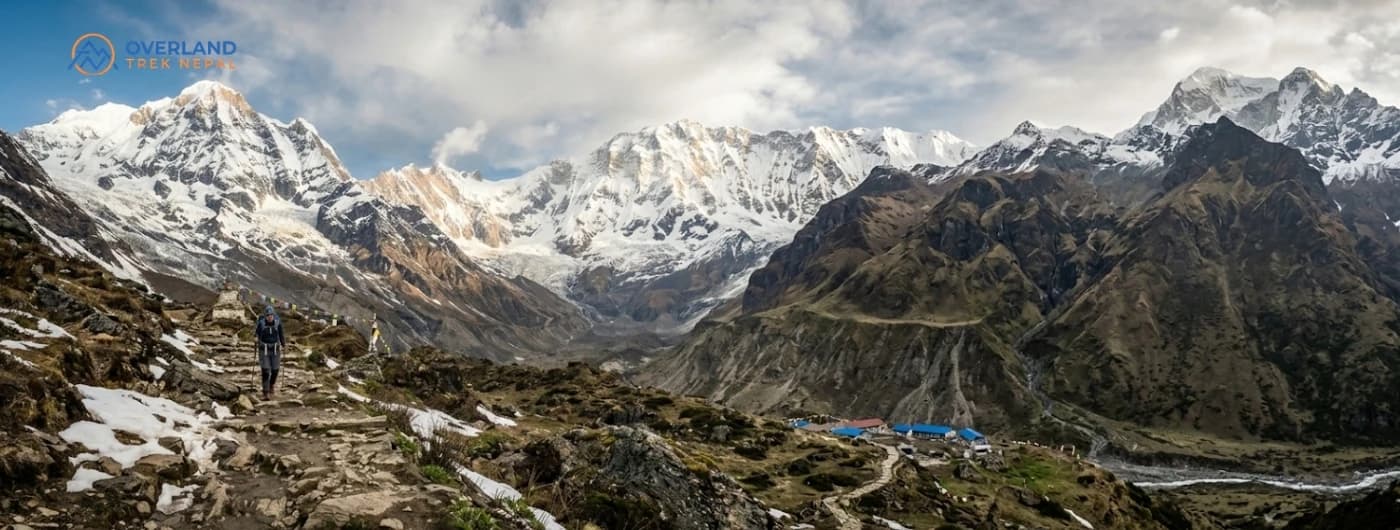
The trail through the Annapurna Sanctuary varies considerably. In the lower sections, you walk through terraced farmland, dense rhododendron forests, and traditional Gurung villages. Stone staircases are common and can be slippery when wet.
Higher up, the terrain becomes rockier and more exposed. Suspension bridges cross the Modi Khola river several times. Above Deurali, the trail enters a narrow glacial valley where high avalanche risk exists during winter and early spring.
Weather Conditions
Weather is one of the biggest variables in Annapurna Sanctuary trek difficulty. During the monsoon season (June to August), trails become slippery and rivers run high. Winter brings cold nights and potential snowfall that can close trails above 3,500 m. Spring and autumn offer the most stable conditions with reliable clear skies.
Can Beginners Do the Annapurna Base Camp Trek?
Yes, The ABC trek is one of the most popular treks in Nepal for first-time Himalayan trekkers. However, 'beginner-friendly' does not mean easy. You need a good base level of fitness.
Minimum fitness requirements for the ABC trek:
- Ability to walk 5 to 7 hours per day with a 5–8 kg daypack
- Comfortable hiking uphill for several hours at a time
- No serious cardiovascular, respiratory, or knee conditions
- Willingness to begin physical training at least 6 to 8 weeks before departure
If you can comfortably complete a 3 to 4 hour hike on hilly terrain, you have the foundation to complete this trek with dedicated preparation.
Annapurna Base Camp Trek Difficulty Compared to Other Treks in Nepal
Here is how the ABC trek difficulty level compares to two other popular Nepal treks:
|
Trek |
Difficulty |
Max Altitude |
Duration |
|
Moderate |
4,130 m |
7–12 days |
|
|
Strenuous |
5,364 m |
14–16 days |
|
|
Easy |
3,210 m |
4–5 days |
Everest Base Camp Trek: EBC is significantly harder than ABC. It reaches 5,364 m, over 1,200 m higher. The trekking days are longer and more demanding, and the risk of altitude sickness is greater. EBC takes 14 to 16 days and requires a higher base fitness level. For a first Himalayan trek, ABC is the wiser choice.
Ghorepani Poon Hill Trek: Poon Hill is an easy trek that takes 4 to 5 days and reaches only 3,210 m. It is ideal for absolute beginners or those with limited time. Many trekkers use Poon Hill as a warm-up before attempting the ABC trek in a future trip.
How to Prepare for the Annapurna Base Camp Trek
Good Annapurna Base Camp trek preparation is the most reliable way to reduce difficulty and prevent problems on the trail.
Physical Fitness Training
- Run, cycle, or swim 3 to 5 times per week for 45 to 60 minutes
- Practice stair climbing with a loaded pack to prepare your legs for stone staircases
- Take long day hikes on hilly terrain on weekends, at least 3 to 4 hours at a time
- Build up gradually: start training 6 to 8 weeks before departure
Essential Trekking Gear
- Sturdy, broken-in trekking boots with ankle support
- Trekking poles to protect your knees on steep descents
- Layered clothing system: base layer, mid-layer fleece, and waterproof outer jacket
- Sleeping bag rated to −10°C for higher elevations
- Sun protection: high-SPF sunscreen, UV-blocking sunglasses, and lip balm
Altitude Awareness
- Consult your doctor about Diamox (acetazolamide) before the trip
- Stay well hydrated, drink 3 to 4 litres of water daily
- Ascend slowly and do not skip acclimatization days
- Learn to recognise early AMS symptoms and know when to descend
Best Time to Trek to Annapurna Base Camp
Spring (March to May): The most popular season. Temperatures are warm, skies are clear, and rhododendron forests bloom in vivid colour. The views of Annapurna I, Annapurna South, and Machhapuchhre (Fishtail) are spectacular. Ideal for photography and overall trekking experience.
Autumn (September to November): The second-best season. After the monsoon clears, visibility is excellent and trails are well-maintained. Temperatures are stable and comfortable. Autumn is the busiest season for Nepal trekking overall.
Winter (December to February): Possible but demanding. Temperatures above 3,500 m can drop well below freezing. Snowfall can close the upper trail sections. Only experienced, well-equipped trekkers should attempt the ABC trek in winter.
Monsoon (June to August): Not recommended. Heavy rain makes trails slippery and dangerous. Cloud cover blocks views. Leeches are common on lower trails. The risk of landslides also increases significantly during this period.
Tips to Make the Annapurna Base Camp Trek Easier
- Start slow: Walk at a comfortable pace for the first two days to let your body adjust
- Trek high, sleep low: Always descend to a lower altitude to sleep whenever possible
- Hire a porter: Let them carry your main bag (5–10 kg) so you only carry a light daypack
- Drink water constantly: Dehydration accelerates altitude sickness symptoms
- Take rest days seriously: They are part of your itinerary, not optional extras
- Eat regular meals: High-calorie teahouse food keeps your energy up at altitude
- Avoid alcohol and sleeping pills above 3,000 m: Both suppress breathing during sleep
- Check weather forecasts daily: Adjust your schedule if bad weather is approaching
- Choose a longer itinerary: 10 to 12 days is better than rushing in 7
Why Trek with a Local Trekking Company in Nepal
Many trekkers underestimate the value of a licensed local guide. The Annapurna Sanctuary is a high-altitude environment where conditions can change quickly. A local guide does much more than show you the way.
Benefits of trekking with a reputable local company such as Overland Trek Nepal:
- Certified, experienced mountain guides who know the trail in every season
- All permits handled: TIMS card and Annapurna Conservation Area Permit (ACAP)
- Emergency evacuation planning and communication equipment on the trail
- Porters who carry your heavy gear so you can focus on the trek
- Knowledge of the best teahouses for food, hygiene, and location
- Direct support of the local economy and Nepalese trekking communities
First-time trekkers especially benefit from having professional support on this route. Even experienced hikers find that a local guide adds safety, local knowledge, and peace of mind that is hard to replicate independently.
FAQs – Annapurna Base Camp Trek Difficulty Level
What is the difficulty level of the Annapurna Base Camp trek?
The Annapurna Base Camp trek difficulty level is moderate. It is suitable for reasonably fit adults including beginners. The trek reaches 4,130 m over 7 to 12 days with 5 to 7 hours of walking per day. No technical climbing skills are required.
Is the Annapurna Base Camp trek difficult for beginners?
Yes, beginners can complete the ABC trek with proper preparation. You do not need prior trekking experience, but you should follow a 6 to 8 week fitness training plan before departure. The trail is well-supported with teahouses and a clear route throughout.
How many days does the ABC trek take?
The standard ABC trek takes 7 to 12 days. A 10-day itinerary starting and ending in Pokhara is the most popular option. Longer itineraries give your body more time to acclimatize and are recommended for beginners or those with limited trekking experience.
What is the altitude of Annapurna Base Camp?
Annapurna Base Camp sits at 4,130 metres (13,550 feet) above sea level. This is the highest point on the standard trekking route. The surrounding amphitheatre of peaks includes Annapurna I (8,091 m), Annapurna South (7,219 m), and Machhapuchhre (6,993 m).
Which is harder, Annapurna Base Camp or Everest Base Camp?
Everest Base Camp is harder. EBC reaches 5,364 m, over 1,200 m higher than ABC, and takes 14 to 16 days. The altitude sickness risk is greater and the daily walking is more demanding. For a first Himalayan trek, the Annapurna Base Camp trek difficulty level is more manageable than EBC.
Final Thoughts on Annapurna Base Camp Trek Difficulty Level
The Annapurna Base Camp trek difficulty level should be respected, but not feared. This is one of the most achievable high-altitude treks in the world, and it rewards those who prepare properly with some of the most dramatic mountain scenery on the planet.
Ready to take on the challenge? View our full 10-day Annapurna Base Camp Trek itinerary and book your guided package from US$799.
.webp&w=1200&q=75&dpl=dpl_EUd5Wwb28cTzwN6qQNwTKfhuRohE)
.webp&w=1200&q=75&dpl=dpl_EUd5Wwb28cTzwN6qQNwTKfhuRohE)