Choosing between a Bhutan vs. Tibet tour from Nepal can feel like a journey between two worlds—both spiritual, majestic, and culturally rich. Bhutan invites travellers with its serene monasteries, lush valleys, and sustainable tourism approach, while Tibet inspires with dramatic Himalayan landscapes, ancient Buddhist heritage, and the holy Potala Palace. This comparison guide helps you decide which suits your travel style by evaluating trip cost, permits, best time to visit, landscapes, culture, and more.
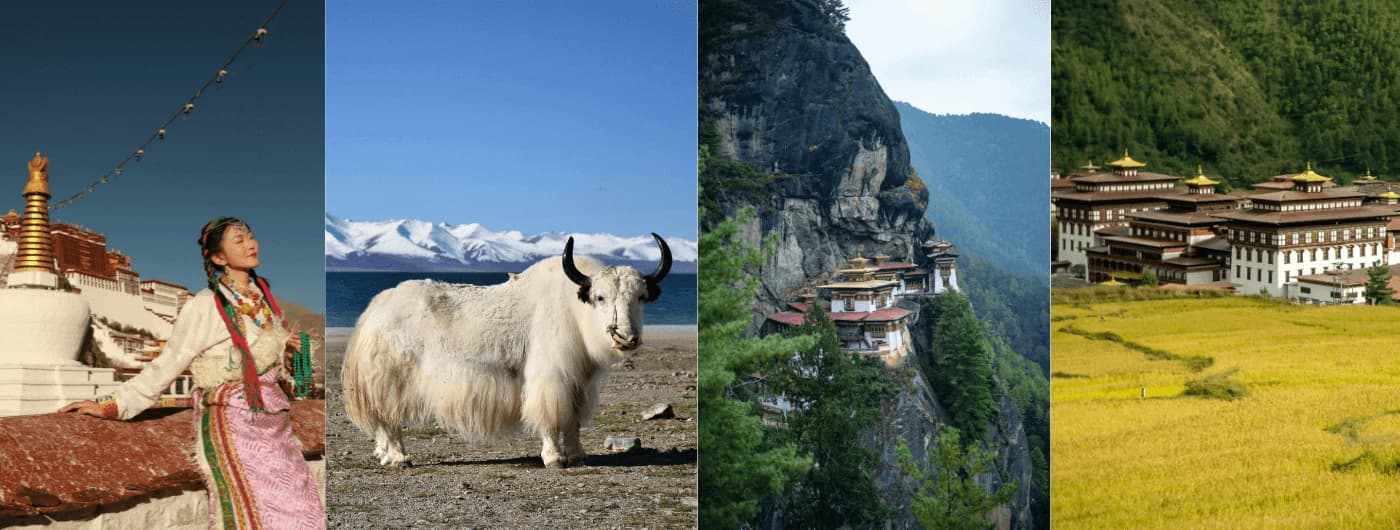
Bhutan vs Tibet Tour

Bhutan Tour vs Tibet Tour – Which Himalayan Journey Is Right for You?
When it comes to mystical Himalayan destinations, Bhutan and Tibetstand out as two of Asia's most culturally immersive and naturally stunning regions. Both are filled with breathtaking scenery, historic monasteries, deep Buddhist traditions, and life-changing travel experiences. However, a Bhutan Tour and a Tibet Tour can offer quite different experiences in terms of travel style, ease of access, cost, and overall adventure.
In this blog, we compare Bhutan Tour vs Tibet Tour to help you decide which destination best suits your travel style, interests, and expectations.
Why Compare Bhutan Tour and Tibet Tour Before Planning Your Trip?
Bhutan and Tibet are both renowned for preserving centuries-old cultures influenced by Buddhism, yet their tourism models, accessibility, and experiences differ significantly.
Bhutan, known as the “Land of the Thunder Dragon,” is a peaceful Himalayan kingdom, offering stunning natural landscapes, cultural immersion, and spiritual enrichment to visitors. This country prioritises Gross National Happiness over mass tourism, making it a unique and heartfelt destination. The well-preserved Buddhist monasteries, dzongs, festivals, and the sustainable tourism model are some of the major attractions of the Bhutan Tour from Kathmandu.
Tibet is often lovingly called the “Roof of the World,” thanks to its breathtaking high-altitude landscapes and rich spiritual heritage. A Tibet tour feels truly adventurous, inviting you to explore expansive plateaus, sacred lakes, and historic monastic centers. The magnificent Potala Palace in Lhasa, sacred monasteries like Jokhang and Sera, serene high-altitude lakes such as Yamdrok Lake and Namtso, and stunning views of Mount Everest from the Tibetan side are some of the highlights of this tour.
Cultural Experience: Gross National Happiness vs Ancient Tibetan Buddhism
A trip to Bhutan offers an excellent chance to immerse yourself in a vibrant culture where local customs warmly blend into daily life. You can join lively Tshechu festivals, try on traditional clothes like Gho and Kira, and visit beautiful monasteries cherished by both monks and the community. Bhutanese culture feels cosy, peaceful, and beautifully connected to nature and spirituality.
A Tibet tour provides an excellent opportunity to truly connect with one of the world’s most ancient and captivating civilisations. You'll get to explore impressive landmarks like Potala Palace and Jokhang Temple, and enjoy the lively atmosphere of monastic debates at Sera and Drepung monasteries. Tibetan culture is vibrant, expressive, and filled with spiritual warmth, shaped by centuries of rich history, dedicated pilgrimage, and remarkable resilience.
Landscapes and Scenery: Green Valleys vs High Plateau
Bhutan is a beautiful, lush, and green country, full of forested hills, river valleys, rice terraces, and snow-capped peaks. The scenery in Bhutan changes wonderfully with the seasons, offering lush green vistas in the summer, vibrant colors in the autumn, snow-covered landscapes in winter, and blooming flora in the spring. This diversity makes Bhutan an ideal destination for nature lovers, adventure seekers, and photographers who enjoy exploring moderate altitudes and immersing themselves in pristine environments.
Tibet’s breathtaking landscape is truly expansive and untouched. Imagine exploring high-altitude plateaus, gazing upon stunning turquoise lakes like Yamdrok Lake, wandering through arid valleys, and taking in the sweeping views of the Himalayas. The feeling of openness and seclusion is simply unmatched, making it a perfect destination for those who love adventure and rugged, awe-inspiring scenery.
Best Time to Visit: Ideal Seasons for Bhutan Tour and Tibet Tour
The best time to visit Bhutan is in spring (March to May) and fall (September to November), when the weather is clear, dry, and ideal for sightseeing and cultural activities. Spring brings blooming rhododendrons and warm temperatures, while fall offers crisp air, breathtaking mountain views, and major festivals like Paro Tsechu and Thimphu Tsechu, making it the peak season for a trip to Bhutan.
Similarly, the best time for a Tibet tour is from late spring to early fall (May to October), when temperatures are milder and high mountain passes are accessible. The peak months of June to September provide the ideal conditions for visiting Lhasa, Everest Base Camp (Tibet side), and sacred lakes, although occasional summer rains may occur. Overall, Bhutan is best visited in spring and fall, while Tibet is most suitable from May to October, depending on altitude and travel routes.
Entry Requirements & Permits: Bhutan Visa Rules vs Tibet Travel Permit
Bhutan’s entry visa requirements are relatively straightforward but strictly controlled. All international travellers, except for nationals from India, Bangladesh, and the Maldives, must obtain a Bhutan tourist visa, which is issued only through a licensed Bhutanese tour operator, along with the mandatory Sustainable Development Fee (SDF). Independent travel is not permitted, and all arrangements, including accommodation, guides, and permits, must be organised in advance. Indian nationals need an entry permit instead of a visa, while travellers from other countries should ensure their passports are valid and their travel plans are confirmed before arrival.
Tibet’s entry process is more complicated and requires multiple documents. Besides a valid Chinese tourist visa (or a group visa when entering from Nepal), all foreign travellers must obtain a Tibet Travel Permit, issued by the Tibet Tourism Bureau through an authorised travel agency. Depending on the itinerary, additional permits may be needed for areas outside Lhasa, such as Everest Base Camp or Mount Kailash. Overall, Bhutan has a simpler but more expensive entry system, while Tibet involves more paperwork and planning.
Can You Combine Bhutan and Tibet Tours?
Yes! You can combine Bhutan and Tibet tours into one unforgettable Himalayan adventure, often chosen by travelers looking for a richer cultural and spiritual experience. Usually, travelers start in Kathmandu, Nepal, which is well-connected to both regions. From there, an overland trip to Tibet is possible, visiting major sights like Lhasa, Potala Palace, Jokhang Temple, and even Everest Base Camp (Tibet side). Afterwards, you can continue to Bhutan either by flight from Paro or overland through India, depending on your route and entry points.
Combining these tours allows you to explore Tibet's rugged high-altitude landscapes and rich Buddhist traditions, then dive into Bhutan's peaceful Himalayan culture and stunning valleys. Since each region requires its own permits, for example, the Tibet Travel Permit and Bhutan visa or Sustainable Development Fee, partnering with a licensed operator like Overland Trek Nepal simplifies planning, permit processing, and travel arrangements. This way, a combined Bhutan–Tibet journey becomes a rewarding experience for culture buffs and Himalayan adventurers.
Cost & Budget Comparison: Is Bhutan or Tibet More Expensive to Travel?
When comparing overall travel costs, Bhutan is typically more expensive than Tibet because of its distinctive tourism policies. Visitors to Bhutan must often purchase a prepaid tour package from a licensed operator, which covers the Sustainable Development Fee (SDF), lodging, guides, meals, and transportation. This flat daily fee system guarantees quality services and promotes sustainable tourism, but it also increases the minimum travel expenses, particularly for solo travellers or those with limited budgets.
On the other hand, Tibet tours can be more budget-friendly since costs depend on group size, season, and travel style. While you still need a Tibet Travel Permit and often a Chinese visa, prices are competitive, especially for larger groups. Travel arrangements like accommodation, transportation, and guides can be adjusted to fit different budgets. Still, things like domestic flights, travel distances within Tibet, and high-altitude stays can add to the costs.
Where to book your Bhutan and Tibet tour from Nepal?
Book your trip with Overland Trek Nepal. Our Bhutan tour from Kathmandu typically costs between USD 2,599 and USD 2,999 per person. This price includes the Sustainable Development Fee (SDF), Bhutan visa, accommodation, a licensed guide, meals, and internal transportation, making your journey smooth and enjoyable. Meanwhile, a Tibet overland tour starting from Kathmandu with Overland Trek Nepal generally begins at USD 1,499 to USD 1,699 per person for a 7–8 day adventure. This covers the Tibet Travel Permit, local guide, transportation, sightseeing, and comfortable accommodation, ensuring a memorable experience.
To book any tour in Nepal, Bhutan, or Tibet, feel free to contact us via WhatsApp at +9779841920870 or via email.
FAQs
Which destination is more expensive, Bhutan or Tibet?
Bhutan is generally more expensive than Tibet. Bhutan tours include a mandatory Sustainable Development Fee (SDF) and all-inclusive packages, which raise the overall costs. Tibet tours are comparatively more affordable, especially for group travel, although permits and a Chinese visa are still required.
Do I need a visa for Bhutan and Tibet?
Yes, the process varies slightly for each destination. For Bhutan, most travellers find it easiest to get their visa through a licensed tour operator. When it comes to Tibet, you'll need a Chinese visa along with a mandatory Tibet Travel Permit, both of which should be arranged through an authorised agency. This ensures a smooth and stress-free travel experience.
Is altitude sickness a concern in Bhutan or Tibet?
Altitude sickness is uncommon in Bhutan, as most regions are below 3,000 meters. In Tibet, altitude sickness is a frequent concern because many destinations, including Lhasa, are situated above 3,600 meters. Proper acclimatisation is crucial for Tibet tours.
Can I see Mount Everest on a tour to Bhutan or Tibet?
You can't see Mount Everest from Bhutan, but a Tibet tour provides great views of Everest from the north side, especially during visits to Everest Base Camp (Tibet side).
Which tour is better for families and senior travellers?
A Bhutan tour is ideal for families and senior travellers because of its lower altitude, comfortable travel arrangements, and leisurely sightseeing options. In contrast, Tibet is more appropriate for travellers who are physically fit due to its high altitude.
Is travel insurance required for both Bhutan and Tibet?
Yes. Both Bhutan and Tibet require travellers to have valid travel insurance that covers medical emergencies, high-altitude trekking, and potential trip cancellations.
Are festivals a key attraction in Bhutan and Tibet?
Yes. Bhutan’s Tsechus are vibrant, large-scale cultural festivities that showcase masked dances and traditional rituals, drawing many visitors. Tibet hosts religious ceremonies and pilgrimages, especially in Lhasa and at monasteries such as Jokhang, providing a deep look into Tibetan Buddhist spirituality. Bhutan’s festivals are more visually captivating and tourist-friendly, whereas Tibet’s events tend to be more spiritual and immersive.
Conclusion
Both Bhutan and Tibet offer unforgettable Himalayan adventures, but they attract different types of travellers. Bhutan is peaceful, lush, and quietly spiritual, while Tibet is vast, intense, and historically rich. Whether you choose Bhutan or Tibet, your trip will be filled with culture, spirituality, and stunning mountain scenery. If you’re planning a Himalayan journey and deciding between a Bhutan Tour and a Tibet Tour, think about your preferred pace, comfort level, and the story you want to bring home from the mountains.
Overland Trek Nepal arranged both the Bhutan Tour from Kathmandu and the Tibet Tour. Feel free to contact us for more queries via email or WhatsApp us at +9779841920870.
Need Help? Call Us+977 9851138871orChat with us on WhatsApp
Latest Travel Blogs
.webp&w=1200&q=75&dpl=dpl_EUd5Wwb28cTzwN6qQNwTKfhuRohE)
Sep 21, 2026
By Anil
Annapurna Base Camp Trek Permits Cost (ACAP + TIMS) | 2026/27
Explore more.webp&w=1200&q=75&dpl=dpl_EUd5Wwb28cTzwN6qQNwTKfhuRohE)
Sep 16, 2026
By Anil
Annapurna Base Camp Trek Cost: Complete Guide 2026
Explore more.webp&w=1200&q=75&dpl=dpl_EUd5Wwb28cTzwN6qQNwTKfhuRohE)
Need Help? Call Us.+977 9851138871